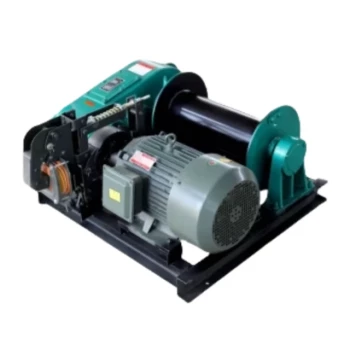
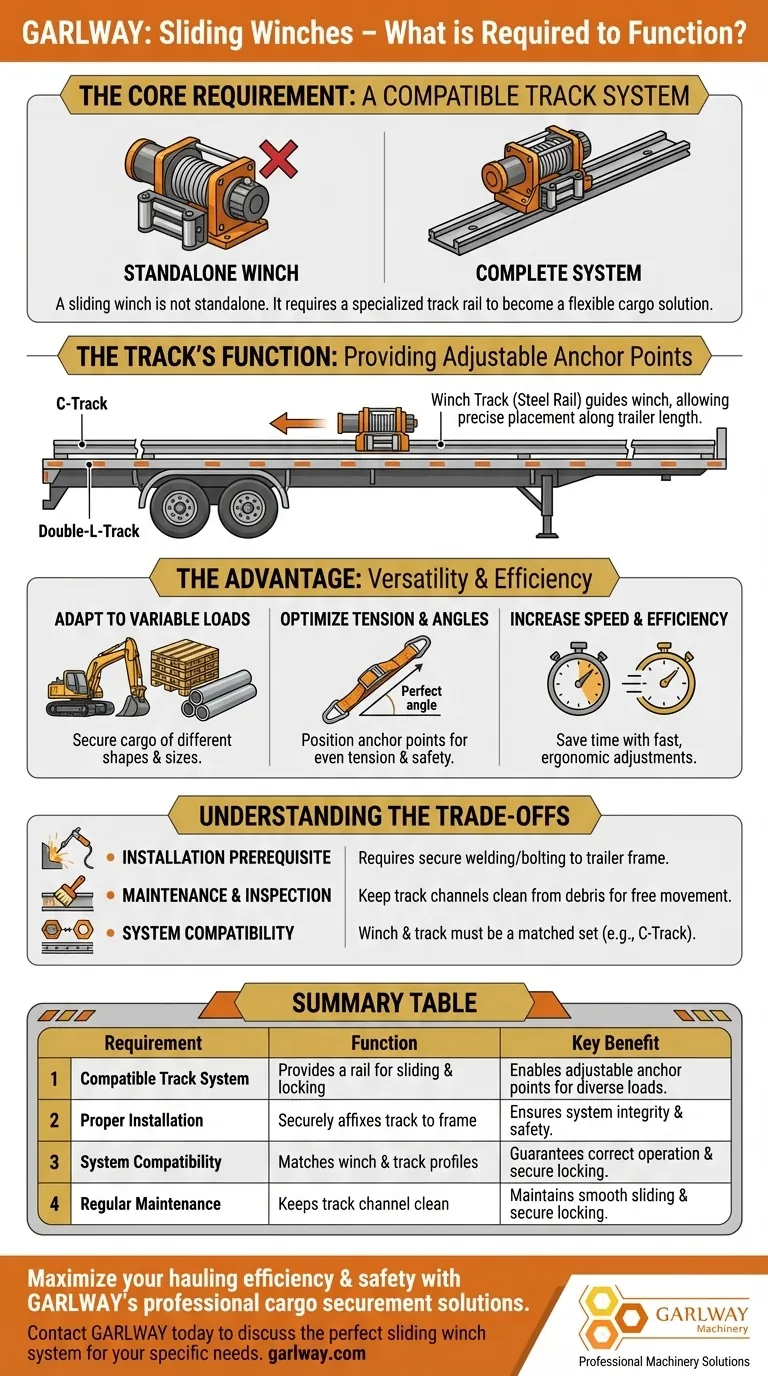
At its core, a sliding winch is not a standalone device. To function as designed, it absolutely requires a compatible track or rail system mounted to the vehicle or trailer frame. This track is what allows the winch to slide back and forth, providing adjustable anchor points for securing cargo.
The essential takeaway is that the value of a sliding winch lies not in the winch itself, but in its integration with a track system. This combination transforms a simple tie-down into a highly flexible and efficient cargo securement solution.
The Core Requirement: A Compatible Track System
A sliding winch is only one half of a complete system. Without the track, it is effectively just a standard winch, unable to be repositioned easily.
What is a Winch Track?
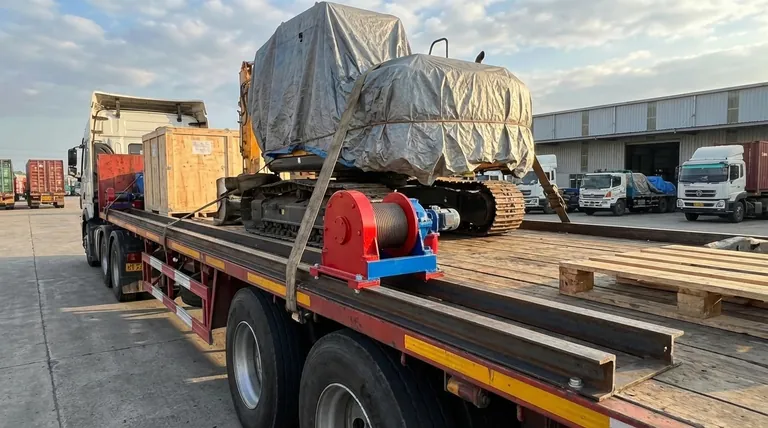
A winch track is a specialized rail, typically made of steel, that is welded or bolted to the side of a flatbed trailer, truck bed, or other hauling platform. It features a specific profile designed to capture the base of a sliding winch.
The Function of the Track
The primary function of the track is to provide a guide for the winch to travel along the length of the trailer. This allows the operator to position the tie-down point precisely where it's needed for any given load, rather than being limited to fixed anchor points.
Common Track Types
While various proprietary designs exist, two industry-standard profiles are most common:
- C-Track: This design features a C-shaped channel that the winch slides within.
- Double-L-Track: This style, often called a side rail, uses an L-shaped profile that the winch hooks onto and slides along. Both achieve the same goal of adjustable positioning.
Why Choose a Sliding System? The Advantage of Versatility
The need for a track system is driven by the demand for flexibility in professional hauling and equipment transport.
Adapting to Variable Loads
The key benefit is the ability to securely tie down cargo of different shapes and sizes. Whether you are hauling a single piece of heavy equipment or multiple pallets, the winches can be moved to the exact location required for each strap.
Optimizing Tension and Angles
Proper cargo securement requires applying tension at the correct angle. A sliding winch allows the operator to position the anchor point directly in line with the strap, ensuring even tension and preventing unsafe side-pulling on the strap webbing.
Increasing Speed and Efficiency
For operators who frequently load and unload diverse cargo, sliding winches are a significant time-saver. Adjusting a winch's position along a track is far faster and more ergonomic than repositioning other types of temporary anchor points.
Understanding the Trade-offs
While highly effective, a sliding winch system has specific considerations that differ from fixed tie-down points.
Installation is a Prerequisite
The primary trade-off is the need for installation. A track must be properly and securely affixed to the trailer frame, which is a more involved process than simply bolting on a fixed winch.
Maintenance and Inspection
The track channel can accumulate dirt, ice, and other road debris. Regular cleaning is necessary to ensure the winches can slide freely and lock securely into place.
System Compatibility
The winch and the track must be compatible. You cannot use a winch designed for a C-Track on a Double-L-Track, or vice versa. They are designed as a matched set.
Making the Right Choice for Your Application
Choosing between a sliding or fixed winch system depends entirely on the type of work you do.
- If your primary focus is hauling diverse cargo: The unmatched flexibility of a sliding winch system is the superior choice for safety and efficiency.
- If your primary focus is hauling uniform loads: A series of less expensive, fixed-position winches may be a perfectly adequate and more cost-effective solution.
- If your primary focus is maximizing speed and safety: A sliding system is the professional standard for its ability to quickly achieve optimal tie-down angles for any load.
Ultimately, investing in a sliding winch system is an investment in operational flexibility and proper cargo control.
Summary Table:
| Requirement | Function | Key Benefit |
|---|---|---|
| Compatible Track System | Provides a rail for the winch to slide and lock into position. | Enables adjustable anchor points for diverse loads. |
| Proper Installation | Track must be securely welded/bolted to the vehicle frame. | Ensures system integrity and safety. |
| System Compatibility | Winch and track profiles (e.g., C-Track, L-Track) must match. | Guarantees correct operation and secure locking. |
| Regular Maintenance | Keeps the track channel free of debris like dirt and ice. | Maintains smooth sliding and secure locking capability. |
Maximize your hauling efficiency and safety with GARLWAY's professional cargo securement solutions.
As a specialist in construction machinery, GARLWAY understands the critical need for reliable and versatile equipment. Our sliding winch systems, including compatible winches and tracks, are engineered for construction companies and contractors who demand flexibility and safety when transporting diverse loads.
We provide robust solutions that help you:
- Adapt quickly to haul equipment and materials of varying shapes and sizes.
- Enhance safety by achieving optimal tie-down angles for every load.
- Save valuable time on every job with easy-to-adjust anchor points.
Ready to upgrade your cargo control? Contact GARLWAY today to discuss the perfect sliding winch system for your specific needs and trailer setup.
Visual Guide
Related Products
- Electric and Hydraulic Winch for Heavy Duty Applications
- Portable Small Trailer Winch
- Quick Windlass Portable Winch for Truck and Boat Best Boat Winch
- Hydraulic Winding Engine Harbor Freight Winch
- Warn Winch Windlass Boat Trailer Winch
People Also Ask
- What are the differences between electric and hydraulic winches? Choose the Right Winch for Your Job
- What are some common uses for a heavy-duty winch? Power Your Construction & Industrial Projects
- What are electro-hydraulic winches and their applications? The Integrated Power Solution for Heavy-Duty Operations
- How do winches assist in bridge launching? Accelerate Bridge Placement with Controlled Pulling Power
- What are the benefits of using heavy-duty winches for large projects? Boost Efficiency & Safety