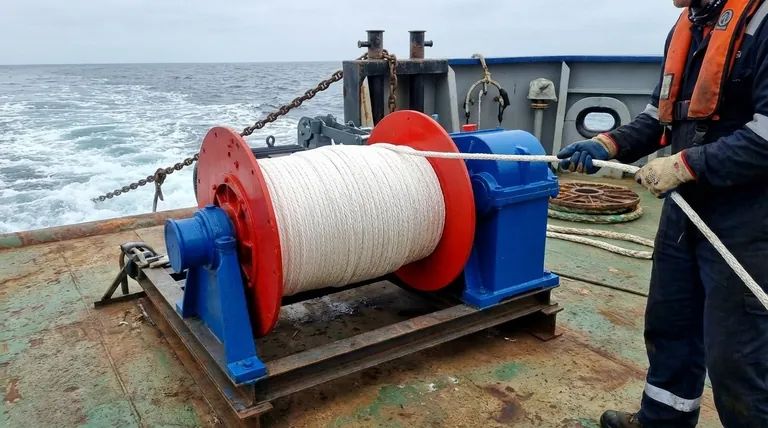
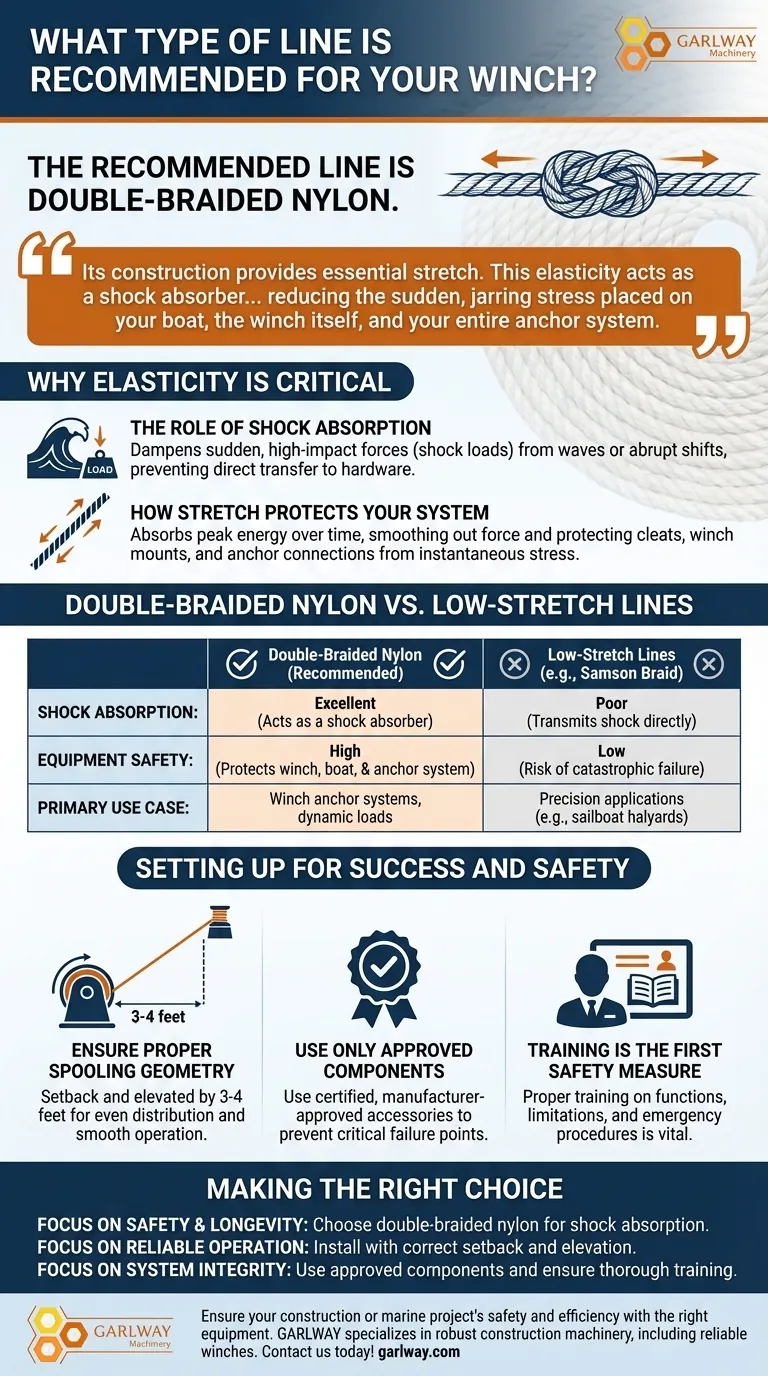
The recommended line for your winch is double-braided nylon. This specific type is chosen over alternatives like Samson braid because its construction provides essential stretch. This elasticity acts as a shock absorber during hard pulls, significantly reducing the sudden, jarring stress placed on your boat, the winch itself, and your entire anchor system.
Selecting the right winch line is about more than just strength; it's about managing dynamic forces. The inherent stretch of double-braided nylon is a critical safety feature that protects your equipment by converting dangerous shock loads into manageable energy.
Why Line Elasticity is So Critical
Understanding the forces at play on your winch system reveals why the physical properties of your line are so important. It's not just a rope; it's a key component in a dynamic system.
The Role of Shock Absorption
A winch line, especially in a marine environment, is subjected to sudden, high-impact forces from things like waves or abrupt shifts in load. These forces, or shock loads, can be many times greater than the static weight the winch is holding.
Without a way to dampen this energy, the entire shock is transferred directly to your hardware.
How Stretch Protects Your System
Double-braided nylon has the ability to elongate slightly under load and then return to its original length. This stretchiness is not a weakness; it is its most important feature in this application.
By stretching, the line absorbs the peak energy of a shock load over a fraction of a second. This effectively smooths out the force, protecting cleats, winch mounts, and anchor connections from instantaneous, damaging stress.
Double-Braided Nylon vs. Low-Stretch Lines
Lines like Samson braid or high-tech fibers are incredibly strong but have very little stretch. While this is useful for applications requiring precision (like a halyard on a sailboat), it is dangerous for a winch anchor system.
A low-stretch line transmits nearly 100% of any shock load directly to the hardware, creating a high risk of catastrophic failure.
Setting Up for Success and Safety
The line is only one part of a reliable system. Proper installation and operation are equally vital to ensure performance and prevent accidents.
Ensure Proper Spooling Geometry
For the line to lay evenly on the winch drum, the winch needs to be installed correctly. A setup that is set back and elevated by 3-4 feet from the first point of contact is ideal.
This angle allows the line to distribute itself evenly across the drum as it's retrieved, preventing tangles and ensuring smooth operation, much like on a fishing reel.
Use Only Approved Components
Your winch system is only as strong as its weakest link. Always use certified, manufacturer-approved accessories for setting up the winch.
Using underrated or incompatible hardware can create a critical point of failure that compromises the safety of the entire system.
Training is the First Safety Measure
The single most important safety component is a well-trained operator. Before using any winch, you must receive proper training on its specific functions, limitations, and emergency procedures. Well-maintained equipment in untrained hands is still a significant hazard.
Making the Right Choice for Your System
Your decision-making should be guided by an understanding of the winch as a complete system, not just a collection of parts.
- If your primary focus is safety and equipment longevity: Choose double-braided nylon line to provide the shock absorption necessary to protect your hardware from failure.
- If your primary focus is reliable winch operation: Install the winch with the correct setback and elevation to guarantee the line spools evenly onto the drum.
- If your primary focus is overall system integrity: Use only manufacturer-approved components and ensure every operator has received thorough training.
By prioritizing system dynamics and safe operation, you ensure your winch is a reliable and safe tool for years to come.
Summary Table:
| Feature | Double-Braided Nylon | Low-Stretch Lines (e.g., Samson Braid) |
|---|---|---|
| Shock Absorption | Excellent (Acts as a shock absorber) | Poor (Transmits shock directly) |
| Safety for Equipment | High (Protects winch, boat, and anchor system) | Low (Risk of catastrophic failure) |
| Primary Use Case | Winch anchor systems, dynamic loads | Applications requiring precision (e.g., sailboat halyards) |
Ensure your construction or marine project's safety and efficiency with the right equipment. GARLWAY specializes in robust construction machinery, including reliable winches designed for demanding applications. Our experts can help you select the perfect winch and accessories for your needs. Contact GARLWAY today to discuss your project requirements and enhance your operational safety!
Visual Guide
Related Products
- Small Electric Winch 120V and 240V for Compact Applications
- Electric and Hydraulic Winch for Heavy Duty Applications
- Hydraulic Winding Engine Harbor Freight Winch
- Electric 120V Boat Winch by Badlands
- Heavy Duty Electric Boat Winch Windlass Anchor
People Also Ask
- What makes electric winches suitable for off-road use? Key Features for Reliable Vehicle Recovery
- What are the common applications of electric winches? Power Your Lifting & Pulling Tasks
- What are the common uses of an electric winch? A Guide to Safe and Efficient Heavy Lifting
- What are the uses of electric winches in mining and tunneling? Enhance Safety and Efficiency Underground
- How do electric winches contribute to energy savings? Maximize Efficiency and Lower Costs