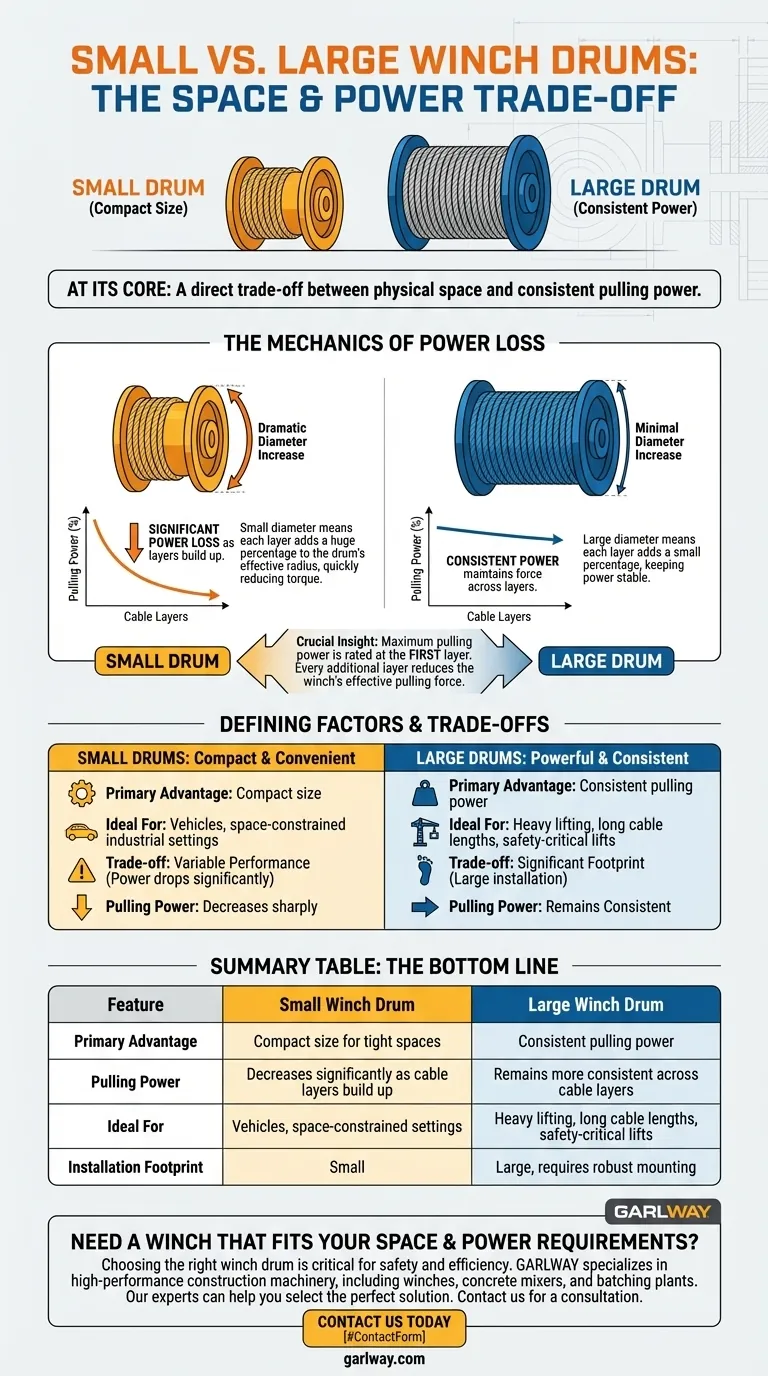
At its core, the difference between a small and a large winch drum is a direct trade-off between physical space and consistent pulling power. A smaller drum saves space but loses pulling force as cable layers build up, while a larger drum maintains more consistent power but requires a significantly larger installation footprint.
The crucial insight is that a winch's maximum pulling power is rated at the first layer of cable on the drum. Every additional layer of cable reduces the winch's effective pulling force, a penalty that is far more severe on a small-diameter drum than a large one.
The Two Defining Factors: Size and Power
The choice between a small or large winch drum is dictated by two primary constraints: the physical space available for installation and the performance requirements of the load being moved.
Small Drums: Compact and Convenient
A small drum's primary advantage is its compact size. This makes it the default choice for applications where space is at a premium, such as on vehicles or in tight industrial settings.
However, this compact design comes with a significant performance caveat. As the cable wraps onto the drum, each new layer dramatically increases the drum's effective diameter, which reduces its pulling power.
Large Drums: Powerful and Consistent
A large drum's main benefit is its ability to maintain a much more consistent pulling force across the entire length of the cable.
While the same mechanical principles apply, each additional layer of cable represents a much smaller percentage increase in the drum's overall diameter. This results in a far less significant drop in power as the cable is spooled in.
The Mechanics of Drum Diameter and Pulling Force
Understanding why power changes is key to selecting the right winch. The relationship is a matter of basic mechanical leverage.
How Cable Layers Change the Equation
Think of the drum's radius as a lever arm that the winch motor must turn. A winch's maximum rated pull is always calculated on the first, bare-drum layer of cable—the shortest possible lever arm.
As cable spools onto the drum, the distance from the center of the drum to the outermost layer of cable increases. This "effective diameter" grows, creating a longer lever arm.
The Impact on Pulling Capacity
For a given amount of motor torque, turning a longer lever arm results in less force. Consequently, with each layer of cable added to the drum, the winch's actual line pull decreases.
This effect is far more pronounced on a small drum. Adding an inch of cable layers to a 3-inch drum doubles its effective diameter, potentially cutting its pulling power in half. Adding that same inch to a 10-inch drum results in a much smaller percentage change and a more modest power reduction.
Understanding the Core Trade-offs
Neither drum size is universally better; the correct choice depends entirely on your operational priorities and constraints.
The Compromise of a Small Drum
A small drum forces you to accept variable performance. You may have 10,000 lbs of pulling power on the first layer but only 5,000 lbs on the last. This requires careful planning to ensure the winch is not underpowered when the drum is full.
The benefit is its ability to fit into applications where a larger winch is simply not an option.
The Demands of a Large Drum
A large drum provides performance that is far more predictable and consistent, which is critical for applications involving heavy loads or safety-critical lifts.
The trade-off is its significant physical footprint and weight. The winch assembly will be larger, heavier, and require a more robust mounting structure, making it unsuitable for many mobile or space-constrained uses.
Making the Right Choice for Your Application
To choose correctly, you must evaluate your primary operational need against these mechanical realities.
- If your primary focus is a compact installation: A small drum is your only practical choice, but you must account for the power loss and potentially select a winch with a higher initial rating to compensate.
- If your primary focus is consistent heavy lifting: A large drum is non-negotiable to ensure you have predictable power throughout the entire pull.
- If your primary focus is using long cable lengths: A large drum is strongly preferred to minimize the number of layers and the resulting severe power drop-off.
Ultimately, choosing the right drum size is about matching the winch's performance curve to the demands of your specific task.
Summary Table:
| Feature | Small Winch Drum | Large Winch Drum |
|---|---|---|
| Primary Advantage | Compact size for tight spaces | Consistent pulling power |
| Pulling Power | Decreases significantly as cable layers build up | Remains more consistent across cable layers |
| Ideal For | Vehicles, space-constrained industrial settings | Heavy lifting, long cable lengths, safety-critical lifts |
| Installation Footprint | Small | Large and requires robust mounting |
Need a Winch That Fits Your Space and Power Requirements?
Choosing the right winch drum is critical for the safety and efficiency of your project. GARLWAY specializes in high-performance construction machinery, offering a range of winches, concrete mixers, and batching plants designed for construction companies and contractors globally.
Our experts can help you select the perfect winch to match your specific needs for space and consistent pulling power.
Contact us today for a consultation and let us provide you with a reliable solution that gets the job done right.
Visual Guide
Related Products
- Best 18000 Pound Drum Anchor Trailer Winch
- Warn Winch Windlass Boat Trailer Winch
- Portable Small Trailer Winch
- Belle Mixer Drum Self Loading Mortar Mixers JS3000
- Heavy Duty Electric Boat Winch Windlass Anchor
People Also Ask
- In what scenarios is a winch particularly useful for trailers? Load Heavy Items Safely & Efficiently
- How do you install a trailer winch? A Step-by-Step Guide for a Safe & Secure Setup
- What should be considered when mounting a winch on a trailer? Ensure a Safe, Aligned Installation
- What are the considerations for equipping a trailer with a winch for hauling a car? A Guide to Safe and Efficient Vehicle Loading
- What are the main types of trailer winches? Choose the Right Power Source for Your Load