
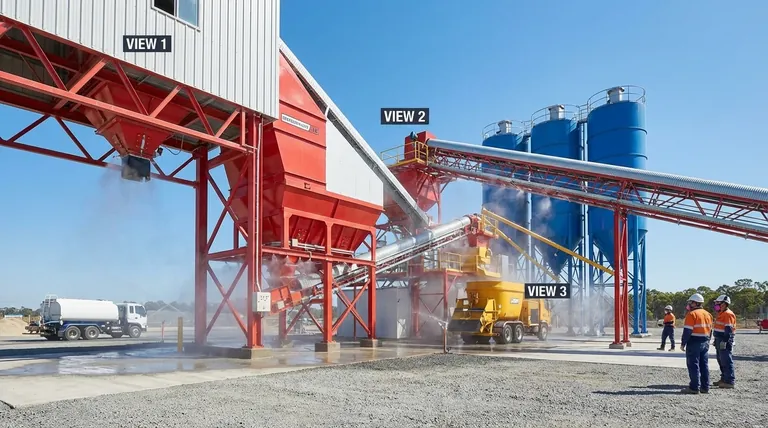
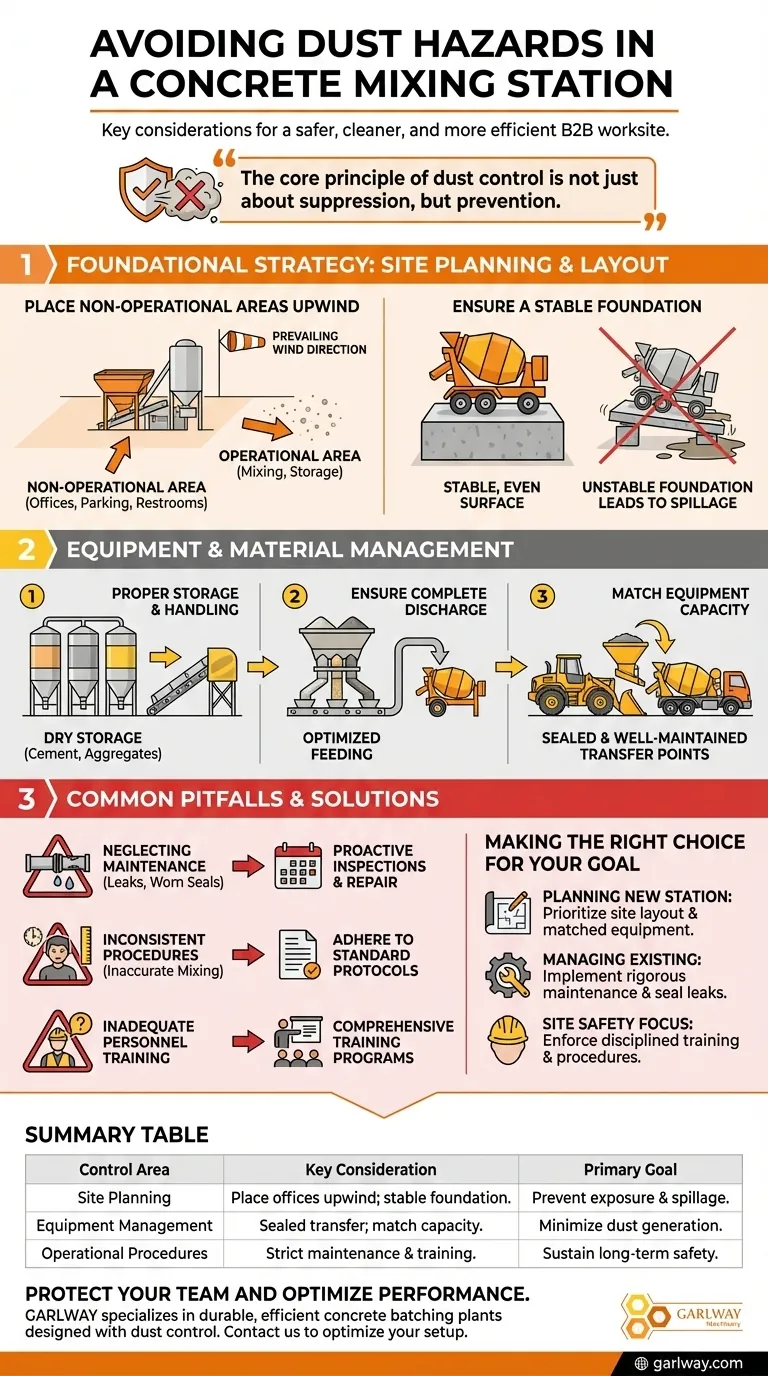
To effectively avoid dust hazards in a concrete mixing station, key considerations span from initial site layout to daily operational discipline. The primary strategies involve placing non-operational areas like offices upwind, ensuring all material transfer points are sealed and well-maintained, and implementing strict procedures for material handling and storage to prevent spillage and airborne particles.
The core principle of dust control is not just about suppression, but prevention. A successful strategy integrates intelligent site planning, proper equipment management, and disciplined operational procedures to minimize dust generation at its source.
Foundational Strategy: Site Planning and Layout
The first opportunity to control dust occurs before the first bag of cement is ever opened. Strategic planning of the station's layout and foundation is your most powerful preventative measure.
Leveraging Wind Direction
A primary and highly effective consideration is the prevailing wind direction at the site.
Placing administrative offices, restrooms, security posts, and parking areas upwind of the mixing and material storage areas significantly reduces personnel exposure to airborne dust. This simple layout choice protects staff in non-operational roles.
Ensuring a Stable Foundation
The physical ground on which the station sits plays a critical role in preventing spills that become dust.
The mixing station must be located on a stable and even surface. An unstable foundation can cause equipment to shift, leading to misalignments in conveyor systems and discharge chutes, which are common sources of material spillage.
Equipment and Material Management
How materials are stored, moved, and processed is central to dust control. Every transfer point is a potential source of dust that must be managed.
Proper Material Storage
The condition of your raw materials directly impacts dust creation.
Cement and other fine aggregates must be kept in dry storage. Moisture causes clumping, which can lead to blockages and require forceful clearing, a process that releases significant amounts of dust.
Optimizing the Feeding System
The design and operation of hoppers and chutes are critical control points.
Aggregates, sand, and cement should ideally have separate chutes to prevent blockages. The system should be designed so that hoppers and chutes are completely discharged after each use, preventing residual material from becoming airborne later.
Matching Equipment Capacity
Mismatched equipment is a common and avoidable cause of spillage.
The loading capacity of the loader should match the batching station's hopper height, and the mixer's discharge capacity must align with the mixing truck's volume. Properly sized equipment ensures clean, efficient transfers and minimizes overflows.
Understanding the Common Pitfalls
Even with a well-designed site, operational oversights can undermine your dust control efforts. Recognizing these common pitfalls is key to maintaining a safe environment.
Neglecting Routine Maintenance
Small issues quickly escalate into major dust problems if ignored.
Leaks at the discharge outlet, worn seals on conveyor belts, or misaligned chutes are significant sources of fugitive dust. A proactive maintenance schedule to inspect and promptly repair these faults is essential.
Inconsistent Operating Procedures
The best equipment is only effective if operated correctly.
Failing to control measurement accuracy or adhere to specified mixing times can lead to process inefficiencies and spills. All personnel must be trained on, and held accountable for, following standard operating protocols without deviation.
Inadequate Personnel Training
Ultimately, human action determines the success of any safety system.
A lack of training on proper operation, safety protocols, and the importance of dust control measures can render even the most advanced engineering controls ineffective. Consistent training and reinforcement are non-negotiable.
Making the Right Choice for Your Goal
Your approach to dust control should be tailored to your specific role and the lifecycle stage of your mixing station.
- If your primary focus is planning a new station: Prioritize intelligent site layout by placing personnel areas upwind and selecting properly matched equipment to prevent spillage from day one.
- If your primary focus is managing an existing operation: Implement a rigorous and proactive maintenance schedule, focusing on sealing all leaks in material transfer systems.
- If your primary focus is site safety and compliance: Develop and enforce comprehensive training programs that ensure every operator understands their role in preventing dust generation through disciplined procedures.
A systematic approach to dust control is a direct investment in the safety of your team, the efficiency of your operation, and the longevity of your equipment.
Summary Table:
| Control Area | Key Consideration | Primary Goal |
|---|---|---|
| Site Planning | Place offices upwind; ensure stable foundation. | Prevent exposure and spillage at the source. |
| Equipment Management | Use sealed transfer points; match equipment capacity. | Minimize dust generation during material handling. |
| Operational Procedures | Enforce strict maintenance and operator training. | Sustain long-term dust control and safety. |
Protect your team and optimize your concrete batching plant's performance. Dust hazards are a major risk for construction companies and contractors. GARLWAY specializes in durable and efficient construction machinery, including concrete batching plants designed with dust control in mind. Our experts can help you select the right equipment or advise on optimizing your existing setup for maximum safety and productivity. Contact GARLWAY today to discuss your specific needs and create a cleaner, safer worksite.
Visual Guide
Related Products
- HZS120 Ready Mix Concrete Batching Plant Commercial Mud Cement Mixer
- HZS35 Small Cement Concrete Mixing Batch Plant
- HZS75 Concrete Batching Plant Cement Mixer Price Concrete Mixer Bunnings Mixing Plant
- HZS180 Ready Mix Concrete Plant for Foundations with Sand and Cement
- Commercial Electric Concrete Mixer Machine HZS 50 Small Batch Plant for Sale
People Also Ask
- What is a ready mix concrete batching plant? The Engine of Modern Construction
- What is the name of the machine used in ready mix? Unpacking the Complete Concrete System
- What is the core component of a concrete batching plant? The Mixer Unit Defines Your Concrete Quality
- What are the types of concrete mixers used in batching plants? Choose the Right Mixer for Your Project
- What are the advantages and disadvantages of concrete batching plants? Maximize Quality & Efficiency





