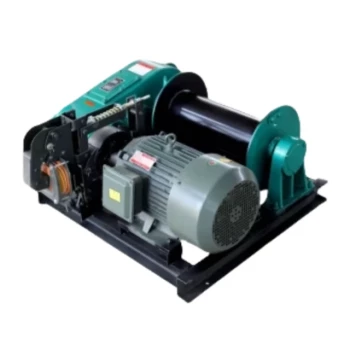
At its core, a winch is a tool for applying controlled pulling force. While primarily known for vehicle recovery, its applications extend to any situation where you need to safely move, tow, or lift exceptionally heavy objects. A winch transforms your vehicle from a mode of transport into a powerful workhorse capable of overcoming significant physical obstacles.
A winch is fundamentally a self-recovery tool designed to pull vehicles out of difficult situations like mud, sand, or snow. However, its utility expands into a much broader range of tasks, including assisting other vehicles, clearing heavy obstructions, and performing worksite duties like loading or hoisting materials.
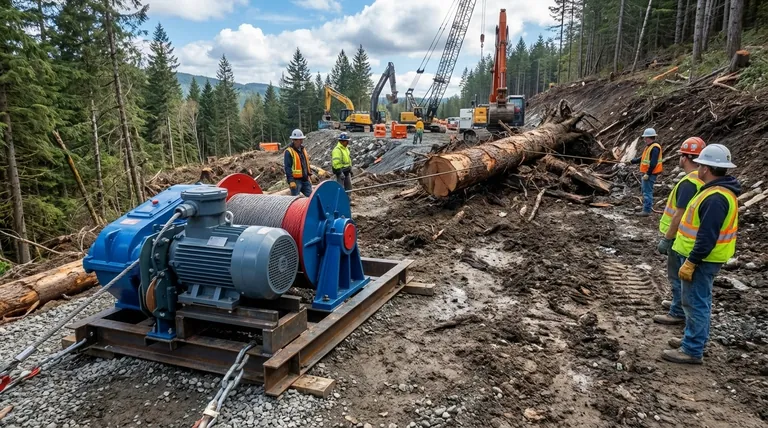
The Core Function: Vehicle Recovery
A winch's most recognized purpose is recovering a vehicle that has become immobilized. This function is critical for anyone venturing off-road or operating in unpredictable terrain.
Self-Recovery: Getting Yourself Unstuck
This is the primary reason most people install a winch. When your vehicle is stuck in mud, snow, sand, or ice with no other vehicle to assist, a winch allows you to pull yourself out by attaching the cable to a solid anchor point like a tree or large rock.
Assisting Others: Recovering Another Vehicle
Your winch can also be used to help others. If you have a secure position and your winch is properly rated for the task, you can pull another stuck vehicle to safety. This makes you a valuable asset on any trail or worksite.
Controlled Loading: Moving Vehicles onto Trailers
A winch provides a slow, controlled pull that is ideal for loading a non-operational vehicle onto a trailer. This is far safer and more precise than attempting to push or tow it up a ramp with another vehicle.
Beyond the Trail: Utility and Worksite Applications
The power of a winch is not limited to vehicle recovery. Its ability to apply immense force makes it invaluable for various utility and work-related tasks.
Clearing Obstructions
A common use is moving exceptionally heavy objects that are blocking a path. With proper rigging and caution, a winch can be used to move downed trees, large boulders, or other debris.
Material Handling and Hoisting
In industries like construction, forestry, and mining, winches are used constantly. They are essential components in machinery for lifting building materials, hoisting equipment, or dragging logs and other raw materials.
Critical Considerations and Safety Protocols
Using a winch improperly can lead to severe equipment damage or serious injury. Understanding its limitations and adhering to safety rules is non-negotiable.
Never Exceed the Load Limit
Every winch has a maximum load capacity. Overloading the winch can cause the cable to snap or the motor to fail catastrophically. Always be aware of the weight you are pulling.
The Importance of a Secure Anchor Point
The winch is only as strong as what it's anchored to. On a vehicle, this means attaching recovery points to the frame, not to a bumper or axle. When anchoring to a natural object, ensure it is solid and can withstand the force.
Maintaining a Safe Zone During Operation
A winch cable under tension stores a tremendous amount of energy. Never stand between the winch and its anchor point, and ensure all people are a safe distance away from the cable's path in case it breaks.
Handling the Cable with Care
Never handle the winch cable with bare hands. Small frays in a steel cable can cause serious cuts, and the line can become hot during use. Always wear heavy-duty gloves.
How to Apply This to Your Goal
Your primary reason for using a winch will dictate your focus.
- If your primary focus is off-road self-reliance: Master the techniques for self-recovery and understand how to choose a stable, safe anchor point in nature.
- If your primary focus is utility and worksite efficiency: Prioritize understanding load capacities and proper rigging techniques for lifting and moving various materials safely.
- If your primary focus is general preparedness: Learn the fundamental safety rules and practice using the winch in a controlled environment before you need it in an emergency.
Understanding these principles transforms a winch from a simple accessory into an indispensable tool for power and problem-solving.
Summary Table:
| Application Category | Key Uses |
|---|---|
| Vehicle Recovery | Self-recovery from mud/snow, assisting others, loading vehicles onto trailers |
| Utility & Worksite | Clearing trees/boulders, lifting materials in construction/forestry/mining |
| Critical Safety Rules | Never exceed load limit, use secure anchor points, maintain a safe zone, wear gloves |
Ready to equip your vehicle or worksite with a reliable, powerful winch?
At GARLWAY, we specialize in providing robust construction machinery, including high-performance winches, concrete mixers, and batching plants. Our winches are engineered for durability and safety, helping construction companies and contractors globally handle heavy lifting and recovery tasks with confidence.
Contact our experts today to find the perfect winch solution for your specific needs!
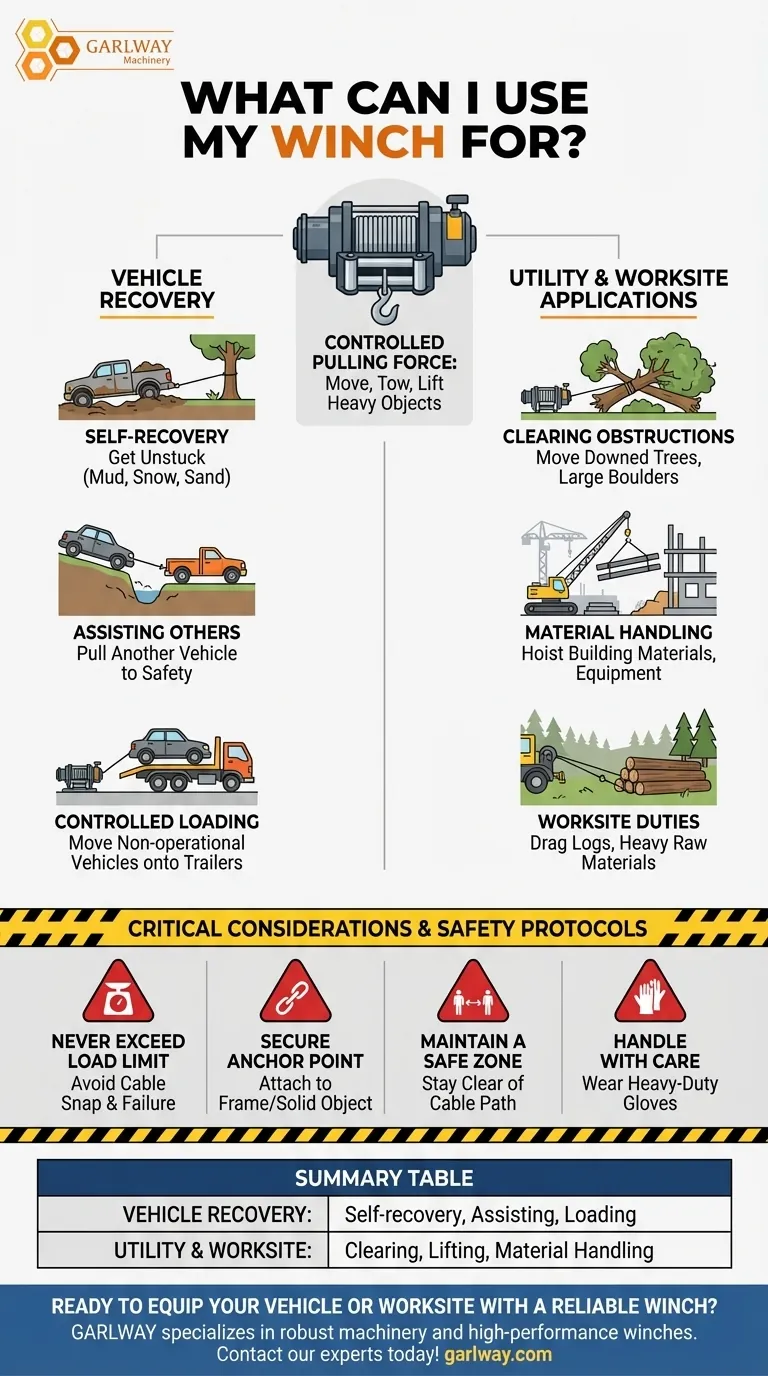
Visual Guide
Related Products
- Warn Winch Windlass Boat Trailer Winch
- Electric and Hydraulic Winch for Heavy Duty Applications
- Small Electric Winch 120V and 240V for Compact Applications
- 12000 lb Electric Boat Trailer Winch with Windlass Anchor Warn
- Quick Windlass Portable Winch for Truck and Boat Best Boat Winch
People Also Ask
- What are the main components of a boat trailer winch? A Guide to Safe & Efficient Boat Loading
- What factors should be considered when choosing a boat trailer winch? Ensure Safe and Effortless Boat Loading
- What is the purpose of boat trailer winches? Safely and Efficiently Load Your Boat
- What are the two main types of boat trailer winches? Manual vs. Electric Explained
- How often should a boat trailer winch be replaced? Your Guide to Safety and Longevity