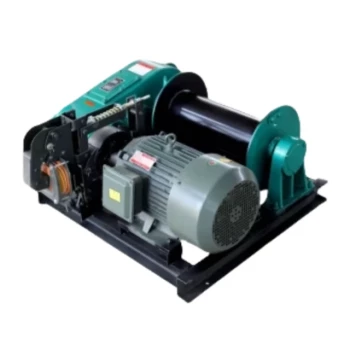
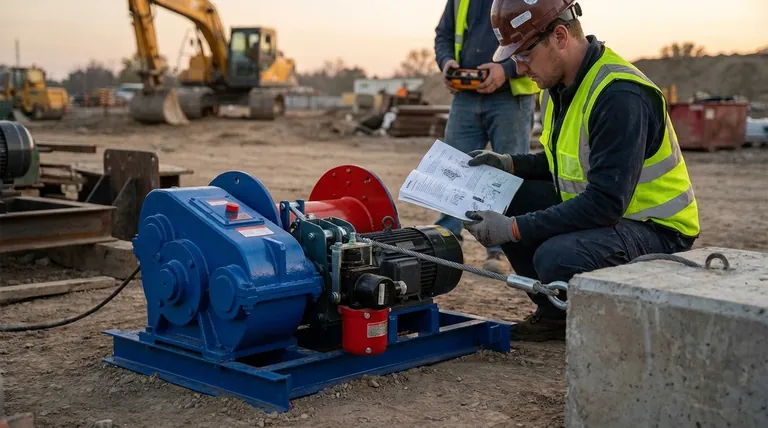
Reading the user manual for an electric winch is the single most important step you can take to ensure safe and effective operation. It contains model-specific instructions, safety warnings, and technical limitations that are essential for preventing catastrophic equipment failure, property damage, and serious personal injury. Ignoring it means operating a powerful tool without understanding its fundamental rules.
An electric winch is not an intuitive appliance; it is a piece of industrial machinery capable of generating immense force. The user manual is the definitive guide to controlling that power safely, making it an indispensable component of your equipment.
Why the Manual is Your Most Important Tool
An electric winch is far more complex than its simple remote control suggests. The manual provides the critical knowledge base required to operate it correctly and reliably.
Decoding Your Winch's Capabilities
The manual specifies the winch's rated line pull, duty cycle, and recommended battery requirements. Exceeding these limits is a primary cause of motor burnout and mechanical failure.
Mastering Correct Operational Procedures
The manual details the precise steps for tasks like engaging and disengaging the clutch, properly spooling the winch line under tension, and rigging a pull. Getting these procedures wrong can damage the cable and the winch's internal gearing.
Identifying Critical Safety Protocols
Every manual has a dedicated safety section. It outlines non-negotiable rules such as maintaining a safe distance, never stepping over a tensioned line, and using accessories like a winch line damper to absorb energy in case of a snap.
Outlining Essential Maintenance
Proper maintenance is crucial for reliability. The manual provides a schedule for inspecting the winch line, checking electrical connections, and lubricating components to prevent failure when you need it most.
Understanding the Inherent Risks
The power that makes an electric winch so useful also makes it inherently dangerous if misused. The safety procedures in the manual exist to mitigate these specific, well-documented risks.
The Danger of Overloading
Attempting to pull a load beyond the winch's capacity can stall the motor, overheat the electrical system, or, in the worst case, cause gears or mounting points to shatter under the extreme strain.
The Hazard of a Snapped Cable
A winch line under thousands of pounds of tension stores a phenomenal amount of kinetic energy. If it breaks, it will whip back with enough force to cause devastating injury or death. The manual's instructions on inspection and safe zones are designed to prevent this.
The Threat of Electrical Failure
Electric winches draw a massive electrical current. Improper wiring or a weak battery, issues addressed in the manual's installation section, can lead to equipment damage or even a vehicle fire.
Common Pitfalls from Ignoring the Manual
Experienced operators can often spot novices by the mistakes they make—mistakes that are almost always covered in the first few pages of the user manual.
Improper Spooling and Cable Damage
Simply winding the cable back onto the drum without proper tension leads to "bird nesting." This tangles and crushes the line, creating weak points that can fail under load.
Misusing the Clutch
Failing to fully engage the clutch before a pull can cause it to slip, potentially dropping a load unexpectedly. Disengaging it while under load can lead to an uncontrolled release of the line.
Neglecting Routine Inspections
Using a winch with a frayed cable, loose mounting bolts, or a cracked housing is a recipe for disaster. The manual provides a clear checklist for pre-operation inspections that can catch these issues before they become critical failures.
Making the Right Choice for Your Goal
Before you ever connect the remote, commit to reading the manual. This prepares you to handle any situation with competence and safety.
- If your primary focus is safety: Read the entire warnings section first and create a pre-operation safety checklist based directly on its recommendations.
- If your primary focus is performance: Follow the installation and maintenance sections to the letter to ensure your winch operates at its peak capacity without premature wear.
- If you are a new user: Practice the basic functions—like engaging the clutch and using the remote—in a no-load situation as described in the manual before attempting a real pull.
Treating your manual as an essential part of your recovery kit is the mark of a safe and responsible operator.
Summary Table:
| Key Manual Section | Why It's Important |
|---|---|
| Safety Warnings | Prevents catastrophic injury from snapped cables or equipment failure. |
| Rated Line Pull & Duty Cycle | Avoids motor burnout by ensuring you don't exceed the winch's capacity. |
| Operational Procedures | Details correct spooling, clutch use, and rigging to prevent damage. |
| Maintenance Schedule | Ensures reliability by outlining inspections and lubrication needs. |
Operate Your Winch with Confidence and Safety
Don't risk equipment failure or personal injury. Proper operation starts with the right equipment and knowledge.
GARLWAY specializes in providing robust and reliable construction machinery, including electric winches, concrete mixers, and batching plants, designed for the demanding needs of construction companies and contractors worldwide. Our equipment is built to perform, but safety is always the top priority.
Contact our experts today to find the perfect winch for your project and get the detailed guidance you need for safe, effective operation. Let GARLWAY power your success, safely.
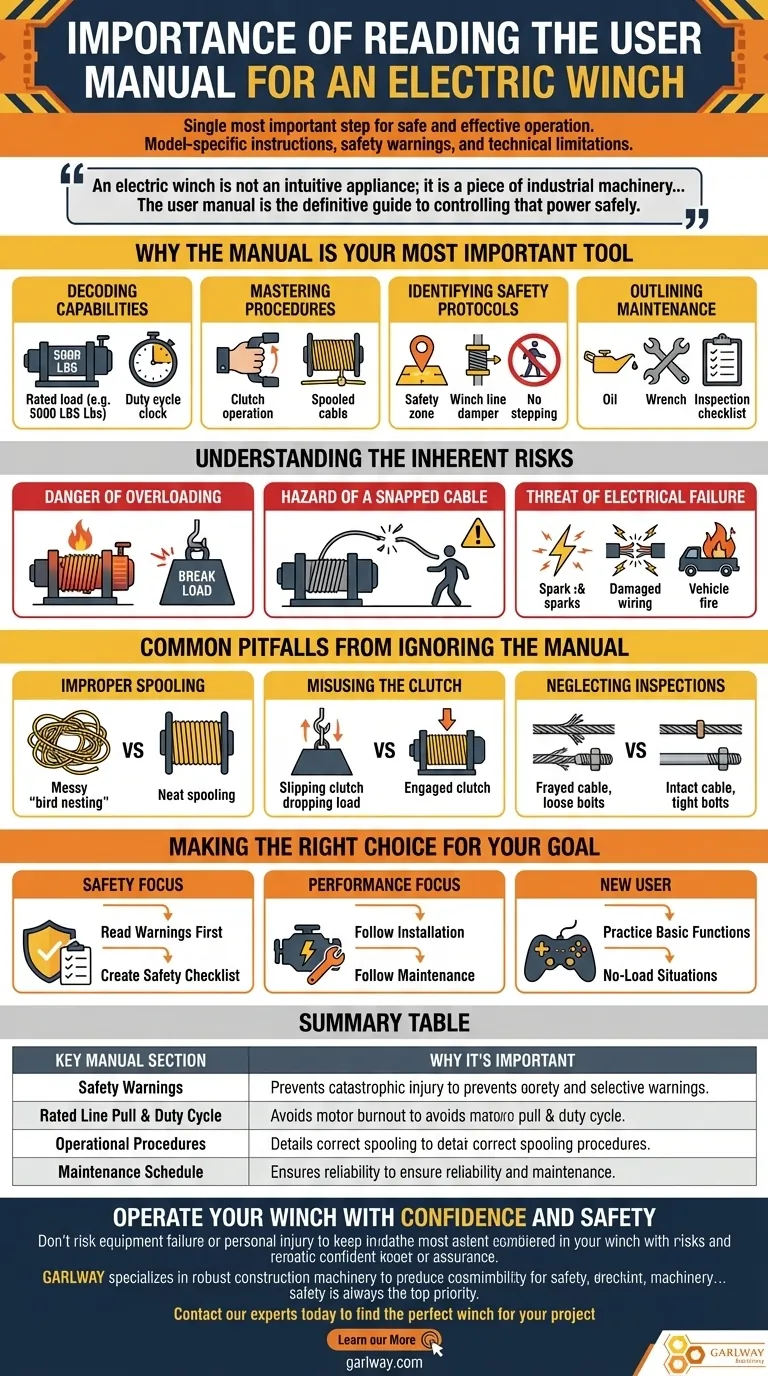
Visual Guide
Related Products
- Electric 120V Boat Winch by Badlands
- Electric and Hydraulic Winch for Heavy Duty Applications
- Small Electric Winch 120V and 240V for Compact Applications
- 12000 lb Electric Boat Trailer Winch with Windlass Anchor Warn
- Electric Hoist Winch Boat Anchor Windlass for Marine Applications
People Also Ask
- How do electric boat winches work? Unlock Effortless Launching & Retrieval
- How much current does an electric boat winch draw? Plan Your Electrical System for Peak Performance
- Can I run a winch straight from a battery? Essential Power Setup for Safe Operation
- What are the types of electric winches available? Choose the Right Winch for Your Job
- What are the uses of electric winches in mining and tunneling? Enhance Safety and Efficiency Underground