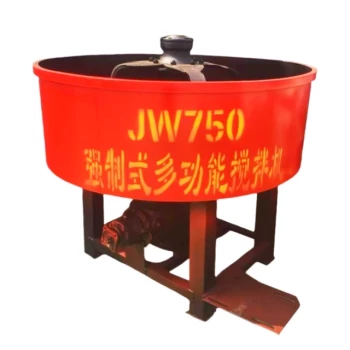
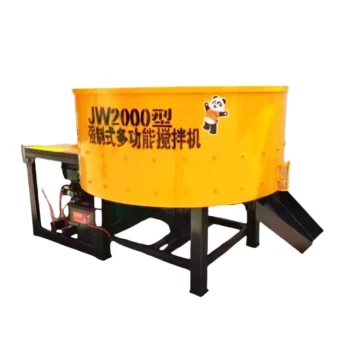
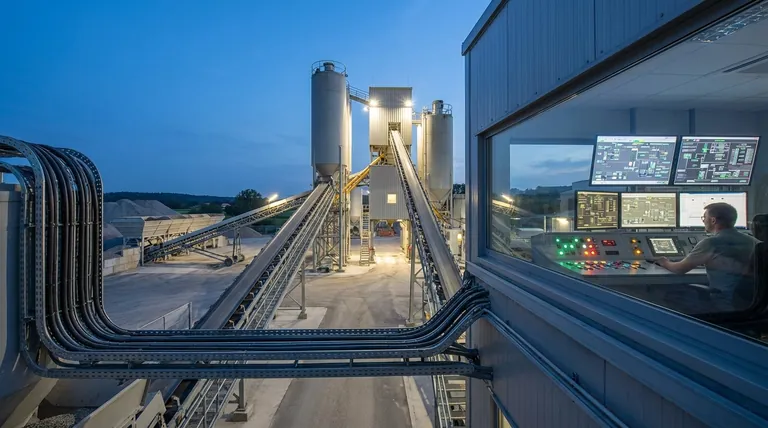
At its core, the electrical control system for a concrete mixing plant must deliver four things: comprehensive automation, precise operational control, robust safety interlocking, and clear fault diagnostics. It is the central nervous system responsible for transforming raw materials into a consistent, quality product with minimal human intervention.
The most critical requirement is not just what the system does, but how reliably it does it. Because the control system is the central hub, its failure means a complete production shutdown, making reliability and serviceability the most important factors in your decision.
The Core Pillars of an Effective Control System
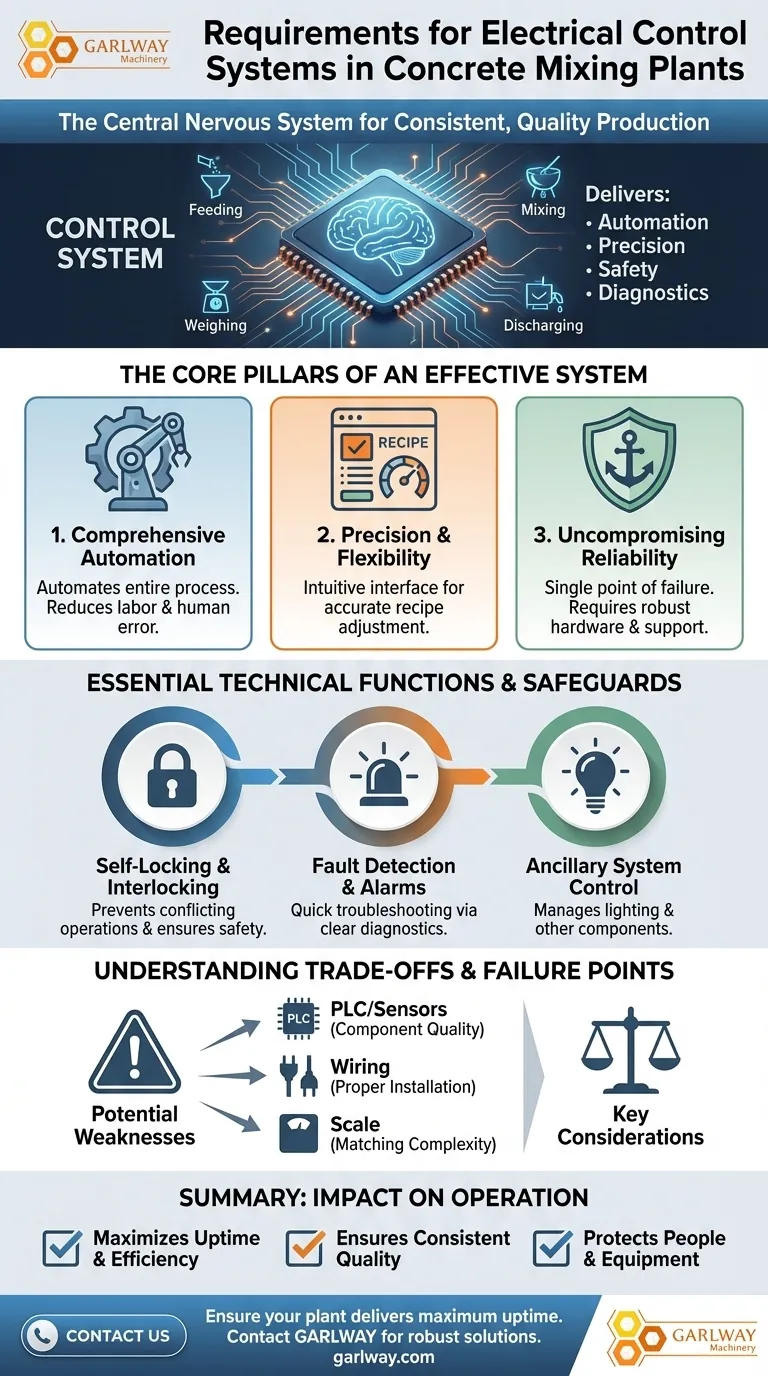
A high-quality control system is built on a foundation of key principles that directly impact your plant's efficiency, consistency, and profitability. Understanding these pillars is essential to evaluating any system.
Pillar 1: Comprehensive Automation
The primary goal is to automate the entire production process. This includes the feeding, weighing, mixing, and discharging of all materials.
Effective automation drastically reduces the need for on-site personnel, lowering labor costs and minimizing the potential for human error in the mixing process.
Pillar 2: Precision and Flexibility
The system's interface must be intuitive, allowing for easy input of production tasks and mix recipes.
Crucially, it must allow for the accurate adjustment and modification of set values for aggregates, cement, water, and admixtures. This ensures you can consistently produce concrete that meets exact specifications.
Pillar 3: Uncompromising Reliability
The control system is the single point of failure for the entire plant. If it stops, production stops.
Because users often cannot service complex controllers themselves, you are dependent on the manufacturer. Therefore, choosing a system from a reputable provider known for robust hardware and responsive support is not a luxury—it's a critical business decision.
Essential Technical Functions and Safeguards
Beyond the high-level principles, a capable system must include specific technical functions that ensure safety and operational integrity.
Self-Locking and Interlocking Logic
This is one of the most important safety and quality assurance features. The system must have comprehensive self-locking and interlocking functions.
This logic prevents conflicting operations, such as opening an aggregate bin gate while the weighing hopper is discharging. It ensures the production sequence is followed correctly and safely, protecting both equipment and personnel.
Fault Detection and Alarms
A good system doesn't just fail; it tells you why it failed. It must have built-in capabilities to detect common faults and trigger clear alarms.
This diagnostic information is vital for quick troubleshooting, minimizing downtime by pointing technicians directly to the source of the problem, be it a sensor, relay, or actuator.
Ancillary System Control
A concrete plant doesn't just run on mixers and conveyors. The electrical control system must also manage ancillary components.
This includes providing flexible control over the plant's lighting systems, which is essential for safe operation during night shifts or in low-light conditions.
Understanding the Trade-offs and Failure Points
No system is infallible. Acknowledging the potential weaknesses is key to making an informed choice and implementing a resilient operation.
The Myth of "Set It and Forget It"
The control system's performance is entirely dependent on the quality of its components. Common points of failure include the central PLC (Programmable Logic Controller), weighing sensors, and intermediate relays.
Investing in a system with high-quality, durable components is a direct investment in your plant's uptime.
The Critical Role of Proper Installation
Even the most advanced control system will fail if installed improperly. The electrical circuits must be laid out in a logical, precise, and secure manner.
A poorly executed installation can lead to intermittent faults, inaccurate measurements, and safety hazards that are difficult to diagnose and rectify.
Matching Complexity to Your Plant's Scale
Control systems are not one-size-fits-all. The complexity and functionality must be appropriate for the size and output of your plant.
A small, simple batch plant does not require the same sophisticated, multi-layered control system as a large, high-volume commercial plant. Over-engineering adds unnecessary cost and complexity.
Making the Right Choice for Your Operation
Ultimately, the ideal control system aligns with your specific production goals. Use these points to guide your selection process.
- If your primary focus is high-volume, consistent production: Prioritize robust automation with high-quality PLCs and comprehensive diagnostic alarms to minimize any potential downtime.
- If your primary focus is producing varied, specialized concrete mixes: Emphasize a system with a user-friendly interface that allows for the easy and precise modification, storage, and recall of complex recipes.
- If your primary focus is operating safely with a lean on-site team: The system's self-locking, interlocking, and automated fault detection features are non-negotiable for safe and reliable operation.
Choosing the right control system is a direct investment in your plant's operational uptime, product quality, and long-term profitability.
Summary Table:
| Requirement | Key Function | Impact on Operation |
|---|---|---|
| Comprehensive Automation | Automates feeding, weighing, mixing, discharging | Reduces labor costs, minimizes human error |
| Precision & Flexibility | Intuitive interface for recipe & set value adjustment | Ensures consistent, high-quality concrete output |
| Uncompromising Reliability | Robust hardware (e.g., PLCs) with responsive support | Maximizes uptime, prevents costly production halts |
| Safety & Diagnostics | Self-locking/interlocking logic, fault detection alarms | Protects equipment/personnel, enables quick troubleshooting |
Ready to ensure your concrete plant's electrical control system delivers maximum uptime and product quality?
At GARLWAY, we specialize in construction machinery and understand the critical role a reliable control system plays in your operation. Our expertise in providing robust solutions, including concrete batching plants, ensures your production runs smoothly and efficiently.
Let us help you avoid costly downtime and achieve consistent, high-quality results. Contact our experts today to discuss your specific requirements and find the perfect control solution for your plant.
Visual Guide
Related Products
- HZS90 Large Multiquip Concrete Mixers for Construction
- HZS180 Ready Mix Concrete Plant for Foundations with Sand and Cement
- Construction Products Concrete Plant Machine Mixing Concrete Mixer
- HZS120 Ready Mix Concrete Batching Plant Commercial Mud Cement Mixer
- Commercial Electric Concrete Mixer Machine HZS 50 Small Batch Plant for Sale
People Also Ask
- What are the types of concrete mixers used in batching plants? Choose the Right Mixer for Your Project
- What is the core component of a concrete batching plant? The Mixer Unit Defines Your Concrete Quality
- What are the different power sources for concrete mixers? Choose the Right Power for Your Project
- What are the main types of concrete mixers? A Guide to Batch, Continuous & More
- What are the main types of concrete mixers mentioned? Find the Perfect Mixer for Your Project