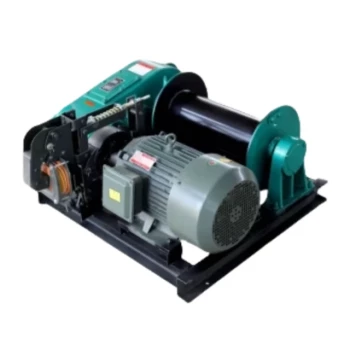
The primary types of winches are categorized by their power source: manual, electric, and hydraulic. While more specific industrial series like JK (high-speed) and JM (slow-speed) exist for heavy applications, understanding the core power source is the first and most critical step in identifying the right tool for the job.
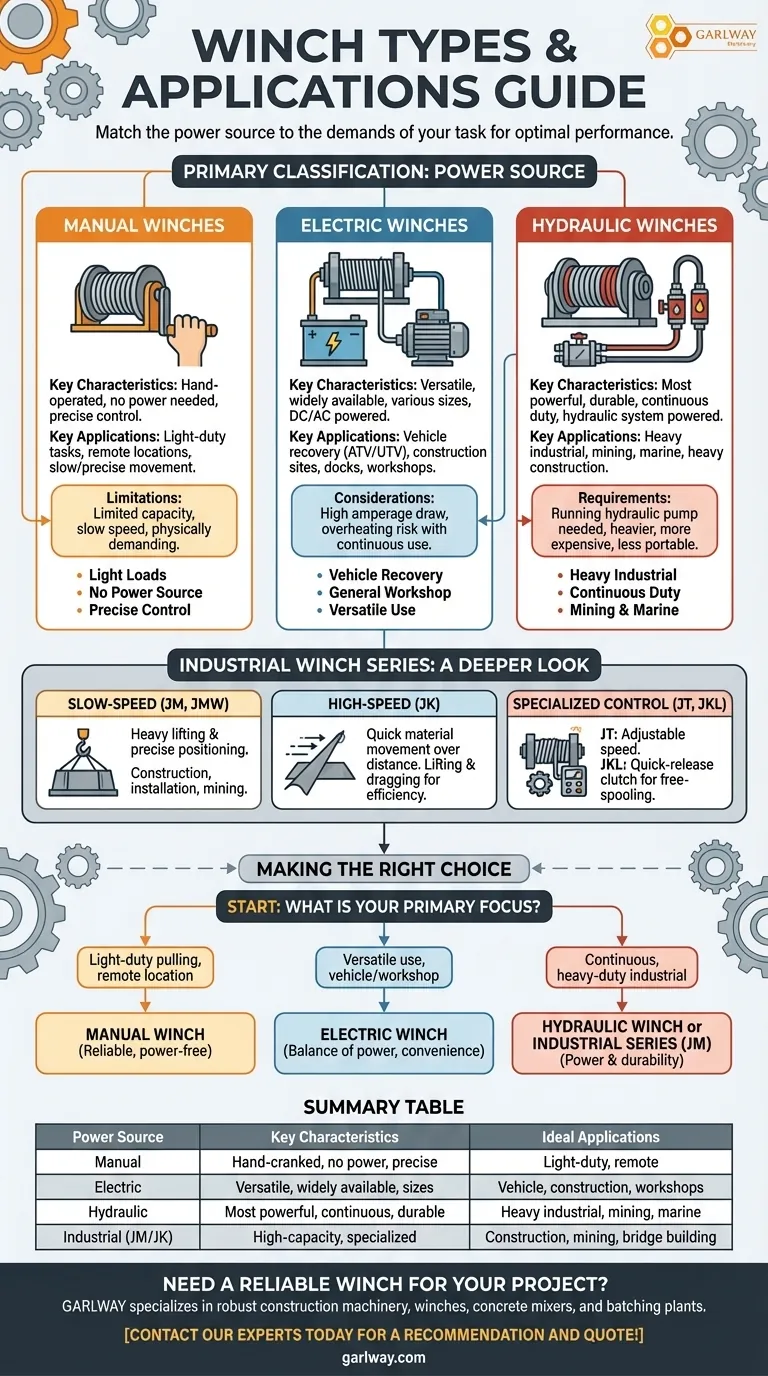
The most effective way to understand winches is not by memorizing model numbers, but by matching the power source to the demands of the task. The choice between manual, electric, and hydraulic operation dictates a winch's power, portability, and ideal application.
The Primary Classification: Power Source
A winch's fundamental design is defined by how it generates pulling force. This single factor determines its suitability for nearly any task.
Manual Winches
Manual winches are operated by hand, typically with a crank. They use mechanical advantage, often through a worm gear mechanism, to allow a person to move heavy loads.
They are best suited for light-duty applications where no power source is available or for tasks requiring slow, precise control.
Electric Winches
Electric winches are the most common and versatile type. They are powered by a DC or AC electric motor, making them a popular choice for everything from vehicle recovery to industrial material handling.
Their wide range of sizes and power levels makes them a default choice for construction sites, off-road vehicles (ATV/UTV), docks, and workshops.
Hydraulic Winches
Hydraulic winches are the most powerful and durable type, designed for the heaviest and most demanding industrial applications.
They run off a hydraulic system, which allows them to operate for long periods without overheating. This makes them ideal for continuous-duty operations in mining, marine, and heavy construction.
Industrial Winch Series: A Deeper Look
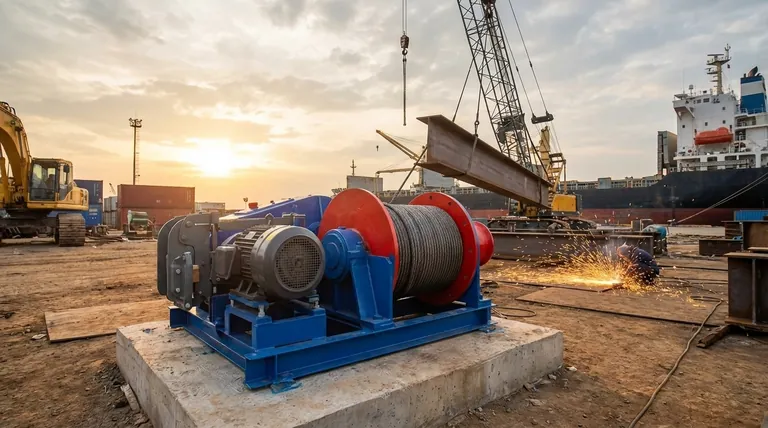
In heavy industries like construction, mining, and bridge building, winches are further classified by model series that denote specific performance characteristics. These are typically large, stationary electric winches.
Slow-Speed (JM, JMW Series)
These winches are engineered for heavy lifting and precise positioning. Their slow, steady pull is essential for safely hoisting massive components in construction, installation, and mining.
High-Speed (JK Series)
When the primary need is moving materials quickly over a distance, a high-speed winch is used. These are common in lifting and dragging operations where speed improves efficiency.
Specialized Control (JT, JKL Series)
This category includes winches with unique features. JT series winches offer adjustable speed control, while JKL and 2JKL winches have a hand-controlled quick-release clutch for rapid free-spooling of the rope.
Understanding the Trade-offs
Choosing a winch involves balancing power, convenience, and system requirements. Each type comes with distinct limitations.
Manual Winch Limitations
The primary drawbacks are limited pulling capacity and slow operational speed. They are entirely dependent on physical effort, making them unsuitable for heavy or repetitive tasks.
Electric Winch Considerations
Electric winches can draw significant amperage, placing a heavy load on a vehicle's battery and electrical system. For continuous use, they are prone to overheating the motor.
Hydraulic Winch Requirements
The main trade-off is complexity. A hydraulic winch requires a running hydraulic pump (typically engine-driven), making the entire system heavier, more expensive, and less portable than an electric equivalent.
Making the Right Choice for Your Goal
Your application's specific demands will point directly to the correct winch type.
- If your primary focus is light-duty pulling in remote locations: A manual winch provides reliable, power-free operation.
- If your primary focus is versatile use for vehicles or general workshop tasks: An electric winch offers the best balance of power, convenience, and availability.
- If your primary focus is continuous, heavy-duty industrial lifting or pulling: A hydraulic winch or a specialized industrial electric series (like JM) is necessary for its power and durability.
Ultimately, matching the winch's core design to the weight of your load and the demands of your environment is the key to a successful operation.
Summary Table:
| Power Source | Key Characteristics | Ideal Applications |
|---|---|---|
| Manual | Hand-cranked, no power needed, precise control | Light-duty tasks, remote locations |
| Electric | Versatile, widely available, various sizes | Vehicle recovery, construction, workshops |
| Hydraulic | Most powerful, continuous duty, durable | Heavy industrial, mining, marine, construction |
| Industrial (JM/JK) | High-capacity, specialized for heavy lifting/dragging | Construction, mining, bridge building |
Need a reliable winch for your construction or contracting project?
GARLWAY specializes in providing robust construction machinery, including a full range of winches, concrete mixers, and batching plants. We help construction companies and contractors globally enhance efficiency and safety on site.
Contact our experts today for a personalized recommendation and quote!
Visual Guide
Related Products
- Small Electric Winch 120V and 240V for Compact Applications
- Warn Winch Windlass Boat Trailer Winch
- Electric and Hydraulic Winch for Heavy Duty Applications
- Quick Windlass Portable Winch for Truck and Boat Best Boat Winch
- Hydraulic Winding Engine Harbor Freight Winch
People Also Ask
- What makes electric winches suitable for off-road use? Key Features for Reliable Vehicle Recovery
- What are the common applications of electric winches? Power Your Lifting & Pulling Tasks
- What are the common uses of an electric winch? A Guide to Safe and Efficient Heavy Lifting
- What are the uses of electric winches in mining and tunneling? Enhance Safety and Efficiency Underground
- How do electric winches contribute to energy savings? Maximize Efficiency and Lower Costs