
At its core, an electric winch is a precisely engineered system designed to multiply force. Its primary components include the electric motor, a gear train (or gearbox), a drum spooled with cable, a braking system, and a control interface, all mounted on a sturdy frame or housing.
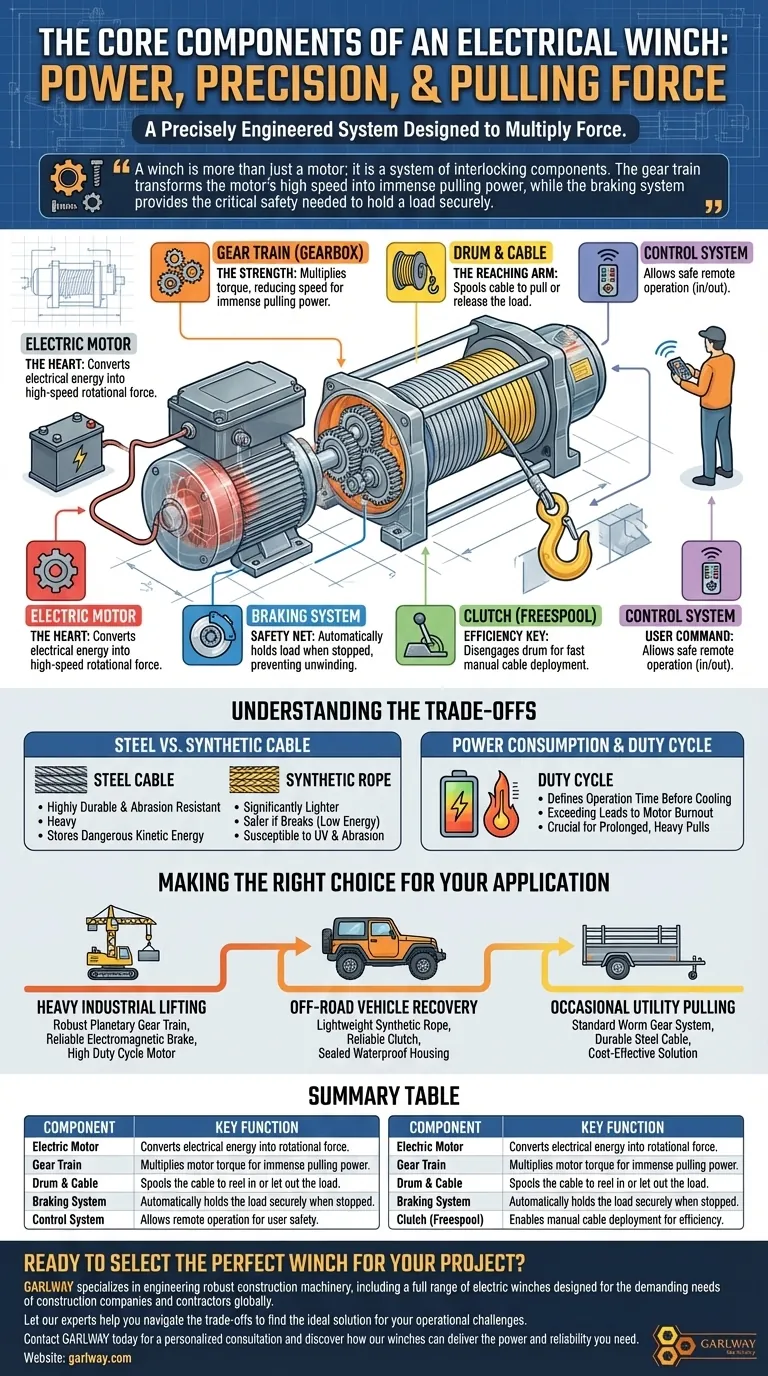
A winch is more than just a motor; it is a system of interlocking components. The gear train transforms the motor's high speed into immense pulling power, while the braking system provides the critical safety needed to hold a load securely.
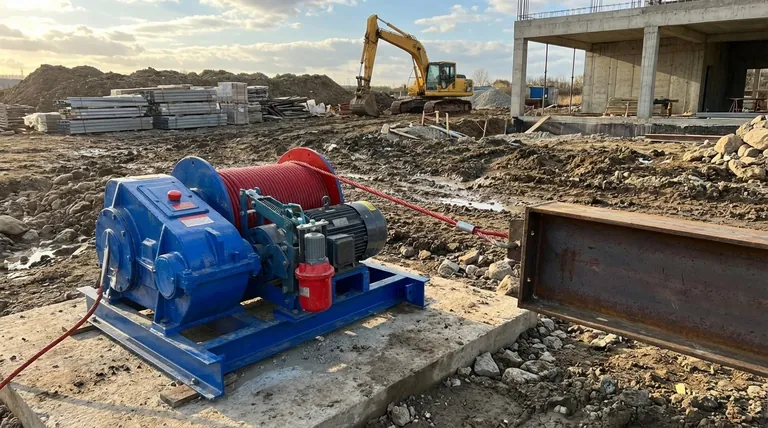
The Anatomy of an Electric Winch: From Power to Pull
To truly understand a winch, you must see its components not as a simple list, but as a chain of functions. Each part plays a distinct role in converting electrical energy into controlled, powerful pulling force.
The Motor: The Heart of the Operation
The electric motor is the prime mover. It converts electrical energy, typically from a vehicle's battery or a dedicated power source, into the rotational mechanical force that drives the entire system.
The motor's power rating is a key factor in the winch's overall capacity, but it does not work alone.
The Gear Train (Gearbox): The Source of Strength
The motor spins very fast but with relatively low torque. The gear train, also called a gearbox or reducer, is a system of gears that reduces this high speed into a much slower, but vastly more powerful, output.
Think of it like the gears on a bicycle. A low gear makes it easy to climb a steep hill by trading your pedaling speed for torque. The winch's gear train does the same, multiplying the motor's force to pull thousands of pounds.
The Drum and Cable: The Reaching Arm
The drum is the cylinder onto which the cable is wound. The gear train turns the drum, which spools the cable in or out.
The cable (or rope) is the component that attaches to the load. It is typically made of either braided steel wire or a lighter, synthetic rope. The hook is securely attached to the end of this cable.
The Braking System: The Critical Safety Net
Perhaps the most crucial safety component is the brake. When the motor stops, the brake automatically engages to prevent the drum from unwinding under load.
This mechanism is essential for holding a vehicle on an incline or suspending a lifted object, preventing catastrophic failure if power is interrupted.
The Control System: The User's Command
The control system is the user's interface with the winch. This is typically a handheld, corded remote or a wireless unit that allows the operator to control the direction of the drum (powering in or out) from a safe distance.
The Clutch (Freespool): The Key to Efficiency
The clutch allows the drum to be disengaged from the gear train. This "freespool" function lets you pull the cable out by hand quickly, which is far more efficient than slowly unspooling it with the motor.
Understanding the Trade-offs
Selecting a winch involves more than just looking at its pulling capacity. The materials and design of its core components create important trade-offs in performance, safety, and durability.
Steel vs. Synthetic Cable
The choice of cable material is a primary consideration.
Steel cable is highly durable and resistant to abrasion, making it excellent for use in rough, rocky terrain. However, it is heavy, can develop sharp burrs over time, and stores tremendous kinetic energy, making it extremely dangerous if it snaps.
Synthetic rope is significantly lighter, easier to handle, and much safer if it breaks, as it does not store the same amount of energy. Its primary drawbacks are a higher susceptibility to abrasion and degradation from UV exposure.
Power Consumption and Duty Cycle
Electric winches are power-hungry and place an enormous load on an electrical system. They also generate significant heat.
The duty cycle defines how long a winch can operate before it needs to cool down. Exceeding this can lead to motor burnout. Cheaper winches often have shorter duty cycles, limiting their use in prolonged, heavy pulls.
Making the Right Choice for Your Application
The ideal winch configuration depends entirely on your intended use.
- If your primary focus is heavy industrial lifting: You need a robust planetary gear train, a reliable electromagnetic brake, and a motor with a high duty cycle.
- If your primary focus is off-road vehicle recovery: Prioritize a lightweight synthetic rope for safety, a reliable clutch for fast deployment, and a sealed, waterproof housing.
- If your primary focus is occasional utility pulling on flat ground: A standard model with a worm gear system and a durable steel cable will likely meet your needs effectively and affordably.
Understanding how these core components work together is the key to selecting a winch that is not only powerful but also safe and reliable for your specific task.
Summary Table:
| Component | Key Function |
|---|---|
| Electric Motor | Converts electrical energy into rotational force. |
| Gear Train (Gearbox) | Multiplies motor torque for immense pulling power. |
| Drum & Cable | Spools the cable to reel in or let out the load. |
| Braking System | Automatically holds the load securely when stopped. |
| Control System | Allows remote operation for user safety. |
| Clutch (Freespool) | Enables manual cable deployment for efficiency. |
Ready to Select the Perfect Winch for Your Project?
Understanding the components is the first step. Choosing the right winch for your specific application—be it heavy-duty construction, off-road recovery, or industrial lifting—is what ensures safety, reliability, and peak performance.
GARLWAY specializes in engineering robust construction machinery, including a full range of electric winches designed for the demanding needs of construction companies and contractors globally.
Let our experts help you navigate the trade-offs between power, duty cycle, and cable type to find the ideal solution for your operational challenges.
Contact GARLWAY today for a personalized consultation and discover how our winches can deliver the power and reliability you need.
Visual Guide
Related Products
- Electric 120V Boat Winch by Badlands
- Electric and Hydraulic Winch for Heavy Duty Applications
- Small Electric Winch 120V and 240V for Compact Applications
- Electric Hoist Winch Boat Anchor Windlass for Marine Applications
- Heavy Duty Electric Boat Winch Windlass Anchor
People Also Ask
- How do electric boat winches work? Unlock Effortless Launching & Retrieval
- How much current does an electric boat winch draw? Plan Your Electrical System for Peak Performance
- Can I run a winch straight from a battery? Essential Power Setup for Safe Operation
- What are the types of electric winches available? Choose the Right Winch for Your Job
- What are the uses of electric winches in mining and tunneling? Enhance Safety and Efficiency Underground





