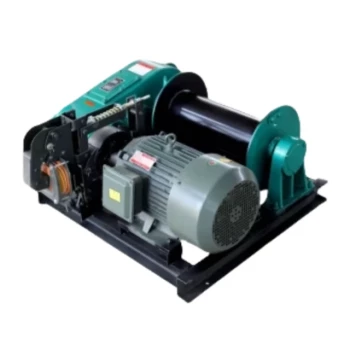
To put it simply, electric winches have become popular in subsea operations because they offer superior precision, higher energy efficiency, and a significantly lower environmental impact compared to traditional hydraulic systems. They are easier to install and maintain, providing a more reliable and controllable solution for the demanding and sensitive deep-sea environment.
The rise of subsea electric winches isn't just about a new way to lift things; it represents a fundamental shift towards safer, more efficient, and environmentally responsible deep-water operations.

The Core Advantages Driving Subsea Adoption
The preference for electric winches stems from several distinct operational advantages that directly address the unique challenges of working miles below the ocean's surface.
Precision Control and Safety
Electric motors provide instantaneous torque and highly accurate speed control. This allows for exceptionally smooth and precise positioning of sensitive equipment like Remotely Operated Vehicles (ROVs) or scientific instruments.
Advanced electronic braking and control systems offer a level of safety and repeatability that is difficult to achieve with hydraulics, which can be prone to pressure fluctuations.
Simplified Installation and Maintenance
Hydraulic winches require extensive and heavy pipework to carry high-pressure fluid from a power unit to the winch, creating multiple potential failure points.
Electric winches replace this complex plumbing with a single power cable. This drastically simplifies installation, reduces weight on the vessel, and minimizes maintenance requirements.
Superior Energy Efficiency
Electric systems are inherently more efficient, consuming power only when the winch is operating.
Hydraulic power units often need to run continuously to maintain system pressure, leading to constant energy consumption and higher fuel costs for the support vessel.
Reduced Environmental Impact
The most significant environmental benefit is the elimination of hydraulic fluid. A leak from a high-pressure hydraulic hose can release thousands of gallons of oil, causing catastrophic damage to sensitive marine ecosystems.
Electric winches operate much more quietly, reducing acoustic disturbance to marine life, which is a growing concern for scientific and commercial operations.
Understanding the Trade-offs
While the benefits are substantial, adopting electric winch technology is not without its challenges. A balanced perspective is crucial for making an informed decision.
Initial System Complexity
High-powered subsea electric winches require sophisticated variable-frequency drives (VFDs) and control systems. The initial capital cost can be higher than for a comparable hydraulic system.
Demanding Power Requirements
These systems demand a stable and robust electrical power supply from the host vessel. Older vessels may require significant and costly upgrades to support the power demands of a large electric winch.
Sealing and Pressure Resistance
Protecting electrical components from the corrosive effects of saltwater and extreme pressures at depth is a major engineering challenge. The integrity of seals and housings is absolutely critical to long-term reliability.
Making the Right Choice for Your Goal
The decision between electric and hydraulic systems depends entirely on your operational priorities.
- If your primary focus is environmental compliance and precision: The elimination of hydraulic oil and the superior control of electric winches make them the definitive choice.
- If your primary focus is operational efficiency and reduced maintenance: The simplified architecture of an electric winch system significantly lowers long-term maintenance costs and improves reliability.
- If you are working with a limited budget or on an older vessel: A traditional hydraulic system might still be a viable option, provided the environmental risks are properly managed.
Ultimately, choosing the right winch technology is about aligning the system's capabilities with the specific demands and risks of your subsea project.
Summary Table:
| Feature | Electric Winches | Hydraulic Winches |
|---|---|---|
| Precision Control | Superior, with instant torque and accurate speed | Can be prone to pressure fluctuations |
| Environmental Impact | No risk of hydraulic fluid leaks; quieter operation | Risk of oil spills; higher noise levels |
| Installation & Maintenance | Simplified with single power cable; lower maintenance | Complex pipework; higher maintenance needs |
| Energy Efficiency | Higher; power used only during operation | Lower; power units often run continuously |
Ready to enhance your subsea operations with reliable and efficient machinery?
GARLWAY specializes in high-performance construction and industrial equipment, including robust winches, concrete mixers, and batching plants. Our solutions are designed for construction companies and contractors who demand precision, durability, and environmental responsibility.
Contact our experts today to discuss how our equipment can meet the specific challenges of your projects and deliver superior value.
Visual Guide
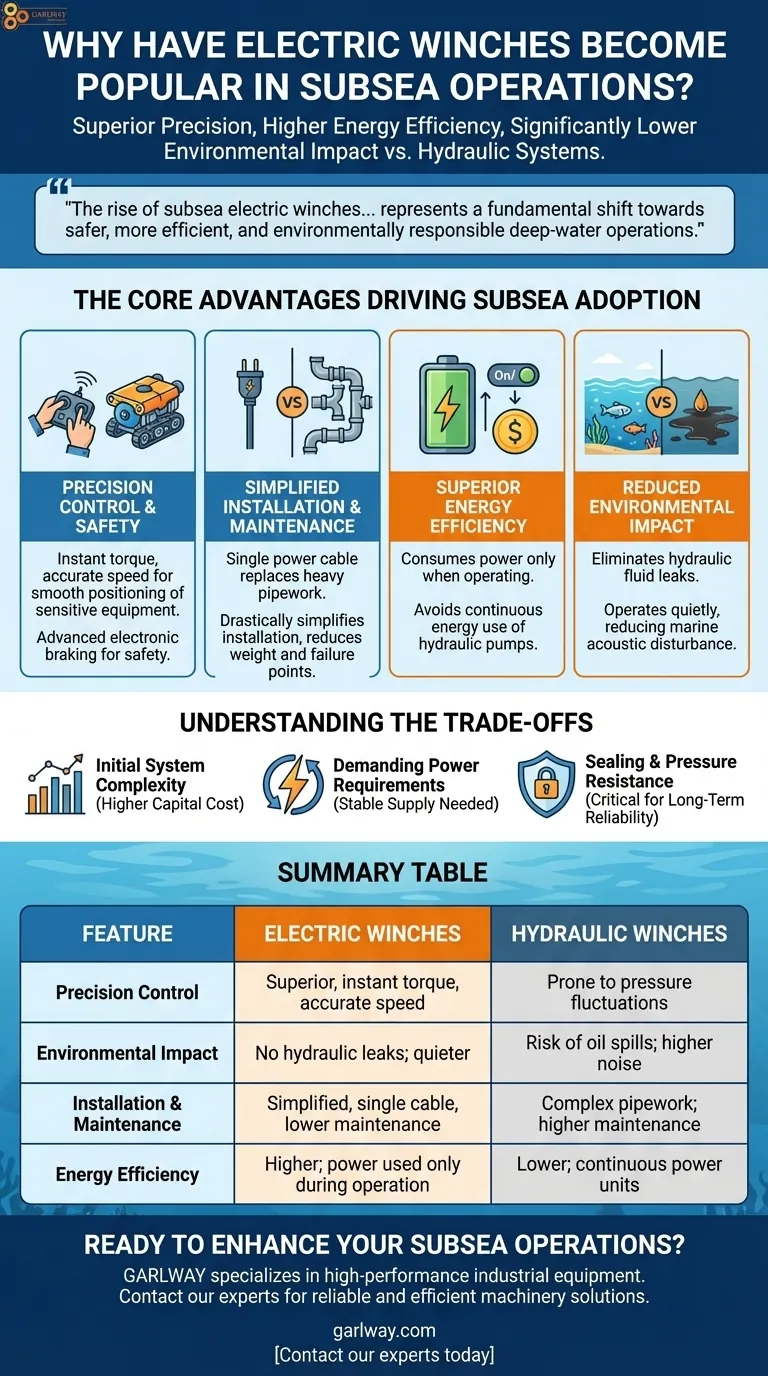
Related Products
- Electric 120V Boat Winch by Badlands
- Electric and Hydraulic Winch for Heavy Duty Applications
- Small Electric Winch 120V and 240V for Compact Applications
- 12000 lb Electric Boat Trailer Winch with Windlass Anchor Warn
- Electric Hoist Winch Boat Anchor Windlass for Marine Applications
People Also Ask
- How do electric boat winches work? Unlock Effortless Launching & Retrieval
- How much current does an electric boat winch draw? Plan Your Electrical System for Peak Performance
- Can I run a winch straight from a battery? Essential Power Setup for Safe Operation
- What are the types of electric winches available? Choose the Right Winch for Your Job
- What are the uses of electric winches in mining and tunneling? Enhance Safety and Efficiency Underground