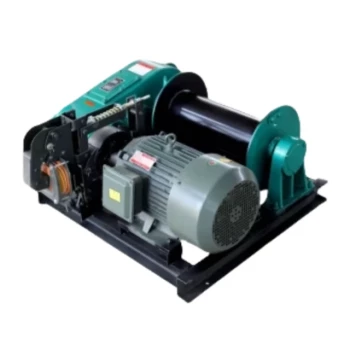
At its core, hydraulic fluid is the lifeblood of a hydraulic winch. It is the medium that transmits immense power from the vehicle's engine to the winch motor, enabling it to pull heavy loads. This fluid is also responsible for cooling the system during strenuous, continuous operation and lubricating its internal components.
The role of hydraulic fluid extends far beyond simple power. It defines the winch's primary advantages: the ability to handle punishing duty cycles without overheating and to deliver consistent, unwavering pulling power.
How Fluid Delivers Raw Power
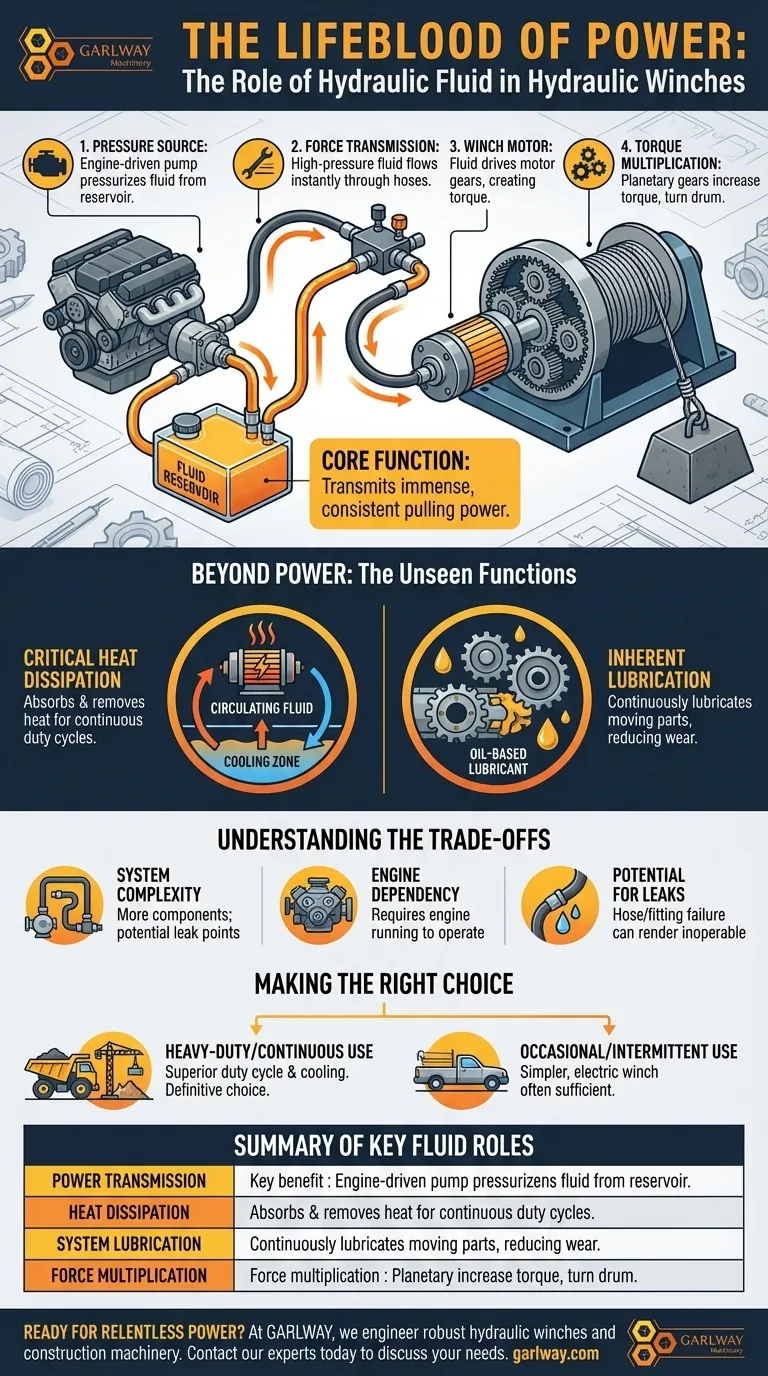
A hydraulic winch operates by converting fluid pressure into mechanical force. The hydraulic fluid is the essential link in this entire chain of events.
The Source of Pressure
It begins with a pump, often the vehicle's own power steering pump. This pump draws hydraulic fluid from a reservoir and puts it under intense pressure.
Transmitting Force
This high-pressure fluid is then channeled through reinforced hoses to a control valve. Because the fluid is virtually incompressible, it transmits this pressure instantly and efficiently over the length of the hose.
Driving the Winch Motor
When the operator activates the winch, the control valve directs the pressurized fluid into the winch's hydraulic motor. The force of the fluid pushes against gears or vanes inside the motor, causing it to rotate with significant torque.
From Rotation to Pull
This rotation is then fed into a planetary gear set. This gearbox reduces the speed of the motor's rotation but multiplies its torque, providing the immense, slow, and steady force required to turn the winch drum and pull the cable.
Beyond Power: The Unseen Functions of the Fluid
The most obvious role of the fluid is power transmission, but its other functions are just as critical to the winch's performance and longevity.
Critical Heat Dissipation
Winching generates a tremendous amount of heat. Unlike an electric winch which can quickly overheat, a hydraulic system uses the circulating fluid to absorb heat from the motor and carry it away, dissipating it back at the reservoir. This allows for much longer and more frequent pulls without risk of thermal damage.
Inherent Lubrication
The hydraulic fluid itself is an oil-based lubricant. As it flows through the system, it continuously lubricates all moving parts within the pump, control valve, and motor, dramatically reducing wear and extending the operational life of the entire system.
Understanding the Trade-offs
While powerful, hydraulic systems are not without their complexities. Understanding their limitations is key to using them effectively.
System Complexity
A hydraulic winch involves more components than its electric counterpart, including a pump, high-pressure lines, a reservoir, and control valves. This complexity can increase installation difficulty and introduce more potential points for leaks or failure.
Engine Dependency
The hydraulic pump is almost always driven by the vehicle's engine. This means the engine must be running for the winch to operate. An electric winch, by contrast, can run directly off the battery for short periods without the engine.
Potential for Leaks
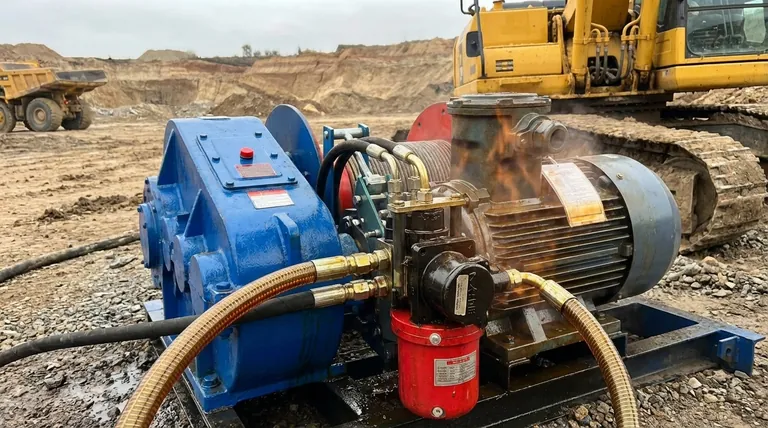
High-pressure hoses and fittings can fail or loosen over time, leading to fluid leaks. A significant leak will not only create a mess but will render the winch inoperable until it is repaired.
Making the Right Choice for Your Goal
Your specific application determines whether a hydraulic system's benefits outweigh its complexities.
- If your primary focus is heavy-duty, commercial, or continuous recovery: The superior duty cycle and cooling of a hydraulic winch make it the definitive choice.
- If your primary focus is occasional, intermittent use and simpler installation: An electric winch is often a more practical and cost-effective solution.
Ultimately, understanding the central role of hydraulic fluid allows you to leverage the immense and reliable power these systems provide.
Summary Table:
| Function | Key Benefit |
|---|---|
| Power Transmission | Delivers immense, consistent pulling force from the engine to the winch. |
| Heat Dissipation | Allows for long, continuous duty cycles without overheating. |
| System Lubrication | Reduces wear on internal components, extending the winch's lifespan. |
| Force Multiplication | Works with planetary gears to convert high-speed rotation into high-torque pulling. |
Ready to harness the relentless power of a hydraulic winch for your toughest jobs?
At GARLWAY, we specialize in engineering robust construction machinery, including high-performance hydraulic winches, concrete mixers, and batching plants, trusted by construction companies and contractors worldwide. Our hydraulic systems are built for demanding applications, offering the durability and continuous operation your projects require.
Contact our experts today to discuss your specific needs and discover how GARLWAY's reliable equipment can become a cornerstone of your operational success.
Visual Guide
Related Products
- Hydraulic Winding Engine Harbor Freight Winch
- Electric and Hydraulic Winch for Heavy Duty Applications
- Electric Hoist Winch Boat Anchor Windlass for Marine Applications
- Electric 120V Boat Winch by Badlands
- 12000 lb Electric Boat Trailer Winch with Windlass Anchor Warn
People Also Ask
- What vehicles commonly use hydraulic winches? For Industrial Trucks Needing Unmatched Power
- What are the features of hydraulic winches? Unmatched Power and Continuous Duty for Heavy Loads
- What preventive measures can be taken to avoid oil leakage in hydraulic winches? Ensure Long-Term Reliability
- What does 'power out' mean in a hydraulic winch? Achieve Absolute Control When Lowering Heavy Loads
- How do hydraulic winches assist in agriculture and farming? Boost Power & Reliability for Your Farm