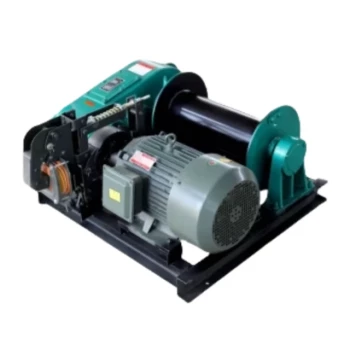
At their core, hydraulic winches are defined by three key features: immense power, exceptional durability, and the ability to perform continuous, heavy-duty work. They operate using pressurized hydraulic fluid rather than electricity, making them the definitive choice for the most demanding industrial, commercial, and military applications.
A hydraulic winch trades the simplicity of an electric model for unparalleled power and the capacity for continuous operation under heavy loads. It is not just a stronger tool; it is a different class of tool designed for scenarios where failure is not an option.
The Source of Unmatched Performance
A hydraulic winch's features stem directly from its power source. Instead of an electric motor, it uses a hydraulic motor driven by pressurized fluid, typically supplied by a vehicle's power steering pump or a dedicated hydraulic power unit.
Immense Power and Torque
Hydraulic systems excel at generating tremendous force. This allows hydraulic winches to handle incredibly heavy loads, often far beyond the capacity of even the most powerful electric winches.
They possess a very high power-to-size ratio, delivering more pulling force from a more compact unit compared to electric alternatives.
The Continuous Duty Cycle Advantage
This is the most significant operational feature. Unlike electric winches that can overheat during long, hard pulls, hydraulic winches can run continuously without risk of thermal damage.
The circulating hydraulic fluid naturally dissipates heat, making them ideal for long-duration recovery operations or industrial applications where the winch is in constant use.
Built for the Harshest Conditions
Hydraulic winches are engineered for reliability in environments where other equipment would fail. Their design prioritizes robustness and resilience over convenience.
Exceptional Durability
These winches are built to withstand punishing jobs. Their components are robust, and with proper maintenance and replacement of worn parts, they are designed to last for a very long time.
Wide Operating Temperature Range
Hydraulic systems are famously resilient to extreme temperatures. They can function optimally in a broad range, from -50° to +100° C, where electric motor components might struggle or fail.
Suitability for Hazardous Environments
Because they do not rely on high-current electrical systems, hydraulic winches are inherently safer in hazardous locations where an electrical spark could be catastrophic.
Understanding the Trade-offs
The power and durability of a hydraulic winch come with specific requirements and considerations. These are not drawbacks but rather inherent characteristics of their design.
The Need for a Hydraulic Power Source
A hydraulic winch cannot operate on its own. It must be connected to a hydraulic power source, which requires a vehicle or power pack equipped with a hydraulic pump and fluid reservoir. This can make installation more complex than a simple electrical hookup.
Higher Initial Cost
The robust engineering, precision components, and powerful nature of hydraulic winches mean they typically have a higher purchase price than comparable electric models.
Potentially Complex Operation
While providing excellent control, hydraulic systems can be less straightforward for inexperienced users. Achieving variable speed and fine control requires familiarity with the hydraulic power unit's operation.
Making the Right Choice for Your Goal
Selecting the correct winch type depends entirely on the demands of your specific application.
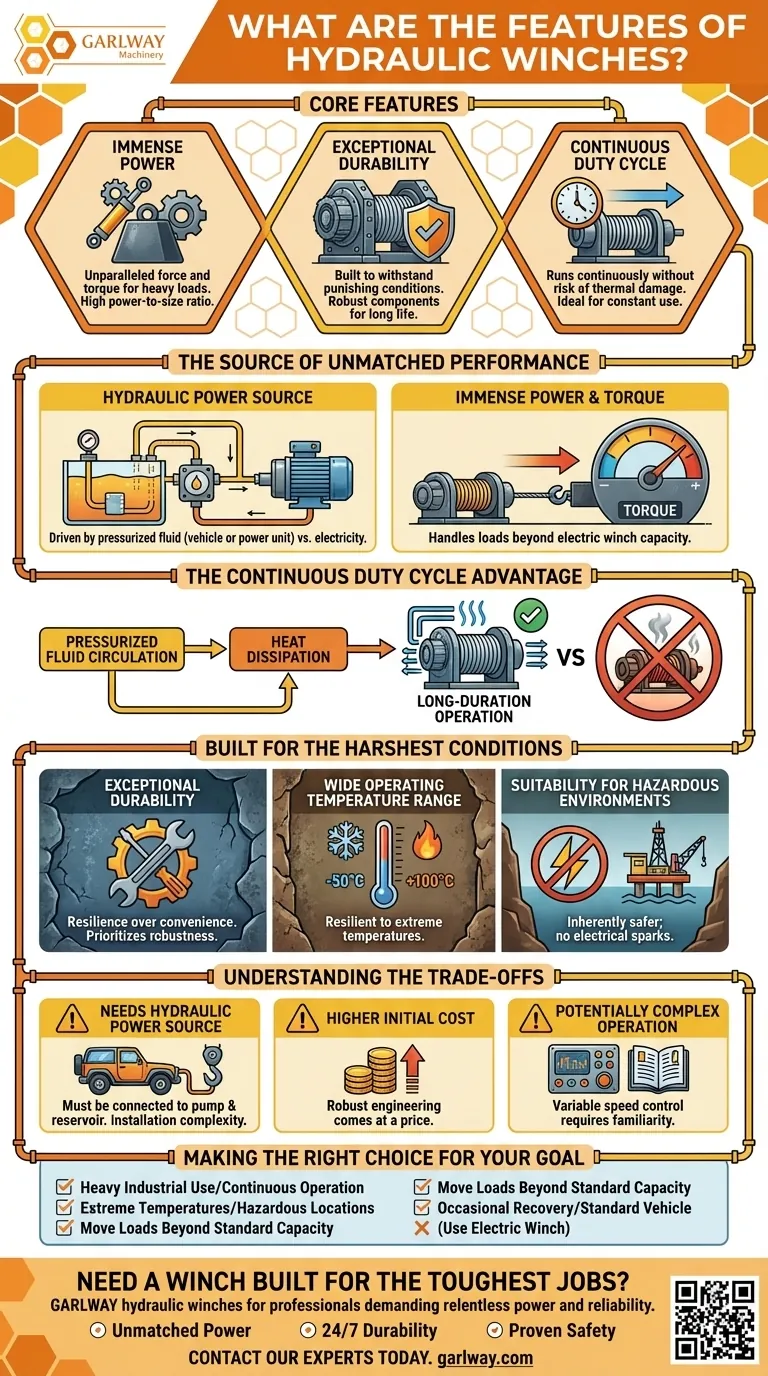
- If your primary focus is heavy industrial use or continuous operation: A hydraulic winch is the only suitable choice for its power and resistance to overheating.
- If you work in extreme temperatures or hazardous locations: The inherent safety and resilience of a hydraulic system provide unmatched reliability.
- If you need to move loads beyond the capacity of standard winches: A hydraulic winch offers the raw torque and pulling power required for the biggest jobs.
- If your need is for occasional recovery on a standard vehicle without a hydraulic system: An electric winch is the more practical and cost-effective solution.
Ultimately, choosing a hydraulic winch is a commitment to a professional-grade system built for power and endurance.
Summary Table:
| Feature | Key Advantage | Ideal Application |
|---|---|---|
| Immense Power & Torque | High power-to-size ratio; handles loads beyond electric winches. | Heavy industrial lifting, large-scale recovery. |
| Continuous Duty Cycle | No overheating; can run for extended periods without stopping. | Long-duration pulls, constant industrial use. |
| Exceptional Durability | Robust components built to withstand punishing conditions. | Mining, construction, marine, and military use. |
| Wide Temperature Range | Operates reliably from -50°C to +100°C. | Arctic exploration, desert operations, foundries. |
| Hazardous Environment Safe | No electrical sparks; ideal for volatile atmospheres. | Oil & gas, chemical plants, mining. |
Need a Winch Built for the Toughest Jobs?
Hydraulic winches from GARLWAY are engineered for professionals who demand relentless power and reliability. If your projects involve continuous heavy lifting, extreme environments, or hazardous conditions, our hydraulic winches are the definitive solution.
We provide construction companies and contractors worldwide with robust machinery that delivers:
- Unmatched Power: Handle the largest loads with confidence.
- 24/7 Durability: Keep your operations running without downtime.
- Proven Safety: Operate safely in the most demanding locations.
Let's discuss your specific needs. Contact our experts today to find the perfect hydraulic winch for your application and ensure your equipment never holds you back.
Visual Guide
Related Products
- Hydraulic Winding Engine Harbor Freight Winch
- Electric and Hydraulic Winch for Heavy Duty Applications
- Electric Hoist Winch Boat Anchor Windlass for Marine Applications
- Electric 120V Boat Winch by Badlands
- 12000 lb Electric Boat Trailer Winch with Windlass Anchor Warn
People Also Ask
- What role does hydraulic fluid play in hydraulic winches? It's the Lifeblood of Your Heavy-Duty Pulling Power
- What vehicles commonly use hydraulic winches? For Industrial Trucks Needing Unmatched Power
- What preventive measures can be taken to avoid oil leakage in hydraulic winches? Ensure Long-Term Reliability
- What does 'power out' mean in a hydraulic winch? Achieve Absolute Control When Lowering Heavy Loads
- How do hydraulic winches assist in agriculture and farming? Boost Power & Reliability for Your Farm