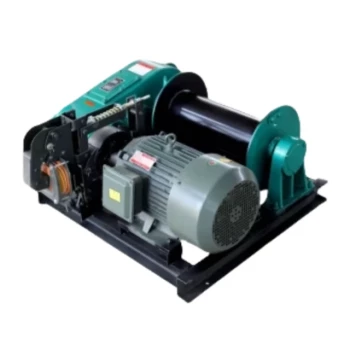
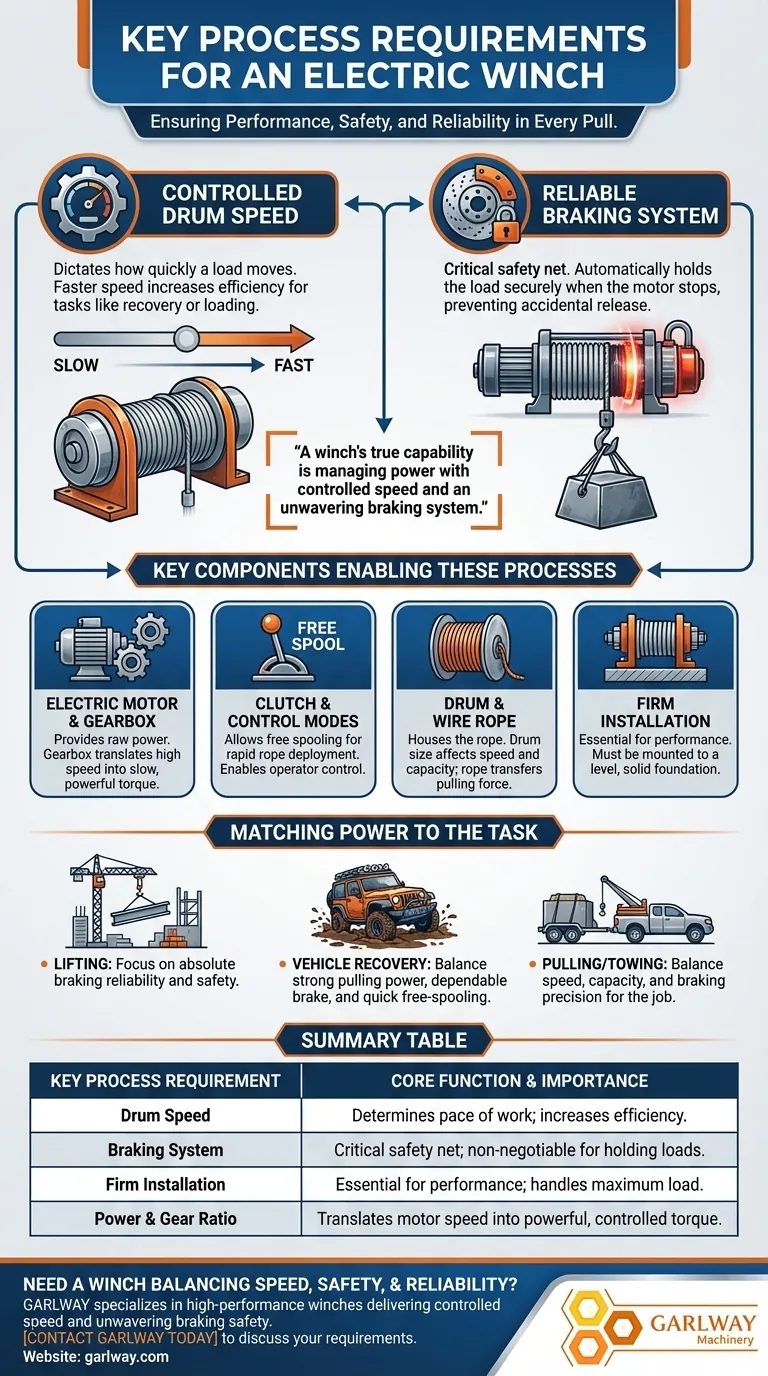
When evaluating an electric winch for any task, the two most critical process requirements are its drum speed, which dictates how quickly it can move a load, and the absolute safety and reliability of its braking system, which ensures that the load can be held securely. These two factors are the foundation of both the winch's performance and its operational safety.
A winch's true capability is not measured by its pulling power alone, but by its ability to manage that power with controlled speed and an unwavering braking system. These core requirements transform raw force into a safe and efficient tool.
The Core Functions: Speed and Control
An electric winch's purpose is to pull or lift heavy loads. To do this effectively, it must master two fundamental processes: moving the load at a controlled pace and holding it securely in place.
Drum Speed: The Pace of Work
The speed of the winch drum directly determines how fast the wire rope is pulled in or let out. This is the primary measure of the winch's operational efficiency.
A faster drum speed means tasks like vehicle recovery or loading equipment can be completed more quickly. The diameter of the drum itself is a key factor influencing this speed.
Braking System: The Critical Safety Net
The braking system is arguably the most important safety component. Its primary job is to automatically engage and hold the load securely whenever the motor is not actively pulling.
A reliable, automatic brake prevents the catastrophic failure of a load being accidentally released. This is non-negotiable for both lifting and pulling applications, ensuring the safety of personnel and equipment.
Key Components That Enable These Processes
Several core components work together to meet the requirements of controlled speed and secure braking. Understanding how they interact provides a complete picture of the winch's operation.
The Electric Motor and Gearbox
The electric motor, typically powered by a 12-volt source like a vehicle battery, provides the raw power. However, this power is refined by the gearbox.
Winches use high gear ratios to translate the motor's high speed into slow, powerful torque. This gearing is what creates the immense pulling force and governs the final speed of the drum.
The Clutch and Control Modes
The clutch allows the drum to be disengaged from the gearbox, a feature known as "free spooling" or "freewheeling." This enables an operator to pull the rope out by hand quickly, which is essential for rapid setup.
Most winches "power in" to pull a load but rely on free-spooling or gravity to let the line out. Very few models offer a "power out" function for a motor-controlled release, which highlights the critical role of the brake in managing the load.
The Drum and Wire Rope
The cylindrical drum is where the wire rope or synthetic cable is wound. Its size affects not only the winding speed but also how much rope the winch can hold.
The rope itself is the medium that transfers the pulling force from the winch to the load, making its condition and strength critical to the entire operation.
Understanding Operational Requirements
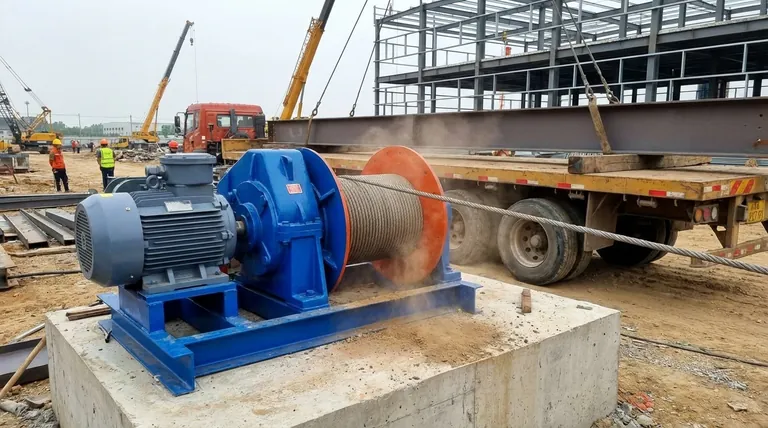
Beyond the internal mechanics, the winch's environment and installation are crucial process requirements for achieving safe and reliable performance.
A Firm and Level Installation
The effectiveness of any winch is immediately compromised if it is not installed correctly. It must be mounted to a level, solid foundation or frame.
An insecure connection can lead to failure under load, regardless of how well-designed the winch itself is. The installation must be firm enough to handle the maximum pulling capacity of the unit.
Matching Power to the Task
While winches are highly versatile tools used for lifting, pulling, and towing, the specific application matters. The demands of static industrial lifting are different from the dynamic pulls required in off-road vehicle recovery.
Understanding your primary use case helps determine the right balance of speed, pulling capacity, and braking precision required for the job.
Making the Right Choice for Your Application
To select and operate a winch correctly, you must align its capabilities with your primary goal.
- If your primary focus is speed and efficiency: Prioritize a winch with a higher rated drum speed, but verify its braking system is robust enough for your typical loads.
- If your primary focus is safety in heavy lifting: The absolute reliability and responsiveness of the automatic braking system is your most critical requirement.
- If your primary focus is vehicle recovery: Seek a balance of strong pulling power, a dependable brake, and the ability to free-spool the line out quickly for fast deployment.
Ultimately, understanding that speed and braking are the core process requirements empowers you to use this powerful tool with both efficiency and confidence.
Summary Table:
| Key Process Requirement | Core Function & Importance |
|---|---|
| Drum Speed | Determines the pace of work; faster speed increases efficiency for tasks like vehicle recovery. |
| Braking System | The critical safety net; an automatic, reliable brake is non-negotiable for holding loads securely. |
| Firm Installation | Essential for performance; the winch must be mounted on a level, solid foundation to handle maximum load. |
| Power & Gear Ratio | The motor and gearbox translate high-speed rotation into powerful, controlled torque for pulling. |
Need a winch that perfectly balances speed, safety, and reliability for your projects?
GARLWAY specializes in high-performance construction machinery, offering robust electric winches designed for the demanding needs of construction companies and contractors globally. Our winches deliver the controlled drum speed and unwavering braking safety detailed in this article.
Contact GARLWAY today to discuss your specific requirements and ensure your operations are both efficient and safe.
Visual Guide
Related Products
- Electric 120V Boat Winch by Badlands
- Electric and Hydraulic Winch for Heavy Duty Applications
- Small Electric Winch 120V and 240V for Compact Applications
- 12000 lb Electric Boat Trailer Winch with Windlass Anchor Warn
- Electric Hoist Winch Boat Anchor Windlass for Marine Applications
People Also Ask
- How do electric boat winches work? Unlock Effortless Launching & Retrieval
- How much current does an electric boat winch draw? Plan Your Electrical System for Peak Performance
- Can I run a winch straight from a battery? Essential Power Setup for Safe Operation
- What are the types of electric winches available? Choose the Right Winch for Your Job
- What are the uses of electric winches in mining and tunneling? Enhance Safety and Efficiency Underground