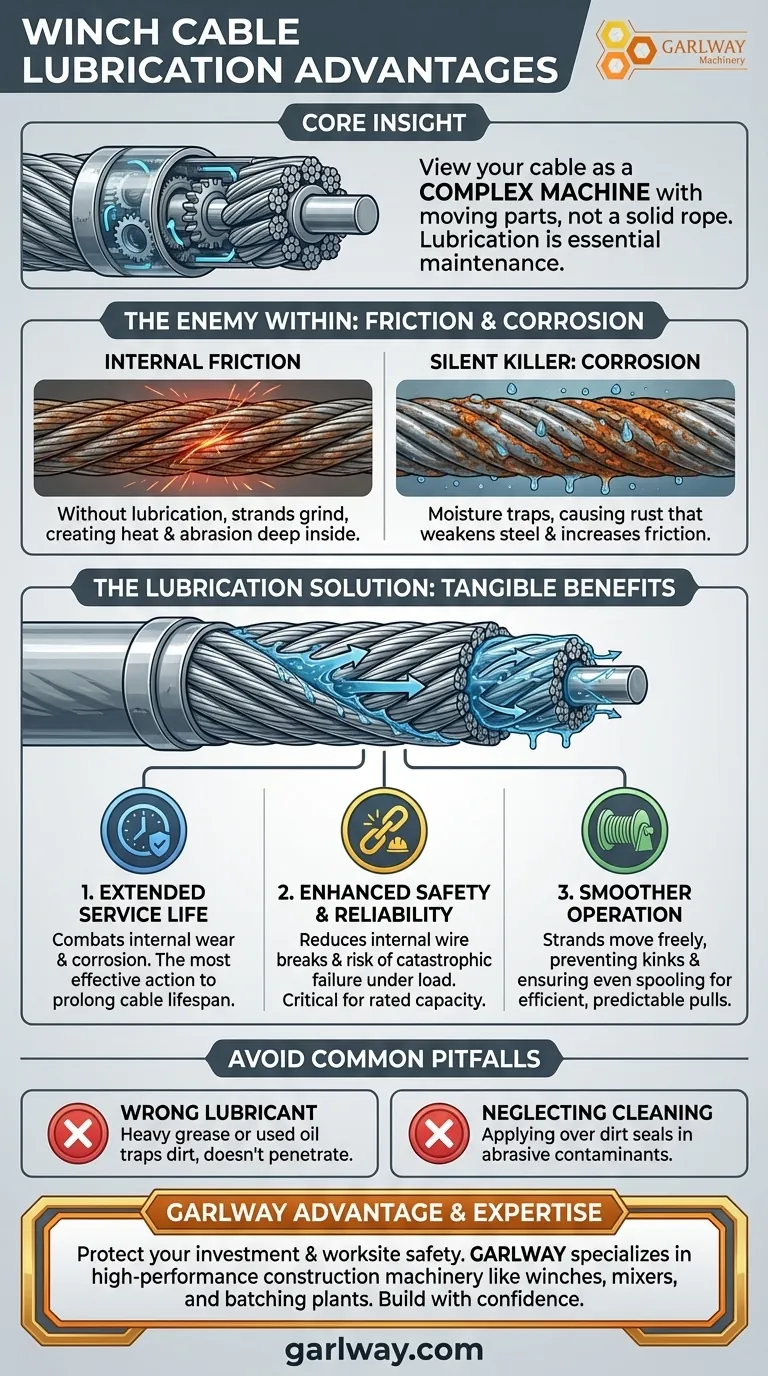
At its core, using a wire rope lubricant on a winch cable provides two critical advantages that work in tandem. It protects the individual steel strands from corrosion and dramatically reduces the internal friction created when the cable bends and straightens under load.
The essential insight is to view your steel winch cable not as a solid rope, but as a complex machine with hundreds of moving parts. Lubrication is the maintenance that allows this machine to function safely and avoid destroying itself from the inside out.
How a Winch Cable Works (and Fails)
To understand the benefits of lubrication, you first need to understand how a steel cable is constructed and what forces are working against it during operation.
The Enemy Within: Internal Friction
A steel winch cable is composed of many individual wires twisted into strands, which are then wound around a central core.
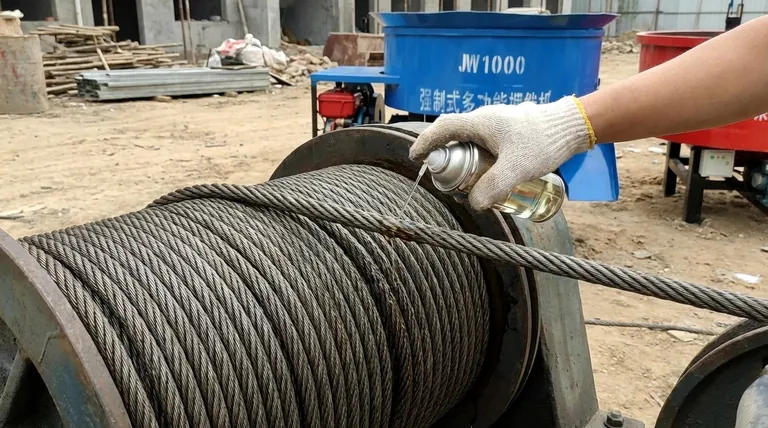
When the cable is spooled, bent over a fairlead, or put under tension, these individual wires and strands must slide against one another. Without lubrication, this movement creates significant friction and heat, leading to abrasion and wear deep inside the cable where it cannot be seen.
The Silent Killer: Corrosion
Moisture and contaminants can become trapped between the cable's strands. This creates the perfect environment for rust to form.
Corrosion not only weakens the steel directly but also increases internal friction, as the rough, rusted surfaces grind against each other. A rusty cable is a brittle and dangerously unpredictable cable.
Why the Core is Critical
The core of the wire rope is its foundation. A proper lubricant must be fluid enough to penetrate past the outer strands and reach this core, protecting it from moisture and ensuring the entire rope remains pliable.
The Tangible Benefits of Proper Lubrication
Applying the right lubricant isn't just a maintenance task; it's a fundamental part of ensuring the equipment performs as expected over its entire service life.
Extended Service Life
By mitigating internal friction and preventing corrosion, lubrication is the single most effective action you can take to prolong the lifespan of your winch cable. It directly combats the primary causes of degradation.
Enhanced Safety and Reliability
A well-lubricated cable is far less likely to suffer from internal wire breaks that can lead to catastrophic failure under load. Regular lubrication is a critical safety protocol, ensuring the cable can handle its rated capacity.
Smoother and More Predictable Operation
Lubrication allows the strands to move freely, helping the cable spool more evenly onto the winch drum. It reduces the chances of kinking and ensures the cable runs smoothly through the fairlead, leading to a more efficient and less frustrating recovery or pull.
Common Pitfalls to Avoid
While lubrication is critical, using the wrong product or method can be counterproductive. True expertise means understanding the nuances.
Using the Wrong Type of Lubricant
Heavy, tacky greases or used motor oil should be avoided. These products often coat the outside of the cable without penetrating to the core. Worse, they can trap abrasive dirt and moisture against the steel.
Neglecting Cable Cleaning
Applying new lubricant over a dirty, gritty cable simply seals in the contaminants that cause abrasion. Always clean the cable thoroughly before re-lubricating.
The Myth of "Maintenance-Free" Steel
Steel rope is incredibly durable and resists external abrasion well. This can create a false sense of security. However, its durability is entirely dependent on preventing the internal friction and corrosion that lubrication is designed to stop.
Making the Right Choice for Your Goal
Your approach to cable maintenance should align with your primary objective for the equipment.
- If your primary focus is safety and reliability: Treat regular inspection and lubrication as a non-negotiable part of your pre-operation checklist to prevent unexpected failure.
- If your primary focus is maximizing equipment lifespan: Understand that lubrication is the most cost-effective way to protect your investment and defer the high cost of cable replacement.
Ultimately, proper lubrication transforms your winch cable from a simple consumable into a durable, reliable piece of machinery.
Summary Table:
| Advantage | Key Benefit |
|---|---|
| Extended Service Life | Combats internal wear and corrosion, the primary causes of cable degradation. |
| Enhanced Safety | Reduces risk of internal wire breaks and catastrophic failure under load. |
| Smoother Operation | Allows strands to move freely, preventing kinks and ensuring even spooling. |
| Core Protection | Penetrates to the cable's core to prevent moisture buildup and rust. |
Protect your investment and ensure worksite safety with GARLWAY's expertise.
Just as proper lubrication is critical for your winch cable's performance, using the right equipment is fundamental to your project's success. GARLWAY specializes in high-performance construction machinery, including durable winches, concrete mixers, and batching plants designed for the demanding needs of construction companies and contractors globally.
Let us help you build with confidence and efficiency. Contact our experts today to discuss your specific requirements and discover the GARLWAY advantage.
Visual Guide
Related Products
- Hydraulic Winding Engine Harbor Freight Winch
- Electric Hoist Winch Boat Anchor Windlass for Marine Applications
- Small Electric Winch 120V and 240V for Compact Applications
- Warn Winch Windlass Boat Trailer Winch
- Quick Windlass Portable Winch for Truck and Boat Best Boat Winch
People Also Ask
- What role does hydraulic fluid play in hydraulic winches? It's the Lifeblood of Your Heavy-Duty Pulling Power
- What vehicles commonly use hydraulic winches? For Industrial Trucks Needing Unmatched Power
- What are the features of hydraulic winches? Unmatched Power and Continuous Duty for Heavy Loads
- What preventive measures can be taken to avoid oil leakage in hydraulic winches? Ensure Long-Term Reliability
- What does 'power out' mean in a hydraulic winch? Achieve Absolute Control When Lowering Heavy Loads