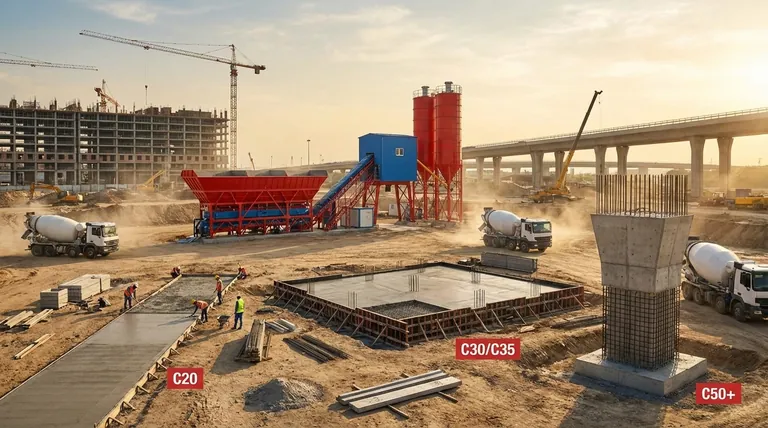
In commercial concrete mixing plants, the most common grades produced are designated by a "C" rating, which directly corresponds to their strength. These typically include C20 for simple bedding, C30 for general floors and walls, C35 for more robust structural elements like beams, and C50 for high-stress infrastructure projects such as bridges and viaducts.
The "C" grade of concrete is not just a label; it is a direct measure of its compressive strength in megapascals (MPa) after 28 days. Understanding this simple principle is the key to selecting the right material for any construction application, from a simple path to a major overpass.
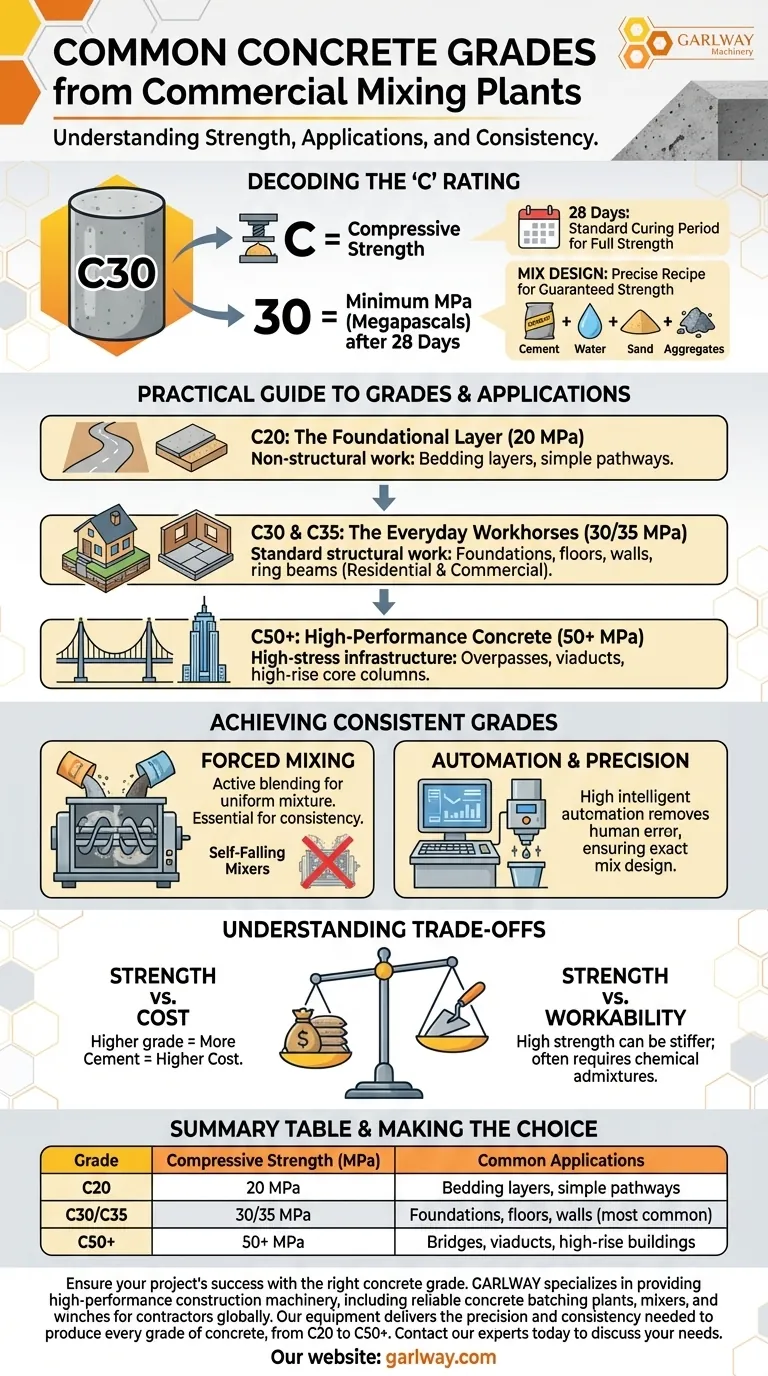
What a Concrete Grade Actually Means
To make an informed decision, it's essential to understand what the numbers and letters signify. This designation is the core language of concrete performance.
Decoding the "C" Rating
The "C" in a grade like C30 stands for Compressive Strength.
The number that follows indicates the minimum strength the concrete must achieve after a standard curing period, measured in megapascals (MPa).
Therefore, C30 concrete is engineered and tested to withstand a compressive force of at least 30 MPa.
Why 28 Days is the Standard
Concrete doesn't gain its full strength immediately. It cures and hardens over time in a chemical process called hydration.
The 28-day mark is the universally accepted industry standard for testing concrete to verify it has reached its specified design strength.
The Role of the Mix Design
Achieving a specific grade is the result of a precise recipe. The commercial mixing plant uses high levels of automation to precisely control the ratio of cement, water, sand, and aggregates.
This "mix design" is what guarantees that a batch of C35 concrete will reliably meet its strength requirements.
A Practical Guide to Common Concrete Grades
While plants can produce a wide range of custom mixes, a few standard grades cover the vast majority of construction needs.
C20: The Foundational Layer
This is a relatively low-strength grade. It's not typically used for major structural elements.
Its primary applications include non-structural work such as bedding layers (blinding), creating a level base for foundations, or for simple concrete pathways.
C30 & C35: The Everyday Workhorses
These are the most versatile and widely used concrete grades in the industry.
You will find C30 and C35 used for most standard structural work, including foundations, floor slabs, walls, and ring beams in both residential and commercial buildings.
C50 and Beyond: High-Performance Concrete
When a structure must withstand immense loads, a high-performance grade is required.
C50 and higher grades are specified for demanding civil engineering projects like overpasses, viaducts, and the core structural columns of high-rise buildings.
How Mixing Plants Achieve Consistent Grades
The reliability of a concrete grade comes from the technology and methodology used within the mixing plant.
The Importance of Forced Mixing
Modern plants universally use forced mixers. These powerful machines actively blend the components to ensure a perfectly uniform and homogeneous mixture.
This is critical for consistent strength, as poorly mixed concrete will have weak spots. The older, less effective "self-falling" (gravity) mixers are now rarely used.
Automation and Precision
Commercial plants are characterized by their high intelligent automation. Computers control the weighing and dispensing of every ingredient for each batch.
This removes human error and ensures that every truckload of a specific grade has the exact same mix design, leading to predictable and reliable performance.
Understanding the Trade-offs
Choosing a concrete grade isn't just about picking the strongest option. There are critical factors to balance for a successful project.
Strength vs. Cost
The primary driver of concrete strength is the cement content. Higher-grade concrete requires more cement, making it significantly more expensive.
Using a C50 mix where a C30 would suffice is a common and costly form of over-engineering.
Strength vs. Workability
Extremely high-strength concrete mixes can sometimes be stiffer and more difficult to pour and finish.
Special chemical admixtures are often required to ensure these high-performance mixes remain workable enough for construction crews to handle effectively.
Making the Right Choice for Your Project
Selecting the appropriate grade is a matter of matching the material's performance to the engineering demands of the application.
- If your primary focus is non-structural work: C20 is typically the most economical and effective choice for bedding, blinding, and simple slabs.
- If your primary focus is standard residential or commercial construction: C30 or C35 will provide the necessary structural integrity for the vast majority of foundations, walls, and floors.
- If your primary focus is high-stress infrastructure: C50 or a higher, specially designed grade is essential to meet the safety and durability requirements for bridges and tall buildings.
Ultimately, understanding these concrete grades empowers you to select the precise material performance your project demands.
Summary Table:
| Grade | Compressive Strength (MPa) | Common Applications |
|---|---|---|
| C20 | 20 MPa | Bedding layers, simple pathways |
| C30/C35 | 30/35 MPa | Foundations, floors, walls (most common) |
| C50+ | 50+ MPa | Bridges, viaducts, high-rise buildings |
Ensure your project's success with the right concrete grade. GARLWAY specializes in providing high-performance construction machinery, including reliable concrete batching plants, mixers, and winches for contractors and construction companies globally. Our equipment delivers the precision and consistency needed to produce every grade of concrete, from C20 to C50+. Contact our experts today to discuss your specific needs and find the perfect solution for your next build.
Visual Guide
Related Products
- HZS35 Small Cement Concrete Mixing Batch Plant
- Commercial Electric Concrete Mixer Machine HZS 50 Small Batch Plant for Sale
- Construction Products Concrete Plant Machine Mixing Concrete Mixer
- HZS120 Ready Mix Concrete Batching Plant Commercial Mud Cement Mixer
- HZS75 Concrete Batching Plant Cement Mixer Price Concrete Mixer Bunnings Mixing Plant
People Also Ask
- Why buy concrete batch plant parts only from the manufacturer? Protect Your Investment and Maximize Uptime
- Why is proper maintenance important for a concrete batch mix plant? Maximize Uptime & Profitability
- What is the advantage of a mobile concrete batching plant? Achieve On-Site Production & Total Control
- What are the advantages and disadvantages of concrete batching plants? Maximize Quality & Efficiency
- What are the two methods of material charging in a concrete mixing station? Single vs. Multiple Charging Explained