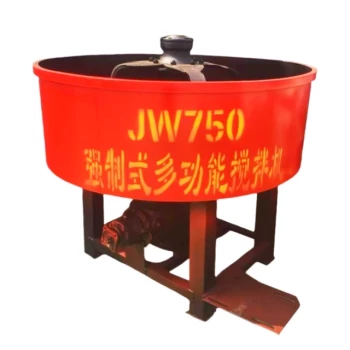
At its core, the process flow of a concrete batching plant is a highly automated and sequential operation designed for precision. It begins with feeding raw materials into the system, accurately weighing each component according to a specific recipe, thoroughly mixing them, and finally discharging the finished concrete for transport.
The primary goal of the batching process is not simply to mix materials, but to guarantee that every single batch of concrete meets exact engineering specifications. This is achieved through systematic weighing and automated control, ensuring consistency, strength, and quality in the final product.
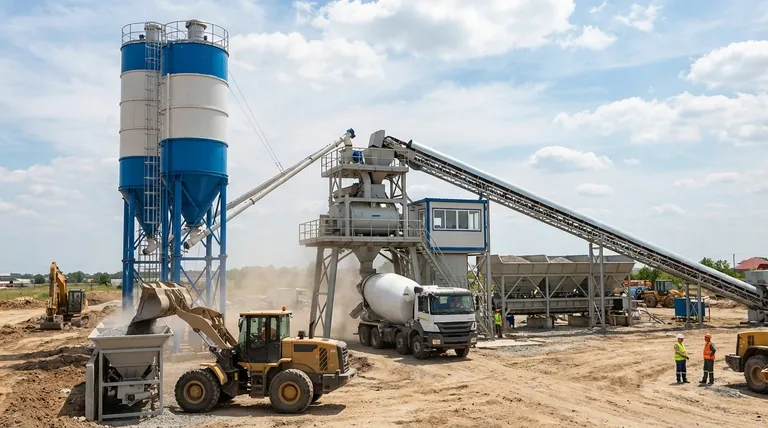
The Anatomy of a Batching Plant: Key Components
Before detailing the process, it's important to understand the main components that make it possible. Each part has a specific function in the production chain.
Material Storage and Silos
Raw materials are stored in dedicated containers. Aggregates like sand and stone are kept in large aggregate bins, while binding materials like cement and fly ash are stored in vertical silos to protect them from moisture.
The Weighing System (The Batcher)
This is the heart of the plant's accuracy. Separate weighing hoppers, or batchers, are used for aggregates, cement, water, and additives. These systems use precise load cells to measure each ingredient to the exact kilogram required by the mix design.
Conveying and Transfer Systems
Once weighed, materials must be moved to the mixer. This is typically done using conveyor belts for aggregates and enclosed screw conveyors for cement to prevent dust and material loss.
The Central Mixer
This is where the homogenization occurs. The weighed aggregates, cement, water, and additives are combined and blended in a powerful mixer for a predetermined amount of time until a uniform consistency is achieved.
The Control System (The Brain)
The entire operation is orchestrated by a central control panel, often running on a Programmable Logic Controller (PLC). This system stores mix recipes, controls all motors and gates, ensures accurate measurements, and logs production data.
The Step-by-Step Batching Process
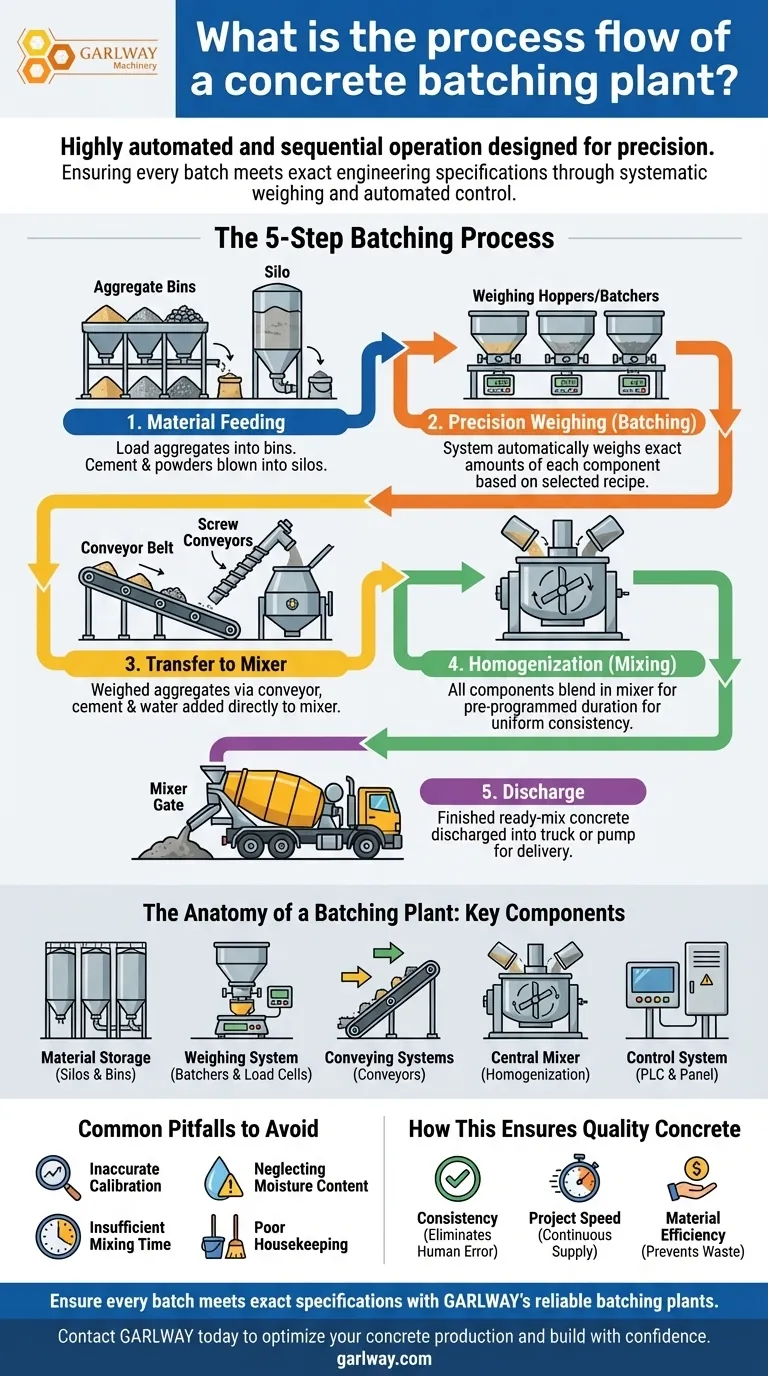
The entire sequence, from weighing materials to discharging the final mix, is known as the batch time. It follows a clear and repeatable five-step flow.
Step 1: Material Feeding
The process begins by loading aggregates into their respective storage bins. Cement and other powders are pneumatically blown into the storage silos.
Step 2: Precision Weighing (Batching)
The plant operator selects a specific mix recipe from the control panel. The system then automatically weighs the precise amount of each aggregate, cement, water, and chemical additive in their separate batchers.
Step 3: Transfer to the Mixer
The weighed aggregates are discharged onto a conveyor belt that transports them to the central mixer. Simultaneously, the weighed cement, water, and additives are added directly into the mixer.
Step 4: Homogenization (Mixing)
With all components loaded, the mixer begins its cycle. It blends the materials for a specific, pre-programmed duration to ensure every particle is coated and the mixture is completely uniform.
Step 5: Discharge
Once the mixing cycle is complete, the ready-mix concrete is discharged through a gate at the bottom of the mixer. It flows directly into a waiting transit mixer truck or a concrete pump, ready for delivery to the construction site.
Common Pitfalls to Avoid
Even with an automated system, operational oversight is critical. The integrity of the entire process depends on maintaining accuracy and control at key points.
Inaccurate Material Calibration
The weighing systems must be regularly calibrated. An uncalibrated system will consistently produce incorrect batches, leading to concrete that fails to meet required strength specifications, even if the PLC recipe is correct.
Neglecting Moisture Content
The moisture present in aggregates (especially sand) can significantly alter the water-to-cement ratio, which is the most critical factor for concrete strength. Modern control systems can compensate for this, but it requires proper sensor maintenance and setup.
Insufficient Mixing Time
Cutting the mixing time short to increase output is a common mistake. This results in poorly homogenized concrete with inconsistent properties, compromising the quality of the final structure.
Poor Housekeeping
Allowing dust and material buildup can interfere with the mechanical operation of gates, conveyors, and weighing sensors. Regular cleaning and maintenance, including the dust collection systems, are essential for reliable operation.
How This Process Ensures Quality Concrete
The structured flow of a batching plant is designed to translate an engineer's design into a physical product with minimal variance.
- If your primary focus is consistency: The automated weighing and PLC-controlled process eliminates the human error common in manual mixing, ensuring every batch matches the specified design.
- If your primary focus is project speed: A well-run plant provides a continuous and reliable supply of high-quality concrete, preventing costly delays and downtime on the construction site.
- If your primary focus is material efficiency: Precise batching prevents the waste of expensive materials like cement and additives, directly reducing project costs and environmental impact.
Ultimately, understanding this controlled flow reveals that a batching plant is not just a mixer, but a sophisticated manufacturing system for producing one of the world's most critical building materials.
Summary Table:
| Step | Process | Key Component | Purpose |
|---|---|---|---|
| 1 | Material Feeding | Aggregate Bins & Silos | Store and load raw materials (sand, stone, cement) |
| 2 | Precision Weighing | Weighing Hoppers (Batchers) | Measure each ingredient to exact recipe specifications |
| 3 | Transfer to Mixer | Conveyor Belts & Screw Conveyors | Move weighed materials to the central mixer |
| 4 | Homogenization | Central Mixer | Blend materials uniformly for consistent quality |
| 5 | Discharge | Mixer Discharge Gate | Release finished concrete into transit mixer trucks |
Ensure every batch of your concrete meets exact specifications with GARLWAY's reliable batching plants. As a specialist in construction machinery, GARLWAY provides high-performance concrete batching plants, mixers, and winches designed for construction companies and contractors who demand efficiency, consistency, and cost-effectiveness. Our automated systems eliminate human error, reduce material waste, and keep your projects on schedule. Contact GARLWAY today to discuss how our solutions can optimize your concrete production and build with confidence.
Visual Guide
Related Products
- HZS120 Ready Mix Concrete Batching Plant Commercial Mud Cement Mixer
- HZS35 Small Cement Concrete Mixing Batch Plant
- HZS75 Concrete Batching Plant Cement Mixer Price Concrete Mixer Bunnings Mixing Plant
- HZS180 Ready Mix Concrete Plant for Foundations with Sand and Cement
- Commercial Electric Concrete Mixer Machine HZS 50 Small Batch Plant for Sale
People Also Ask
- What is a ready mix concrete batching plant? The Engine of Modern Construction
- What is the name of the machine used in ready mix? Unpacking the Complete Concrete System
- What is the core component of a concrete batching plant? The Mixer Unit Defines Your Concrete Quality
- What are the types of concrete mixers used in batching plants? Choose the Right Mixer for Your Project
- What are the advantages and disadvantages of concrete batching plants? Maximize Quality & Efficiency