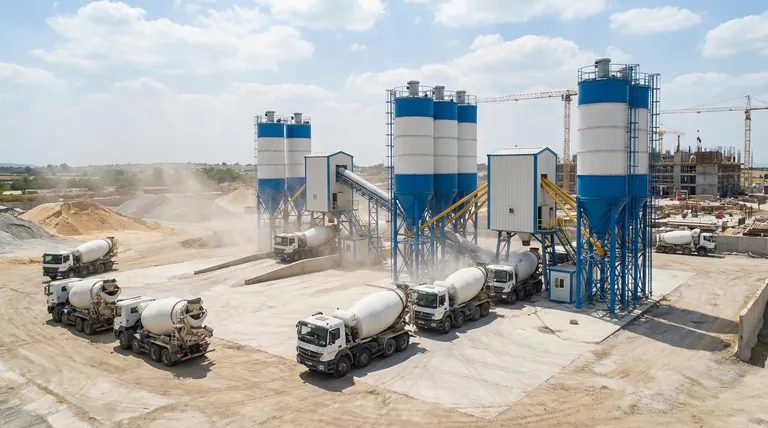
In short, ready-mix concrete (RMC) is concrete that is manufactured in a specialized batching plant to a precise recipe, then delivered to a construction site in a freshly mixed, ready-to-use state. It is a mixture of cement, water, and aggregates (such as sand, gravel, or crushed stone) that is proportioned at the plant rather than on the job site.
The fundamental value of ready-mix concrete is the shift from variable, labor-intensive site mixing to precise, quality-controlled off-site manufacturing. This approach prioritizes material consistency and project speed over the manual processes of traditional methods.
The Core Principle: Centralized Manufacturing
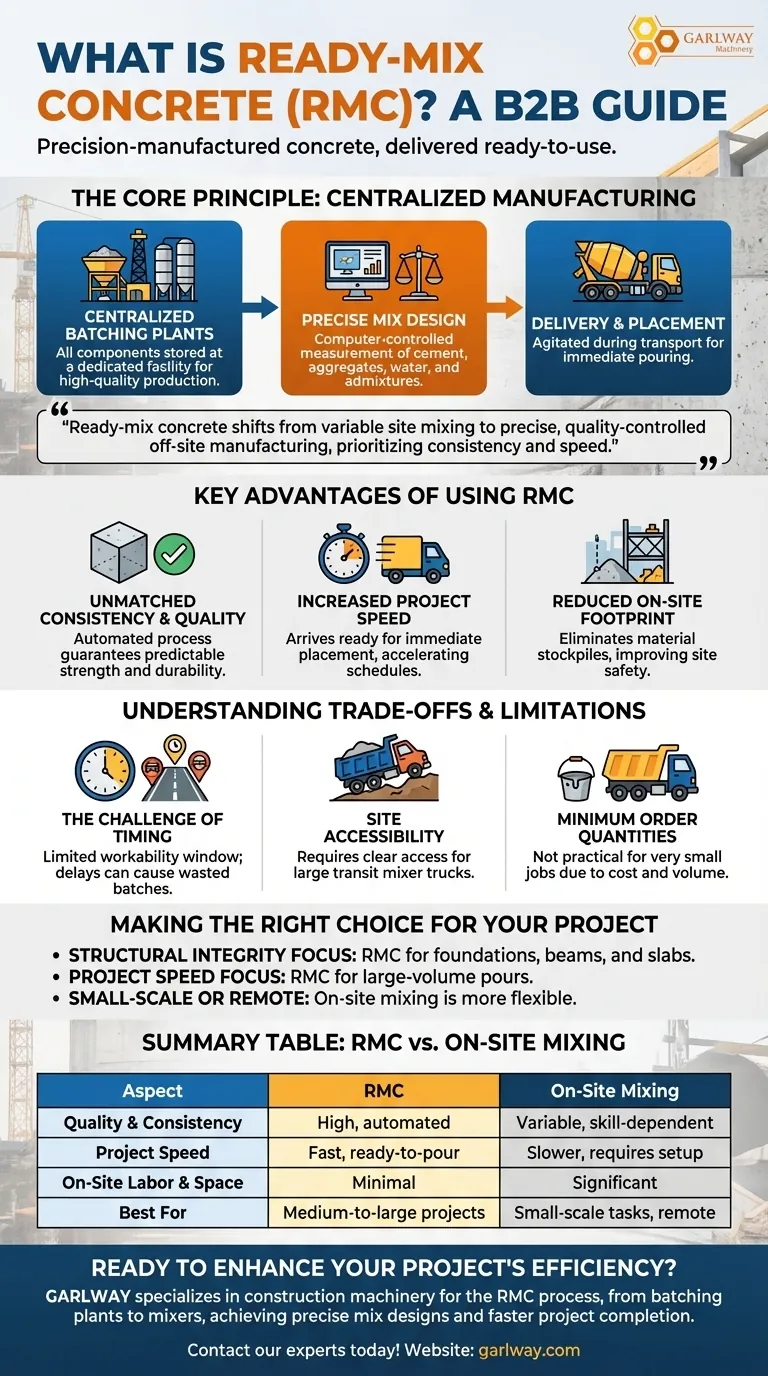
Ready-mix concrete fundamentally changes the logistics of how concrete is produced and used on a project. The process is defined by control and precision from start to finish.
Centralized Batching Plants
Instead of stockpiling raw materials on a congested job site, all components are stored at a dedicated facility. This plant is designed for one purpose: producing high-quality concrete.
Precise Mix Design
Computer-controlled systems weigh and measure each ingredient—cement, aggregates, water, and any chemical admixtures—according to a specific engineering formula. This automated process removes the guesswork and human error common in on-site mixing.
Delivery and Placement
The precisely batched concrete is discharged into a transit mixer truck. The truck's rotating drum agitates the mixture during transportation, ensuring it remains workable and does not begin to set before it arrives at the project site for pouring.
Key Advantages of Using RMC
Opting for ready-mix concrete offers significant, measurable benefits for most medium-to-large scale construction projects.
Unmatched Consistency and Quality
Because the batching process is automated and occurs in a controlled environment, each truckload of concrete has the exact same properties. This guarantees predictable strength, durability, and finish, which is critical for structural elements like foundations, columns, and slabs.
Increased Project Speed
RMC eliminates the time and labor required for on-site material handling, mixer setup, and manual batching. The concrete arrives ready for immediate placement, allowing crews to pour large volumes quickly and accelerate the overall project schedule.
Reduced On-Site Footprint
Using RMC frees up valuable space on the construction site. There is no need for large, messy stockpiles of sand and gravel or bags of cement, which simplifies site logistics and improves safety and cleanliness.
Understanding the Trade-offs and Limitations
While powerful, RMC is not the ideal solution for every situation. Its primary limitations are tied to logistics and timing.
The Challenge of Timing
Fresh concrete has a limited window of workability, typically around 90 minutes. Any unforeseen delays, such as heavy traffic or on-site preparation issues, can cause the entire batch to become unusable, resulting in significant wasted cost and time.
Site Accessibility
Large, heavy transit mixer trucks require clear and stable access to the pour location. This can be a major constraint for projects in remote areas, on difficult terrain, or in dense urban environments with narrow streets.
Minimum Order Quantities
RMC is produced and delivered in large volumes. For very small jobs, such as setting a single fence post or a minor repair, the cost associated with a minimum order and delivery fee makes traditional on-site mixing far more practical.
Making the Right Choice for Your Project
Your decision between ready-mix and site-mixed concrete depends entirely on your project's scale, location, and technical requirements.
- If your primary focus is structural integrity and quality: RMC is the superior choice for foundations, beams, and slabs where consistent, verifiable strength is non-negotiable.
- If your primary focus is project speed and labor efficiency: RMC provides a clear advantage for large-volume pours, minimizing on-site labor and accelerating the construction timeline.
- If your primary focus is a small-scale task or a remote location: On-site mixing offers greater flexibility and is more cost-effective when site access is poor or the required volume is very low.
Ultimately, choosing ready-mix concrete is an investment in precision, quality control, and efficiency for any serious construction endeavor.
Summary Table:
| Aspect | Ready-Mix Concrete (RMC) | Traditional On-Site Mixing |
|---|---|---|
| Quality & Consistency | High, computer-controlled batching | Variable, dependent on crew skill |
| Project Speed | Fast, delivered ready-to-pour | Slower, requires on-site setup and mixing |
| On-Site Labor & Space | Minimal labor and footprint | Significant labor and material storage needed |
| Best For | Medium-to-large scale projects, critical structural work | Small-scale tasks, remote locations with poor access |
Ready to enhance your project's quality and efficiency with reliable concrete?
GARLWAY specializes in providing construction machinery that supports the entire RMC process, from batching plants to mixers. Our solutions help construction companies and contractors globally achieve precise mix designs, consistent quality, and faster project completion.
Contact our experts today to discuss how our concrete batching plants and mixers can bring precision and power to your next project!
Visual Guide
Related Products
- Ready Mixer Machine for Construction Ready Mix Machinery
- Portable Ready Mix Concrete Mixer Equipment
- HZS180 Ready Mix Concrete Plant for Foundations with Sand and Cement
- HZS120 Ready Mix Concrete Batching Plant Commercial Mud Cement Mixer
- HZS25 Best Cement Mixer for Quick Mix Concrete at Bunnings
People Also Ask
- What are the purposes of low-speed agitation in truck mixers? Preserve Concrete Quality During Transit
- How is ready-mixed concrete transported from a commercial concrete batching plant? Ensuring Quality & Timely Delivery
- What are the main ingredients mixed in a concrete mixer truck? Master the Formula for Strong Concrete
- In what ways does a mobile concrete mixer improve quality control and consistency? Achieve Superior On-Site Concrete Quality
- What types of construction projects typically use concrete mixer trucks? From Highways to Home Foundations