
The primary benefit of a transit mix plant is its exceptional flexibility. This design, also known as a dry batch plant, loads raw materials like sand, gravel, and cement into a truck mixer. Water is then added, and the concrete is mixed during transport to the job site, allowing for adjustments and serving multiple locations with ease.
A transit mix plant prioritizes adaptability and lower initial cost, making it ideal for projects with variable site conditions or multiple small pours. This stands in contrast to a central mix plant, which prioritizes high-volume production and maximum quality consistency.
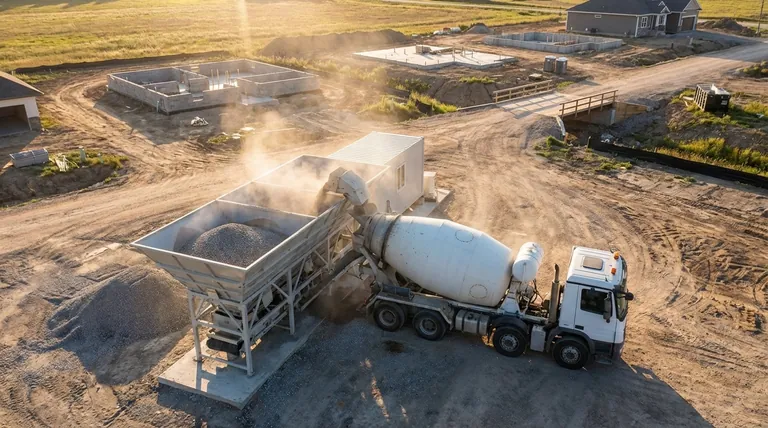
The Core Principle: Mixing in Motion
A transit mix plant operates on a simple but effective principle: separate the batching of dry materials from the wet mixing process. This fundamental difference drives all of its advantages and defines its ideal use cases.
How a Transit Mix Plant Works
At the plant, all the dry ingredients (aggregates and cement) are weighed and batched before being discharged into the concrete mixer truck. The truck's water tank holds the precise amount of water needed. The mixing process begins either at the plant, during transit, or upon arrival at the construction site.
The Key Advantage: Unmatched Flexibility
Because the concrete is not fully mixed until it's ready to be poured, operators have a window to make slight adjustments. This is invaluable for projects spread across different locations or where site conditions may require minor changes to the mix upon arrival.
Lower Initial Investment
Compared to central mix plants, which require large, complex, and costly stationary mixers, transit mix plants have a simpler setup. The primary "mixer" is the truck itself, reducing the plant's overall footprint, complexity, and upfront capital cost.
When Transit Mix Excels: Key Scenarios
The flexibility of this system makes it the superior choice for specific types of construction projects where adaptability is more important than sheer volume.
Projects with Multiple Pour Locations
A single truck can be dispatched from a transit mix plant to serve several small, geographically dispersed job sites. This is highly efficient for residential construction, repairs, or utility work.
Preventing Premature Setting on Long Journeys
For remote job sites, transporting pre-mixed concrete risks it beginning to harden (set) before it can be poured. By keeping the materials dry until closer to the destination, transit mix plants eliminate this problem entirely.
Variable Site Conditions
If a sudden change in temperature or humidity at the job site affects the concrete's required consistency, the truck operator can make a final adjustment to the water content just before the pour. This level of on-site control is a significant operational advantage.
Understanding the Trade-offs: Transit Mix vs. Central Mix
Choosing a plant type is a matter of aligning the tool with the task. The benefits of a transit mix plant come with inherent trade-offs when compared to a central mix (wet batch) plant.
Quality Control and Consistency
A central mix plant offers superior quality control. All ingredients, including water, are mixed in a large, computer-controlled stationary mixer, ensuring every batch has exceptional uniformity. A transit mix operation relies more on the truck's mixing efficiency and the operator, which can introduce slight variability between loads.
Production Volume and Speed
Central mix plants are built for high-volume, rapid output, making them the standard for large-scale projects like paving or high-rise construction. Transit mix plants are generally slower, as part of the mixing time occurs during transport.
Equipment Wear and Tear
In a transit mix system, the truck's mixer drum is used constantly, leading to more wear and tear on the vehicle's mixing components. In a central mix system, the truck is used purely for transport, which can reduce maintenance on the vehicle fleet.
Making the Right Choice for Your Project
The decision between a transit mix and a central mix plant is a strategic one based on your project's specific goals and constraints.
- If your primary focus is flexibility and serving multiple small sites: The transit mix plant's ability to mix en route and make on-site adjustments is the ideal solution.
- If your primary focus is maximum quality consistency and high-volume output: A central mix plant provides the control and speed necessary for large, demanding projects.
- If your primary focus is minimizing upfront capital investment: The simpler design and smaller footprint of a transit mix plant make it a more cost-effective choice.
Ultimately, understanding your project's core demands will guide you to the most efficient and effective concrete production strategy.
Summary Table:
| Benefit | Key Advantage | Ideal For |
|---|---|---|
| Flexibility | Mix concrete en route to multiple job sites | Projects with variable locations or small pours |
| Cost-Effectiveness | Lower initial investment and simpler setup | Budget-conscious projects and contractors |
| On-Site Control | Adjust water and mix upon arrival | Jobs with changing site conditions or long hauls |
Ready to boost your project's efficiency and flexibility?
For construction companies and contractors, choosing the right equipment is crucial for project success. A GARLWAY transit mix plant delivers the adaptability and cost-efficiency you need to manage multiple sites and variable conditions effectively.
Contact our experts today to discuss how a GARLWAY concrete batching plant can be tailored to your specific needs. Let us help you build smarter.
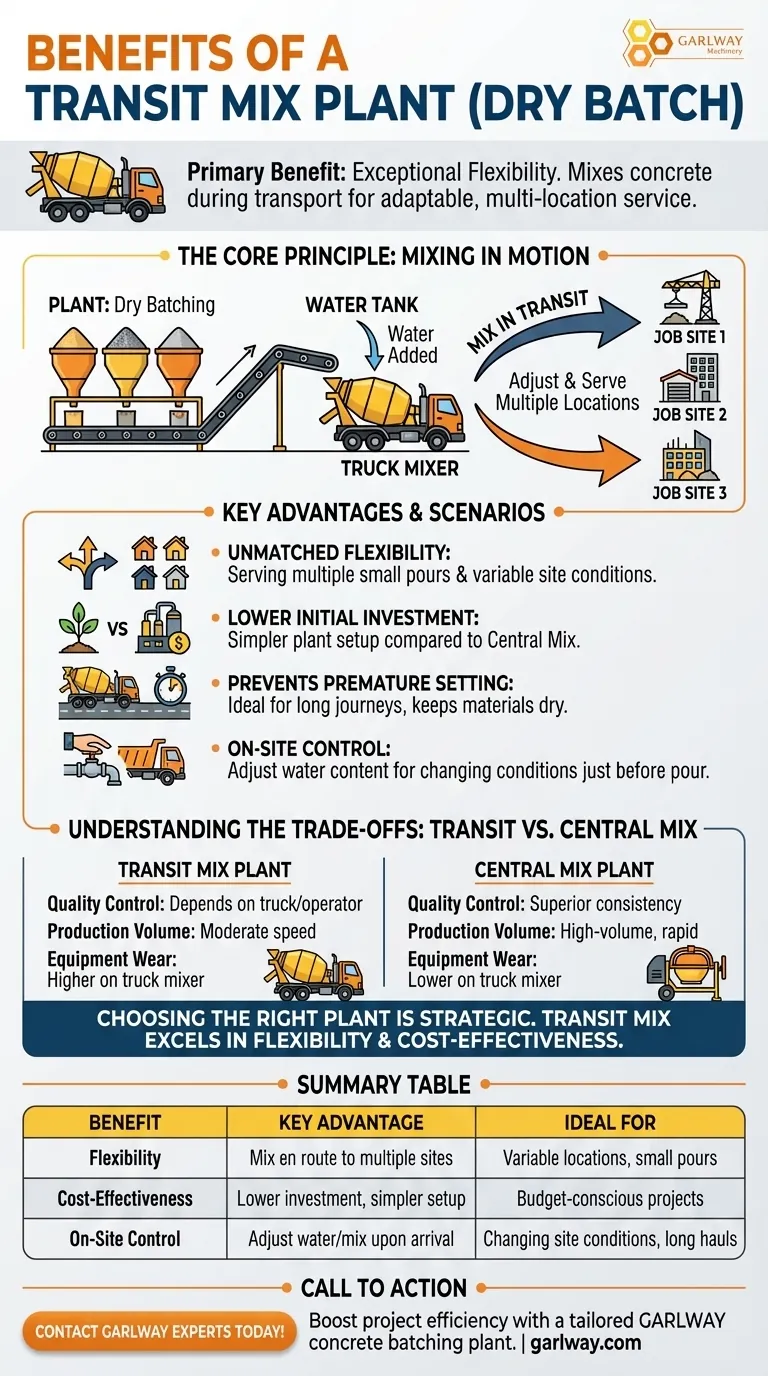
Visual Guide
Related Products
- Ready Mixer Machine for Construction Ready Mix Machinery
- JW1000 Mobile Cement Mixer Concrete Mixer Truck and Batching Plant
- Commercial Electric Concrete Mixer Machine HZS 50 Small Batch Plant for Sale
- HZS35 Small Cement Concrete Mixing Batch Plant
- HZS120 Ready Mix Concrete Batching Plant Commercial Mud Cement Mixer
People Also Ask
- What are the purposes of low-speed agitation in truck mixers? Preserve Concrete Quality During Transit
- How is ready-mixed concrete transported from a commercial concrete batching plant? Ensuring Quality & Timely Delivery
- What are the main ingredients mixed in a concrete mixer truck? Master the Formula for Strong Concrete
- In what ways does a mobile concrete mixer improve quality control and consistency? Achieve Superior On-Site Concrete Quality
- What types of construction projects typically use concrete mixer trucks? From Highways to Home Foundations





