
The primary advantage of using an enclosed material storage yard in a concrete mixing station is a significant reduction in environmental pollution. By physically containing raw materials like sand and gravel, these structures drastically cut down on the dust emissions that are a major issue with traditional open-air yards.
An enclosed storage yard transforms material handling from an open-air environmental liability into a controlled, efficient, and regulatory-compliant operational asset. It's a strategic investment in sustainability and quality control.
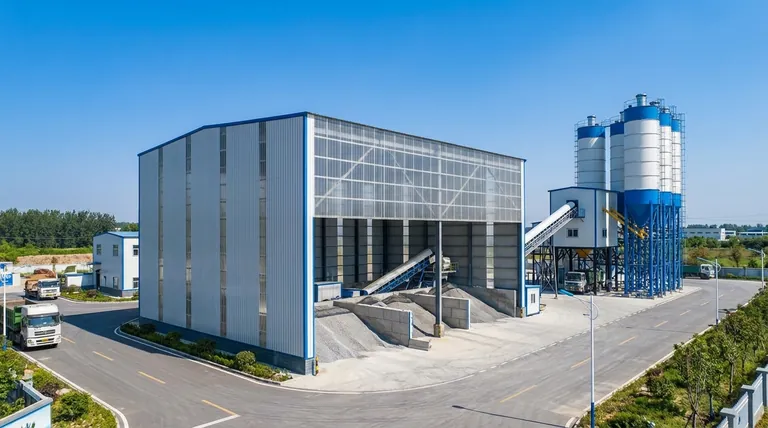
The Core Problem: Uncontrolled Emissions from Open Yards
Open-air storage is the traditional method for housing aggregates, but it comes with inherent and significant downsides. The primary issue is the uncontrolled release of particulate matter into the surrounding environment.
Sources of Dust Pollution
Most dust originates from unwashed raw materials, such as gravel and sand. As these materials are loaded, moved, and exposed to wind, fine particles become airborne, creating a persistent source of pollution.
Environmental and Community Impact
This dust contributes to local air pollution, posing a risk to ecosystems and nearby communities. Operations located near residential or commercial areas often face complaints and regulatory scrutiny due to nuisance dust.
Operational and Safety Risks
Airborne dust creates a hazardous work environment, increasing the risk of respiratory issues for employees. It also settles on machinery, accelerating wear and tear and increasing maintenance costs.
The Enclosed Solution: Gaining Control Over Operations
Enclosing the material yard is the most effective engineering control for managing these issues. It fundamentally changes how the plant interacts with its environment and manages its resources.
Superior Dust Suppression
The structure itself acts as a physical barrier, containing dust at the source. This prevents wind from eroding stockpiles and carrying particulate matter off-site, ensuring a cleaner, safer environment both inside and outside the plant.
Meeting Modern Environmental Regulations
As environmental standards become stricter, enclosed yards are often the most reliable way to ensure compliance. This proactive approach helps avoid fines, operational shutdowns, and damage to a company's reputation.
Protecting Material Quality and Consistency
An enclosure protects aggregates from the elements. Keeping materials dry and free from contamination like leaves or debris leads to a more consistent and higher-quality final concrete product.
Understanding the Trade-offs
While the benefits are clear, adopting an enclosed system requires a careful evaluation of the associated costs and complexities. It is a significant operational upgrade.
Higher Initial Investment
Constructing a large-scale enclosure requires a substantial upfront capital expenditure compared to simply designating an open area for storage. This is often the primary barrier to adoption.
Increased Operational Complexity
Enclosed yards require systems for proper ventilation, lighting, and internal logistics. Managing the flow of materials within a confined space demands more planning than an open yard.
Ongoing Maintenance Requirements
The structure itself requires maintenance to ensure its integrity and effectiveness. This includes regular inspections and cleaning to manage any dust that accumulates internally.
Making the Right Choice for Your Operation
The decision to use an enclosed yard depends on balancing long-term strategic goals with initial capital constraints.
- If your primary focus is environmental compliance and community relations: An enclosed yard is the definitive solution for minimizing your plant's environmental footprint and building public trust.
- If your primary focus is maximizing concrete quality and consistency: An enclosed system protects your raw materials from moisture and contamination, directly improving your final product.
- If your primary focus is minimizing initial capital costs: An open yard is less expensive to establish, but you must be prepared to manage the long-term risks of dust control, regulatory action, and material loss.
Ultimately, choosing an enclosed material yard is a strategic investment in a more sustainable, responsible, and efficient operation.
Summary Table:
| Advantage | Key Benefit |
|---|---|
| Dust Suppression | Contains particulate matter, reducing environmental pollution and health risks. |
| Regulatory Compliance | Helps meet strict environmental standards, avoiding fines and shutdowns. |
| Material Quality | Protects aggregates from moisture and contamination for consistent concrete. |
| Operational Safety | Minimizes respiratory hazards and machinery wear from airborne dust. |
Upgrade your concrete mixing station with GARLWAY's reliable solutions.
As a specialist in construction machinery, GARLWAY provides robust equipment like concrete batching plants designed for efficiency and compliance. An enclosed material storage yard is a key component for sustainable operations. Let us help you reduce environmental impact, enhance product quality, and meet regulatory demands.
Contact GARLWAY today to discuss tailored solutions for your construction business!
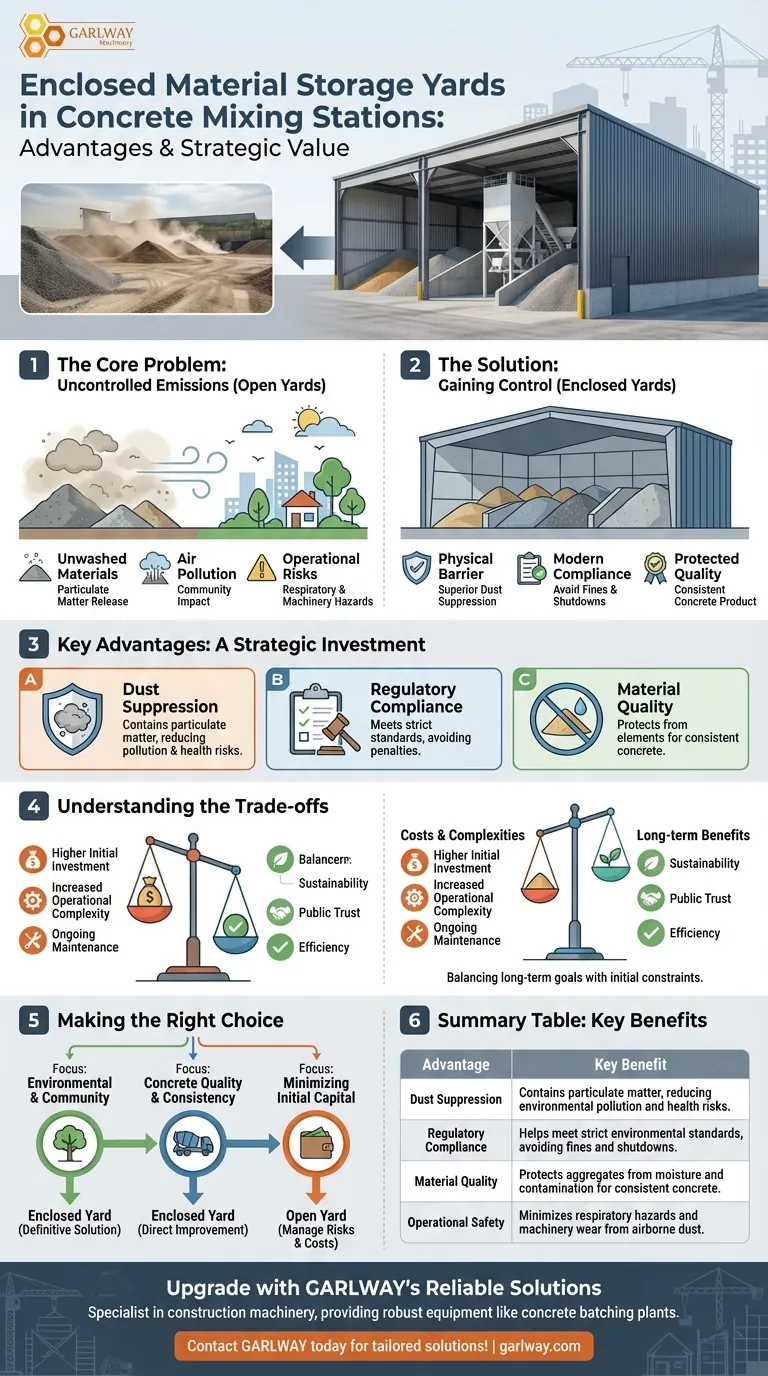
Visual Guide
Related Products
- HZS90 Large Multiquip Concrete Mixers for Construction
- HZS75 Concrete Batching Plant Cement Mixer Price Concrete Mixer Bunnings Mixing Plant
- Portable Concrete Mixer Machine Equipment for Mixing Concrete
- Commercial Electric Concrete Mixer Machine HZS 50 Small Batch Plant for Sale
- HZS35 Small Cement Concrete Mixing Batch Plant
People Also Ask
- What are the types of concrete mixers used in batching plants? Choose the Right Mixer for Your Project
- What is the core component of a concrete batching plant? The Mixer Unit Defines Your Concrete Quality
- What are the different power sources for concrete mixers? Choose the Right Power for Your Project
- What are the main types of concrete mixers? A Guide to Batch, Continuous & More
- What are the main types of concrete mixers mentioned? Find the Perfect Mixer for Your Project





