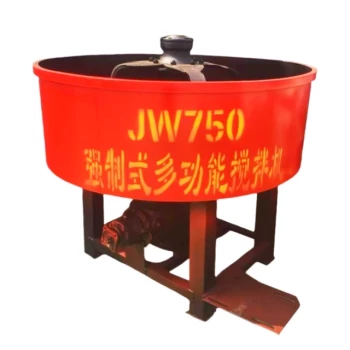
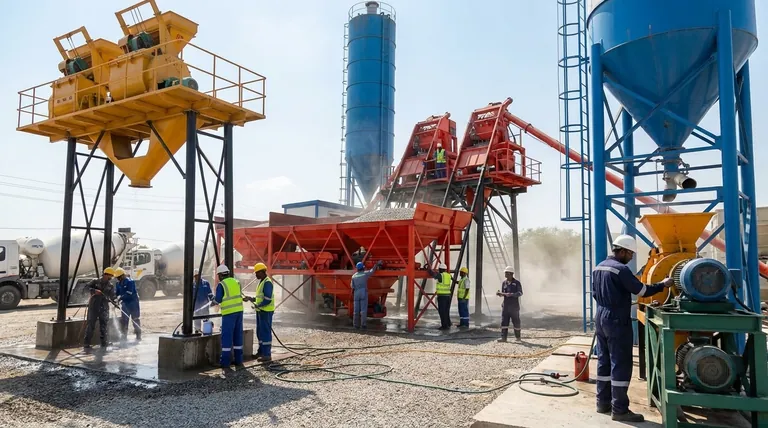
The best practices for maintaining a concrete plant revolve around a systematic and proactive schedule of inspection, cleaning, and preventative repair. This involves daily checks of critical moving parts like conveyors and mixers, weekly calibration of weighing systems, and periodic deep maintenance on components like dust collectors and gearboxes to ensure consistent output and operational safety.
Effective concrete plant maintenance is not a reactive cost center, but a strategic system of proactive checks. This approach directly drives production uptime, ensures consistent product quality, and is the single most important factor in protecting the long-term value of your asset.
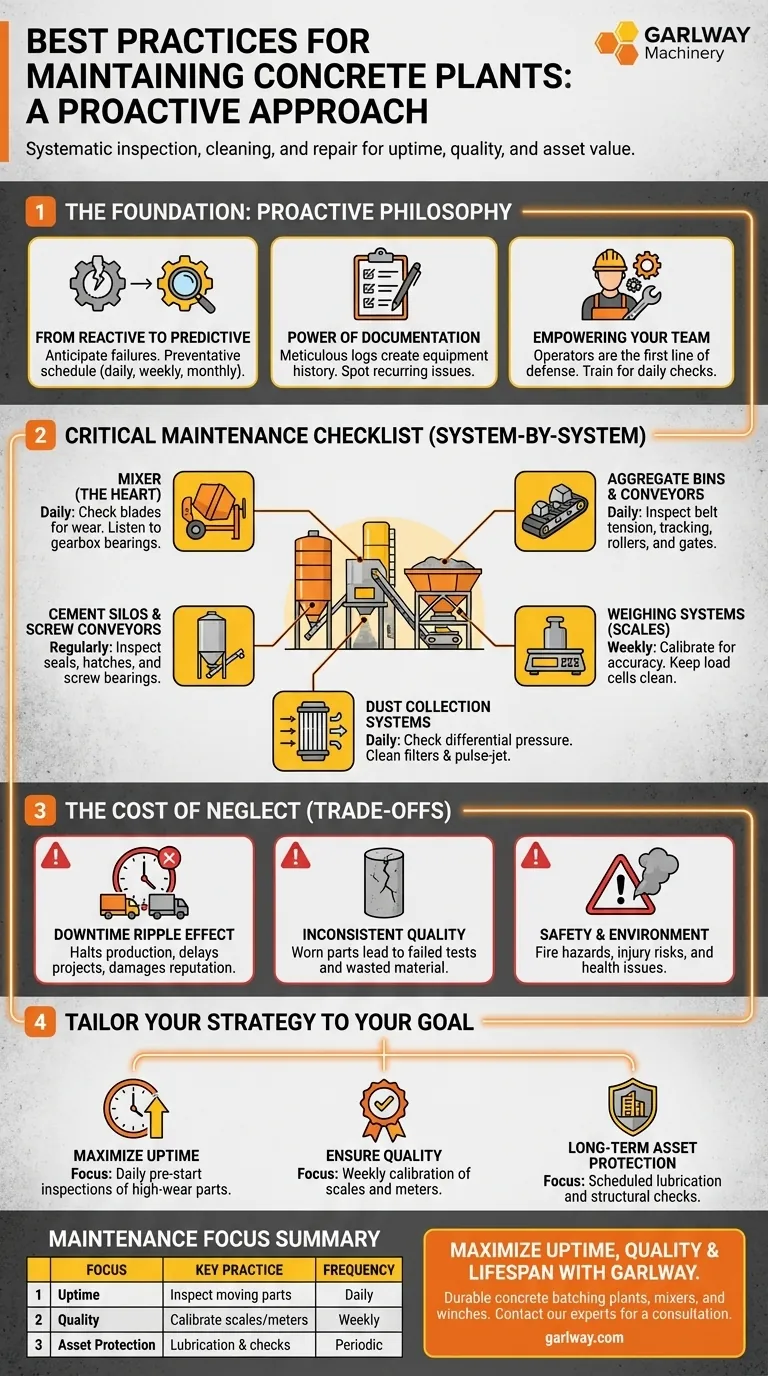
The Foundation: A Proactive Maintenance Philosophy
Moving from a "fix it when it breaks" model to a proactive one is the key to efficiency. This shift in mindset prevents catastrophic failures that halt production and cause cascading project delays.
From Reactive to Predictive
True efficiency comes from anticipating failures before they happen. This means looking for signs of wear, listening for unusual noises, and monitoring performance data.
A preventative maintenance schedule is your roadmap, outlining tasks on a daily, weekly, monthly, and annual basis.
The Power of Documentation
If it isn't written down, it didn't happen. Meticulous logs for all maintenance activities, repairs, and inspections are non-negotiable.
This documentation creates a history for each piece of equipment, helping you spot recurring issues and make informed decisions about future upgrades or replacements.
Empowering Your Team
Your plant operators are the first line of defense. They interact with the equipment daily and are best positioned to notice small changes that signal a developing problem.
Train them not just to operate the machinery, but to perform basic daily checks and understand what to look and listen for. A well-trained operator is your best early-warning system.
The Critical Maintenance Checklist: A System-by-System Breakdown
A comprehensive maintenance plan must address every component of the plant. Each system has unique needs and failure points that require specific attention.
The Mixer: The Heart of the Plant
The mixer is the most critical and high-wear component. Its condition directly dictates the quality of your concrete.
Focus on daily checks of mixer paddles or blades for wear and buildup. Ensure the gearbox oil level is correct and listen for any grinding from the main bearings.
Aggregate Bins and Conveyors
The flow of materials is the lifeblood of your operation. A failure here starves the entire plant.
Inspect conveyor belts daily for tension, tracking, and signs of tearing. Check that all rollers spin freely and listen for bearing noise. Ensure bin gates operate smoothly without sticking.
Cement Silos and Screw Conveyors
Proper cement handling is crucial for safety and batch accuracy.
Regularly inspect silo seals and hatches to prevent moisture intrusion. Check the bearings and flights on screw conveyors (augers) for wear, as this can impact batching speed and accuracy.
Weighing Systems (Batchers and Scales)
Your scales are your cash register. Inaccurate measurements lead to poor quality concrete and financial loss.
Calibration is paramount. Check scale accuracy at least weekly and perform a full professional calibration on a quarterly or semi-annual basis. Keep load cells and pivot points clean and free of debris.
Dust Collection Systems
An effective dust collector is essential for environmental compliance and worker safety.
The most common failure point is clogged or "blinded" filter bags. Check the differential pressure gauge daily and inspect and clean filters according to a strict schedule. Ensure the pulse-jet cleaning system is functioning correctly.
Understanding the Trade-offs: The Cost of Neglect
Deferring maintenance might seem to save money in the short term, but it creates significant financial and operational risks that far outweigh the initial savings.
The Ripple Effect of Downtime
An unexpected plant shutdown doesn't just stop production. It idles expensive trucks and their drivers, delays concrete pours at the job site, and can put entire construction projects behind schedule, damaging your reputation.
Inconsistent Quality and Its Consequences
Worn mixer blades, inaccurate scales, or clogged admixture lines lead to inconsistent batches. This can result in failed quality control tests, forcing you to discard material and replace rejected concrete at your own expense.
The Hidden Dangers: Safety and Environment
A poorly maintained plant is an unsafe plant. Worn electrical wiring creates fire hazards, failed guards on moving parts can cause severe injury, and excessive dust can lead to long-term health issues and environmental fines.
Making the Right Choice for Your Goal
Your maintenance strategy should be tailored to your primary business objectives.
- If your primary focus is maximizing daily uptime: Prioritize daily pre-start inspections of all high-wear components, especially mixer blades, conveyor belts, and boot elevators.
- If your primary focus is ensuring consistent product quality: Emphasize the weekly calibration of scales and water/admixture meters above all else.
- If your primary focus is long-term asset protection: Focus on scheduled lubrication, gearbox oil analysis, and periodic structural integrity checks to extend the operational life of the plant.
Ultimately, a well-maintained plant is not just more reliable; it is the foundation of a profitable and reputable operation.
Summary Table:
| Maintenance Focus | Key Practice | Frequency |
|---|---|---|
| Maximizing Uptime | Inspect mixer blades, conveyor belts, and moving parts | Daily |
| Ensuring Quality | Calibrate weighing systems and water/admixture meters | Weekly |
| Asset Protection | Lubrication, gearbox oil analysis, structural checks | Periodic / Scheduled |
| Safety & Compliance | Check dust collectors, electrical systems, and guards | Daily / Weekly |
Maximize the uptime, quality, and lifespan of your concrete plant with GARLWAY.
As a specialist in construction machinery, GARLWAY provides durable and reliable equipment, including concrete batching plants, mixers, and winches, designed for construction companies and contractors worldwide. Our expertise ensures your operation runs smoothly and profitably.
Contact our experts today for a consultation on optimizing your plant's performance and explore our robust product solutions.
Visual Guide
Related Products
- HZS180 Ready Mix Concrete Plant for Foundations with Sand and Cement
- HZS35 Small Cement Concrete Mixing Batch Plant
- Commercial Electric Concrete Mixer Machine HZS 50 Small Batch Plant for Sale
- HZS120 Ready Mix Concrete Batching Plant Commercial Mud Cement Mixer
- HZS75 Concrete Batching Plant Cement Mixer Price Concrete Mixer Bunnings Mixing Plant
People Also Ask
- What is a ready mix concrete batching plant? The Engine of Modern Construction
- What is the name of the machine used in ready mix? Unpacking the Complete Concrete System
- What systems are included in a ready-mix concrete plant? A Guide to the 6 Core Systems
- How does a ready-mix concrete plant work? A Guide to Efficient, High-Quality Production
- What are the components of a ready mix concrete plant? A Guide to Precision and Efficiency