
The primary advantages of a precast concrete batching plant are superior quality control, increased construction speed, and enhanced safety, all stemming from producing concrete in a controlled, off-site environment. This factory-like approach reduces many of the variables and risks associated with traditional on-site mixing.
A precast concrete batching plant fundamentally transforms concrete production from a variable field operation into a predictable, industrial process. This shift provides unparalleled consistency, which is the true driver behind its key advantages in quality, speed, and overall project efficiency.
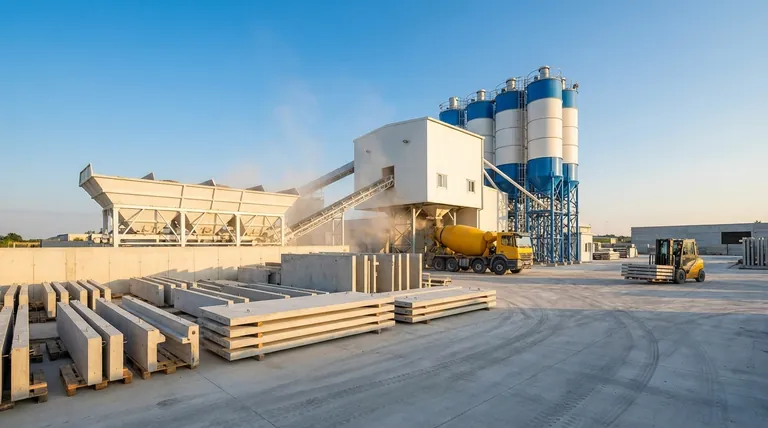
The Core Advantage: A Controlled Factory Environment
Moving concrete production from an open construction site to a dedicated plant creates a controlled environment. This single change is the source of the most significant benefits, impacting everything from material quality to project timelines.
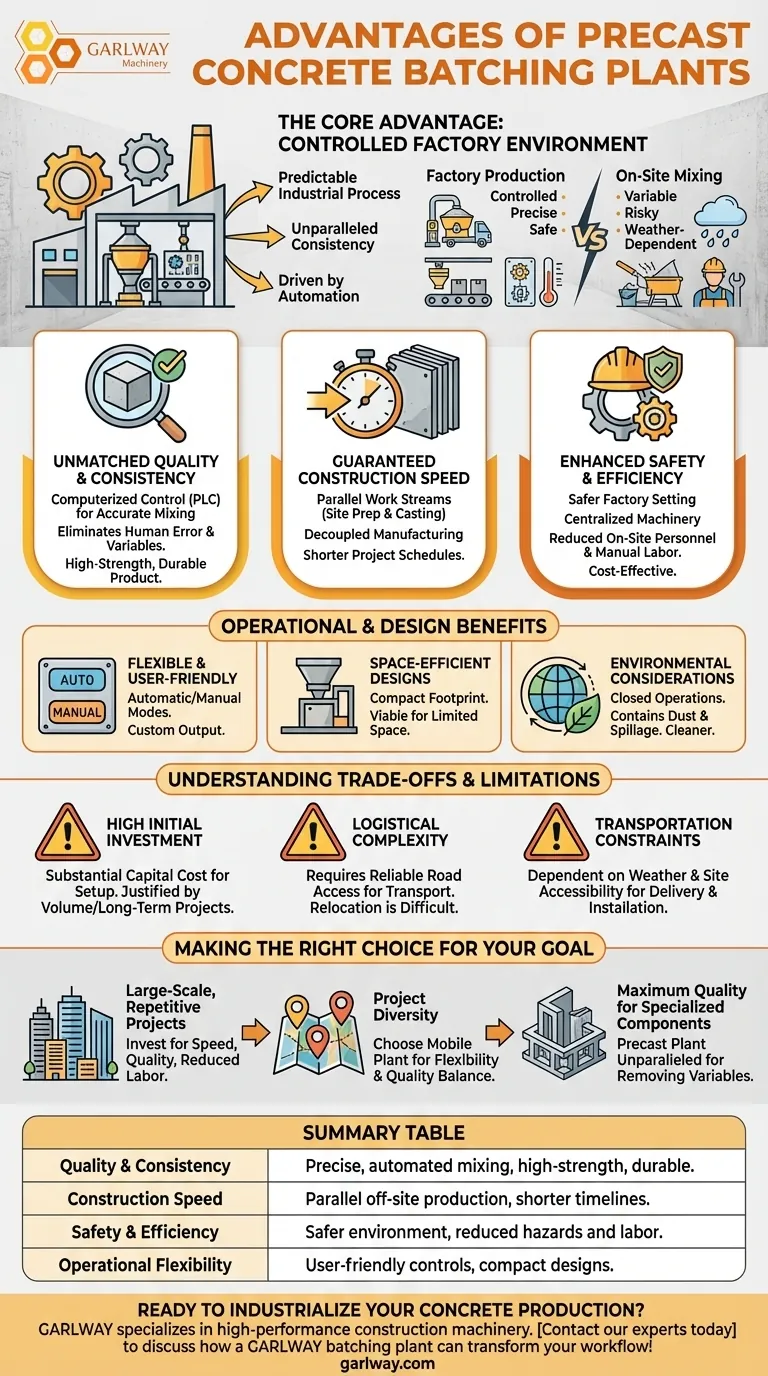
Unmatched Quality and Consistency
A dedicated plant allows for a level of precision that is difficult to achieve on-site. Computerized control systems (PLC) ensure accurate measurement and mixing of all ingredients—aggregates, cement, water, and admixtures—for every single batch.
This automated process eliminates the human error and environmental variables (like temperature and humidity) that can compromise the quality of concrete mixed on-site, resulting in a consistently high-strength and durable final product.
Guaranteed Construction Speed
Manufacturing concrete components off-site allows for parallel work streams. Foundation and site preparation can occur at the same time concrete panels, beams, or modules are being cast in the plant.
This decoupling of manufacturing from on-site activities dramatically shortens the overall project schedule. Finished components arrive ready for immediate installation, accelerating the construction timeline significantly.
Enhanced Safety and Efficiency
A factory setting is an inherently safer and more organized workplace than an active construction site. It centralizes heavy machinery, reduces on-site vehicle traffic, and minimizes the number of personnel exposed to the hazards of a busy job site.
Furthermore, features like efficient belt-feeding mechanisms and automated batching reduce manual labor and energy consumption, leading to a more streamlined and cost-effective operation.
Operational and Design Benefits
Beyond the core strategic advantages, precast plants are engineered with features that improve their usability and adaptability.
Flexible and User-Friendly Operation
Modern plants feature user-friendly interfaces that can be operated in both fully automatic and manual modes. This flexibility allows operators to manage production precisely according to project demands. Many designs can also be customized to meet specific output or material requirements.
Space-Efficient Designs
Many precast plants, particularly those that use a hopper for loading materials, are designed with a compact footprint. This makes them a viable option even when space is limited, without sacrificing productivity.
Environmental Considerations
The closed operations of a batching plant help contain dust and prevent material spillage. This not only creates a cleaner work environment but also reduces material loss and minimizes the environmental impact compared to open-air mixing.
Understanding the Trade-offs and Limitations
While powerful, a precast strategy is not without its challenges. An objective evaluation requires acknowledging its potential downsides.
High Initial Investment
The most significant barrier is the high initial capital cost required to purchase and set up a batching plant. This investment is substantial and must be justified by the volume or long-term nature of the planned projects.
Logistical Complexity
A precast strategy shifts complexity from production to logistics. It requires reliable road access for transporting large, heavy components from the plant to the construction site. The process of dismantling and relocating a large, stationary plant is also difficult and costly.
Transportation and Installation Constraints
While a mobile plant offers flexibility, it still requires setup time. More importantly, the transportation and installation of finished precast elements are still dependent on factors like weather conditions and site accessibility, which can cause delays.
Making the Right Choice for Your Goal
Selecting a precast concrete batching plant is a strategic decision that should align with your specific operational priorities.
- If your primary focus is large-scale, repetitive projects: The high initial investment is justified by the long-term gains in speed, quality control, and reduced labor costs.
- If your primary focus is project diversity across multiple locations: A mobile concrete batching plant provides the best balance of quality control and logistical flexibility.
- If your primary focus is maximum quality for specialized components: A precast plant is unparalleled, as it removes the environmental variables and inconsistencies inherent in on-site pouring.
Ultimately, adopting a precast strategy is a decision to prioritize industrial precision and predictability in your construction workflow.
Summary Table:
| Key Advantage | Key Benefit |
|---|---|
| Quality & Consistency | Precise, automated mixing ensures high-strength, durable concrete. |
| Construction Speed | Parallel off-site production significantly shortens project timelines. |
| Safety & Efficiency | Safer factory environment reduces on-site hazards and labor. |
| Operational Flexibility | User-friendly controls and compact designs for various project needs. |
Ready to industrialize your concrete production?
GARLWAY specializes in high-performance construction machinery, including precast concrete batching plants designed for construction companies and contractors seeking superior quality, efficiency, and safety. Our solutions help you achieve predictable results and faster project completion.
Contact our experts today to discuss how a GARLWAY batching plant can transform your workflow!
Visual Guide
Related Products
- HZS120 Ready Mix Concrete Batching Plant Commercial Mud Cement Mixer
- HZS180 Ready Mix Concrete Plant for Foundations with Sand and Cement
- HZS35 Small Cement Concrete Mixing Batch Plant
- HZS75 Concrete Batching Plant Cement Mixer Price Concrete Mixer Bunnings Mixing Plant
- Commercial Electric Concrete Mixer Machine HZS 50 Small Batch Plant for Sale
People Also Ask
- What is a ready mix concrete batching plant? The Engine of Modern Construction
- What is the name of the machine used in ready mix? Unpacking the Complete Concrete System
- What is the core component of a concrete batching plant? The Mixer Unit Defines Your Concrete Quality
- What are the types of concrete mixers used in batching plants? Choose the Right Mixer for Your Project
- What are the advantages and disadvantages of concrete batching plants? Maximize Quality & Efficiency





