In a concrete batching plant, a cement silo serves a singular, critical purpose: to store bulk cement in a controlled, moisture-free environment. This function is fundamental to both the quality of the final concrete product and the efficiency of the entire production process. It protects the cement from environmental degradation while ensuring a consistent, ready supply for continuous operation.
The cement silo is more than just a storage container; it is the quality control and supply-chain linchpin for a batching plant. It safeguards cement from moisture damage and guarantees an uninterrupted flow of material for high-volume concrete production.
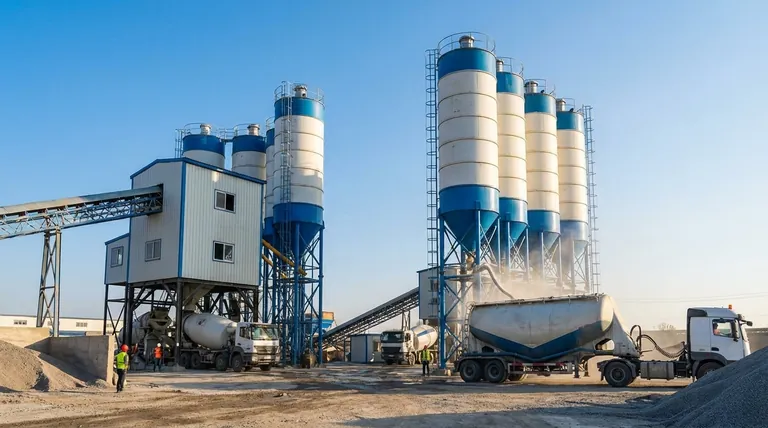
The Core Functions of a Cement Silo
A concrete batching plant is a precise system designed to mix various ingredients into a high-quality, homogenous product. The cement silo's role in this system is non-negotiable and breaks down into two primary responsibilities: protection and supply.
Protecting Cement Integrity
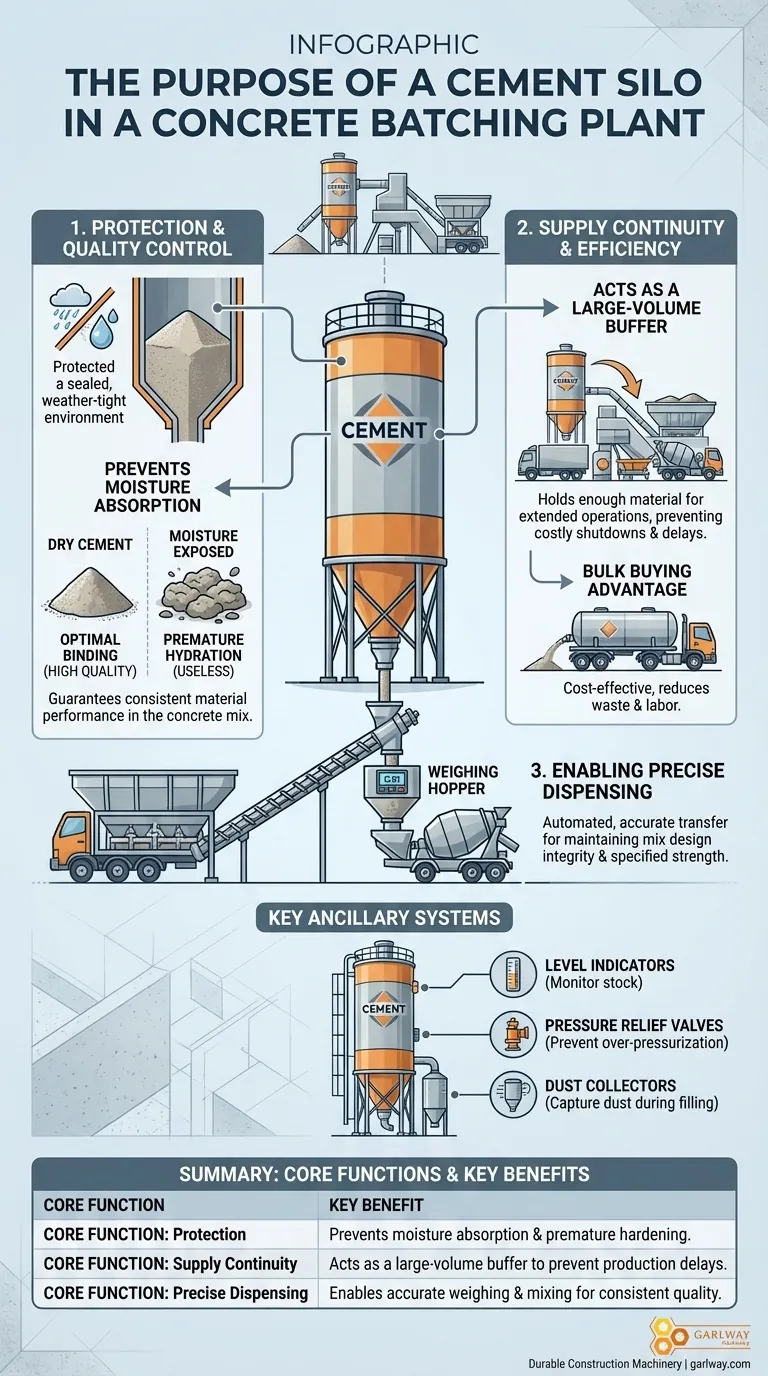
Cement is hygroscopic, meaning it readily absorbs moisture from the air.
When cement is exposed to moisture, a process called premature hydration begins. This causes the cement to harden and form lumps, drastically reducing its binding capability and rendering it useless.
The sealed, weather-tight environment of a silo acts as a crucial barrier, protecting thousands of dollars worth of material from humidity and rain, thereby guaranteeing its quality and performance in the concrete mix.
Ensuring Production Continuity
A modern batching plant consumes vast quantities of cement quickly. Relying on just-in-time deliveries of bagged or small-volume cement is operationally inefficient and risky.
The silo acts as a large-volume buffer, holding enough cement to run the plant for extended periods.
This ensures a continuous and seamless production process, preventing costly shutdowns and delays while waiting for material deliveries.
Enabling Precise Dispensing
While the silo provides bulk storage, it is the first step in a precise dispensing system.
From the silo, cement is typically transferred via a screw conveyor to a weighing hopper. This smaller hopper measures the exact amount of cement required for a specific batch recipe.
This automated and accurate transfer is essential for maintaining the mix design's integrity and producing concrete of a consistent, specified strength.
Understanding the Operational Impact
The silo isn't a standalone component; it's deeply integrated into the plant's workflow and directly impacts operational success. Without it, high-volume concrete production would be practically impossible.
The Problem of Moisture
The single greatest threat to stored cement is moisture. A poorly sealed or maintained silo can allow humidity to enter, leading to clumping and hardening of the cement, a phenomenon known as "silo pack-out."
This not only results in wasted material but can also clog the discharge system, requiring hazardous and time-consuming manual clean-outs.
The Advantage of Bulk Buying
Storing cement in a silo allows a plant to purchase it in bulk quantities, delivered by pneumatic tanker trucks.
This is significantly more cost-effective than buying cement in smaller bags and also reduces labor, waste, and dust associated with handling individual bags.
The Need for Ancillary Systems
Effective silo operation relies on several key subsystems. These often include:
- Level Indicators: To monitor the amount of cement and alert operators when to reorder.
- Pressure Relief Valves: To protect the silo from over-pressurization during pneumatic filling.
- Dust Collectors: To capture cement dust during filling, protecting the environment and preventing material loss.
How to Apply This to Your Project
Understanding the silo's purpose helps you evaluate the capabilities and reliability of a concrete supplier.
- If your primary focus is consistent concrete quality: The silo's role in preventing moisture contamination is the most critical feature ensuring the cement meets performance standards.
- If your primary focus is operational efficiency and timelines: The silo's function as a buffer prevents production interruptions, ensuring your concrete supply is reliable and on schedule.
- If your primary focus is project cost control: The ability to store bulk cement allows suppliers to reduce material costs, a saving that can be reflected in their pricing.
Ultimately, a well-maintained cement silo transforms a key raw material from a logistical liability into a consistent and reliable asset.
Summary Table:
| Core Function | Key Benefit |
|---|---|
| Protection | Prevents moisture absorption and premature hardening of cement. |
| Supply Continuity | Acts as a large-volume buffer to prevent production delays. |
| Precise Dispensing | Enables accurate weighing and mixing for consistent concrete quality. |
Need a reliable concrete batching plant with high-performance cement silos?
GARLWAY specializes in providing durable construction machinery, including winches, concrete mixers, and complete batching plants for construction companies and contractors globally. Our cement silos are engineered for maximum protection and efficiency, ensuring your project stays on schedule and within budget.
Contact GARLWAY today to discuss your specific needs and get a customized solution!
Visual Guide
Related Products
- HZS35 Small Cement Concrete Mixing Batch Plant
- HZS120 Ready Mix Concrete Batching Plant Commercial Mud Cement Mixer
- Portable Cement Mixer with Lift Concrete Machine
- JW1000 Mobile Cement Mixer Concrete Mixer Truck and Batching Plant
- Commercial Construction Mixer Machine for Soil Cement Mixing Concrete
People Also Ask
- Why buy concrete batch plant parts only from the manufacturer? Protect Your Investment and Maximize Uptime
- Why is proper maintenance important for a concrete batch mix plant? Maximize Uptime & Profitability
- What is the advantage of a mobile concrete batching plant? Achieve On-Site Production & Total Control
- What are the advantages and disadvantages of concrete batching plants? Maximize Quality & Efficiency
- What are the two methods of material charging in a concrete mixing station? Single vs. Multiple Charging Explained