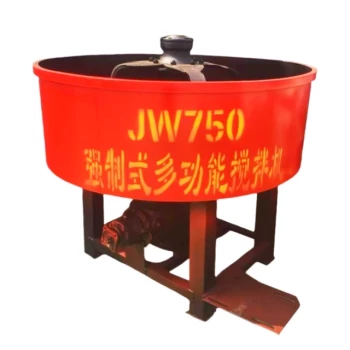
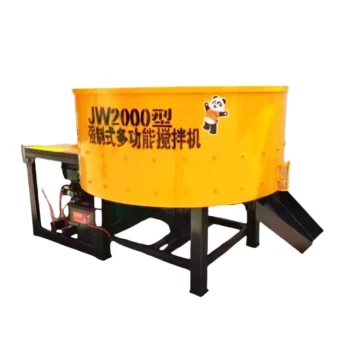
The primary advantages of on-site concrete mixing are superior control over the materials, the elimination of logistical delays, and the guaranteed freshness of every batch. By producing concrete exactly where it's needed, you remove the risks associated with transportation and supplier schedules, which enhances overall project efficiency and reduces material waste.
On-site mixing transforms concrete production from a dependency on an external supplier into a controlled, internal process. This shift grants you unparalleled flexibility in timing and mix design, directly translating to less waste and fewer costly delays.
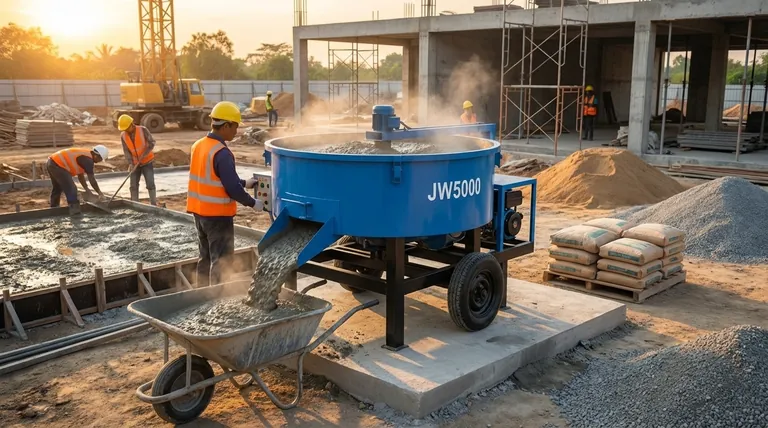
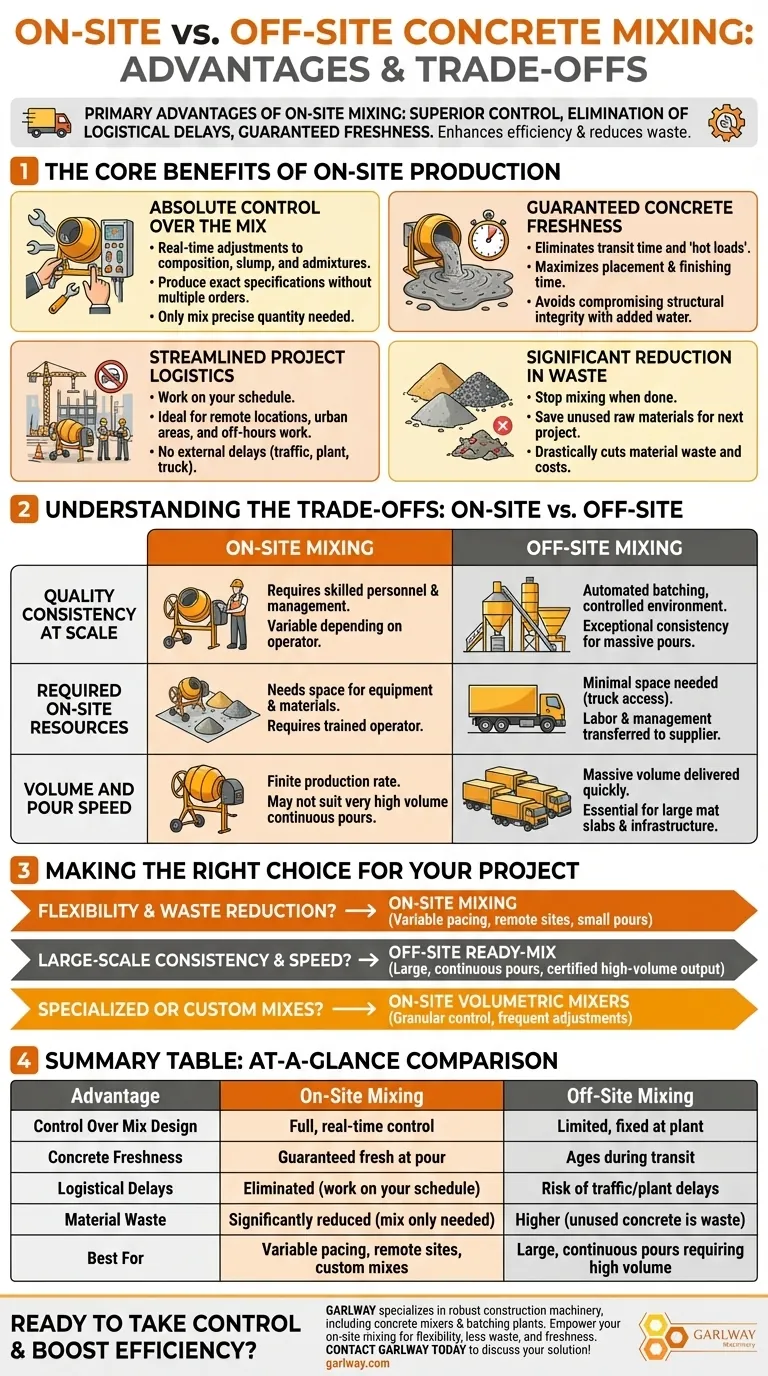
The Core Benefits of On-Site Production
Absolute Control Over the Mix
On-site mixers, particularly volumetric models, give you complete authority over the concrete's composition. You can make real-time adjustments to the mix design, slump, and admixtures right at the pour site.
This level of control ensures you can produce the exact specification required for different parts of a job without placing multiple, separate orders. You only mix the precise quantity needed, preventing the common issue of over-ordering from an off-site plant.
Guaranteed Concrete Freshness
Concrete begins to hydrate the moment water is introduced. The time spent in a ready-mix truck during transit can reduce the concrete's workability and optimal strength.
On-site mixing ensures the concrete is as fresh as possible, maximizing its placement and finishing time. This eliminates the risk of "hot loads" and the dangerous temptation to add water to aging concrete, which compromises its structural integrity.
Streamlined Project Logistics
Relying on off-site mixing introduces external variables you can't control, such as traffic, plant delays, and truck availability. These factors can bring a project to a standstill.
With an on-site mixer, you work on your own schedule. This is especially valuable for projects in remote locations, congested urban areas, or for work performed outside of a ready-mix plant's normal operating hours.
Significant Reduction in Waste
When you order from a ready-mix plant, any unused concrete is typically sent back and becomes waste, a cost you often absorb.
On-site production allows you to stop mixing the moment the job is done. Unused raw materials like sand, cement, and aggregate can be stored and saved for the next project, drastically cutting down on material waste and associated costs.
Understanding the Trade-offs: On-Site vs. Off-Site
Quality Consistency at Scale
Off-site ready-mix plants operate in highly controlled environments with automated batching systems. This process ensures exceptional consistency and stable quality from one truck to the next.
For massive pours or projects with extremely strict specifications, the certified and automated quality control of a dedicated plant can be a distinct advantage.
Required On-Site Resources
On-site mixing requires space for the mixer and the storage of raw materials. It also necessitates having personnel on-site who are skilled in operating the equipment and managing the mix.
In contrast, off-site mixing only requires enough access for the ready-mix truck, transferring the labor and equipment management to the supplier.
Volume and Pour Speed
A fleet of ready-mix trucks can deliver a massive volume of concrete in a very short amount of time, which is essential for large mat slab pours or major infrastructure projects.
While efficient, a single on-site mixer has a finite production rate that may not be sufficient for projects requiring a very high volume of concrete to be poured continuously.
Making the Right Choice for Your Project
Choosing your concrete strategy requires matching the method to the project's unique demands.
- If your primary focus is flexibility and waste reduction: On-site mixing is superior for projects with variable pacing, multiple small pours, or remote locations where delivery is a challenge.
- If your primary focus is large-scale consistency and speed: Off-site ready-mix is the definitive choice for large, continuous pours where certified, high-volume output is critical.
- If your primary focus is specialized or custom mixes: On-site volumetric mixers provide the granular control needed for jobs requiring frequent adjustments that are impractical to coordinate with an off-site supplier.
Ultimately, selecting the right mixing strategy is about aligning your logistical capabilities with your project's specific needs for control, volume, and quality.
Summary Table:
| Advantage | On-Site Mixing | Off-Site Mixing |
|---|---|---|
| Control Over Mix Design | Full, real-time control | Limited, fixed at plant |
| Concrete Freshness | Guaranteed fresh at pour | Ages during transit |
| Logistical Delays | Eliminated (work on your schedule) | Risk of traffic/plant delays |
| Material Waste | Significantly reduced (mix only what's needed) | Higher (unused concrete is waste) |
| Best For | Variable pacing, remote sites, custom mixes | Large, continuous pours requiring high volume |
Ready to take control of your concrete supply and boost your project's efficiency?
GARLWAY specializes in providing robust and reliable construction machinery, including concrete mixers and batching plants, for construction companies and contractors globally. Our equipment empowers you to mix on-site, giving you the flexibility to reduce waste, eliminate delays, and guarantee concrete freshness.
Contact GARLWAY today to discuss the perfect concrete mixing solution for your next project!
Visual Guide
Related Products
- Portable Concrete Mixer Machine Equipment for Mixing Concrete
- Construction Products Concrete Plant Machine Mixing Concrete Mixer
- Portable Electric Concrete Mixer Machine for Cement Mixing
- JZC400 Mobile Small Concrete Mixer Cement Mixer Machine
- Hydraulic Concrete Mixer Machine Cement Mixing Equipment for Mixture Concrete
People Also Ask
- Why is it necessary to use a portable concrete mixer? Gain Total Control & Efficiency
- How much concrete can you pour with a portable mixer? Find the Perfect Fit for Your Project
- What types of projects are portable concrete mixers suitable for? Ideal for DIY & Small-Scale Construction
- How much does a portable concrete mixer hold? A Guide to Choosing the Right Capacity
- What types of portable concrete mixers exist? Find the Perfect Mixer for Your Project