The fundamental principles of winch safety center on three core phases: rigorous preparation of your equipment, controlled operation during the pull, and maintaining a safe, clear environment at all times. This methodical approach is critical for managing the immense forces involved and preventing equipment failure or serious injury.
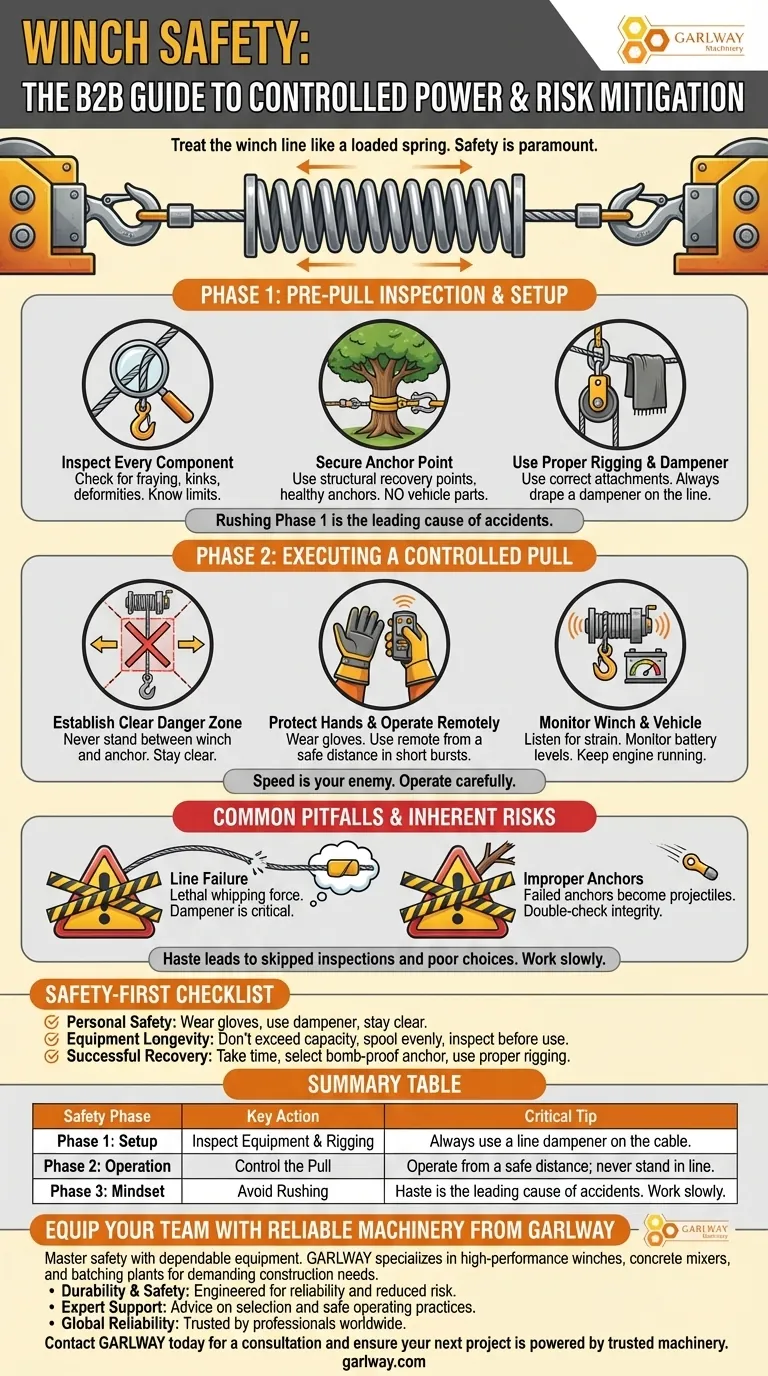
The single most important concept in winching safety is treating the winch line like a loaded spring. The tension it holds is immense, and every safety measure—from wearing gloves to using a dampener—is designed to protect you from the catastrophic release of that energy.
Phase 1: Pre-Pull Inspection and Setup
Before you even think about engaging the motor, a thorough setup and inspection is the most critical step you can take. Rushing this phase is the leading cause of accidents.
Inspect Every Component
Your winch is a system, and every part must be in good working order. Check the winch line (whether steel cable or synthetic rope) for any signs of fraying, kinks, or flat spots. Inspect straps for weakness and hooks for any deformities.
Know Your Equipment's Limits
Never attempt to pull a load that exceeds your winch's specified capacity, which you can find in the owner's manual. Overloading doesn't just risk failure on the current pull; it can cause hidden damage that leads to failure later.
Choose a Secure Anchor Point
Your anchor must be unquestionably stable and strong enough to handle the load. Never attach the winch to a vehicle's bumper or axle. Use a designated, structural recovery point on the frame. If using a natural anchor like a tree, ensure it is healthy and solid.
Use Proper Rigging Techniques
Always use the correct attachments for the job, such as tree-saver straps and D-ring shackles. If you need to pull at an angle, use a snatch block. This pulley-like device redirects the force safely and can nearly double your winch's pulling power.
Place a Dampener on the Line
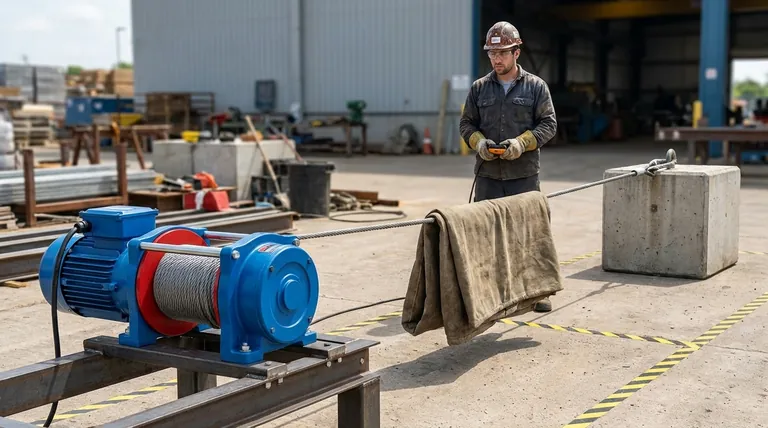
A winch line dampener—which can be a heavy blanket, a purpose-built weight, or even a heavy jacket—should always be draped over the midpoint of the tensioned line. If the line snaps, the dampener will absorb a significant amount of the energy and force the broken ends to the ground instead of whipping through the air.
Phase 2: Executing a Controlled Pull
With everything properly staged, the focus shifts to careful and deliberate operation. Speed is your enemy during the pull itself.
Establish a Clear Danger Zone
Ensure all people are standing far away from the winch line's path. The safest positions are far to the sides. Never stand between the winch and the anchor point, and never allow anyone to step over a tensioned line.
Protect Your Hands
Always wear durable, heavy-duty recovery gloves. A steel cable can have tiny, sharp frays that can easily slice bare hands. Never touch the cable or guide it onto the drum with your hands while it is under tension or in motion.
Practice Controlled Operation
Operate the winch using the remote from a safe distance. Pull in short, controlled bursts, pausing frequently to check your rigging and monitor how the line is spooling onto the drum. A messy, bunched-up spool can damage the line.
Monitor the Winch and Vehicle
Pay attention to the sounds of the winch motor for signs of straining. Monitor your vehicle's battery levels, as winching draws a tremendous amount of power. Keeping the engine running during operation can help prevent a dead battery.
Common Pitfalls and Inherent Risks
Understanding what can go wrong is key to making sure it doesn't. A winch is a simple machine, but the forces it generates are unforgiving.
The Risk of Line Failure
A snapping winch line is the single most dangerous event. Without a dampener, the broken cable will whip back towards the winch or the anchor point with enough force to be lethal. This is why establishing a danger zone is not a suggestion, but a critical rule.
The Danger of Improper Anchors
If your anchor point fails, it becomes a projectile. A recovery point tearing off a vehicle frame or a strap slipping off a weak tree can send heavy metal components flying unpredictably. Always double-check your anchor's integrity.
The Problem of Rushing
Nearly all winching accidents are rooted in haste. Rushing leads to skipped inspections, poor rigging choices, and a failure to clear the area properly. The process must be slow and deliberate from start to finish.
A Safety-First Winching Checklist
Use this simple framework to guide your actions for every single recovery.
- If your priority is personal safety: Always wear gloves, place a dampener on the line, and stay far away from the tensioned cable during operation.
- If your priority is equipment longevity: Never exceed the winch's load capacity, ensure the line spools evenly onto the drum, and conduct a thorough inspection before every use.
- If your priority is a successful recovery: Take your time to select a bomb-proof anchor point and use proper rigging equipment like snatch blocks and tree-savers.
By adopting a methodical and cautious approach, you transform the winch from a potential hazard into a powerful and reliable tool.
Summary Table:
| Safety Phase | Key Action | Critical Tip |
|---|---|---|
| Phase 1: Setup | Inspect Equipment & Rigging | Always use a line dampener (e.g., heavy blanket) on the cable. |
| Phase 2: Operation | Control the Pull | Operate from a safe distance; never stand in line with the tensioned cable. |
| Phase 3: Mindset | Avoid Rushing | Haste is the leading cause of accidents. Work slowly and deliberately. |
Equip Your Team with Reliable and Safe Machinery from GARLWAY
Mastering safety protocols is essential, but it starts with dependable equipment. GARLWAY specializes in high-performance construction machinery, including robust winches, concrete mixers, and batching plants designed for the demanding needs of construction companies and contractors globally.
Why choose GARLWAY?
- Durability & Safety: Our winches are engineered with safety features and built to last, reducing the risk of equipment failure.
- Expert Support: Get expert advice on selecting the right equipment and safe operating practices for your specific projects.
- Global Reliability: Trusted by professionals worldwide for consistent performance on tough job sites.
Contact GARLWAY today for a consultation and ensure your next project is powered by machinery you can trust for both performance and safety.
Visual Guide
Related Products
- Warn Winch Windlass Boat Trailer Winch
- Electric and Hydraulic Winch for Heavy Duty Applications
- Small Electric Winch 120V and 240V for Compact Applications
- Quick Windlass Portable Winch for Truck and Boat Best Boat Winch
- Hydraulic Winding Engine Harbor Freight Winch
People Also Ask
- What are the main components of a boat trailer winch? A Guide to Safe & Efficient Boat Loading
- What factors should be considered when choosing a boat trailer winch? Ensure Safe and Effortless Boat Loading
- What is the purpose of boat trailer winches? Safely and Efficiently Load Your Boat
- What are the two main types of boat trailer winches? Manual vs. Electric Explained
- How often should a boat trailer winch be replaced? Your Guide to Safety and Longevity