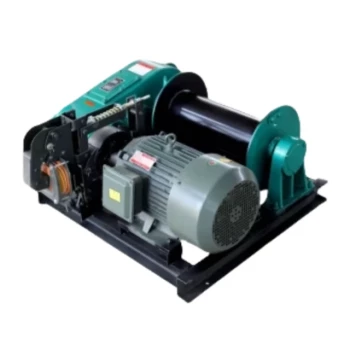
At its core, an electric winch machine is an integrated system designed to convert electrical energy into mechanical pulling force. The primary components responsible for this are the electric motor, a reduction gearbox, a cable-wound drum, and a braking system, all mounted on a sturdy frame.
A winch's true power isn't just from its motor, but from the gear system that multiplies the motor's torque. Understanding how these core components interact is the key to appreciating its capability and ensuring safe operation.
The Power Train: From Electricity to Force
The primary function of a winch is to create pulling power. This is accomplished by a set of components that generate, multiply, and apply force in a controlled manner.
The Electric Motor: The Heart of the Operation
The electric motor is the prime mover of the entire system. It draws a high-current load, typically from a vehicle's battery or another dedicated power source, to initiate the mechanical action.
The Gearbox: The Force Multiplier
The motor itself does not produce enough torque for heavy pulling. It connects to a reduction gearbox (often a planetary gear set) which trades high speed for high torque.
This gear reduction is what multiplies the motor's power into the immense pulling force the winch is rated for. A higher gear ratio results in more pulling power but a slower line speed.
The Drum: The Spooling Mechanism
The gearbox turns the winch drum, a large cylinder onto which the cable is wound. The drum's rotation is what pulls the cable in or lets it out, directly moving the load.
The Load-Handling System: Connecting to the Work
These are the components that physically engage with the object being pulled, transferring the force generated by the power train.
The Winch Cable: The Line of Force
This is the flexible line that extends from the winch to the load. It can be made of either traditional steel wire or modern synthetic rope, each with its own benefits and drawbacks.
The Hook: The Final Connection Point
A heavy-duty hook is attached to the end of the cable. This provides a secure and reliable point of attachment to the load or an anchor point.
Control and Safety Systems
Controlling immense force requires robust safety and control mechanisms. These components are just as critical as the ones that generate power.
The Braking System: Preventing Catastrophe
An automatic brake is a non-negotiable safety feature. When the motor is not actively pulling, the brake engages to prevent the drum from unwinding and releasing the load. This is crucial for holding a load securely in place.
The Clutch (Free Spool): Enabling Rapid Deployment
The clutch disengages the drum from the gearbox. This allows the cable to be pulled out by hand quickly, a feature known as "free spooling," which is much faster than using the motor to unspool the line.
The Control Unit: The User's Command
This is the interface for operating the winch. It is typically a handheld remote, either wired or wireless, that allows the operator to control the "power in" and "power out" functions from a safe distance.
Understanding the Trade-offs
Selecting or using a winch involves balancing competing factors inherent in its design.
Pulling Power vs. Line Speed
The gearbox dictates this fundamental trade-off. A winch designed for extreme pulling power will have a high gear reduction ratio, making it very strong but slow. Conversely, a winch optimized for speed will have less raw power.
Steel Cable vs. Synthetic Rope
Steel cable is highly durable and resistant to abrasion but is also heavy, can develop sharp burrs, and stores a dangerous amount of kinetic energy if it snaps.
Synthetic rope is significantly lighter, flexible, and safer as it stores less energy. However, it is more susceptible to abrasion and damage from UV light and heat.
Making the Right Choice for Your Goal
The ideal winch configuration depends entirely on its intended application.
- If your primary focus is vehicle recovery: Prioritize a high gear reduction ratio for maximum pulling power and a robust automatic braking system.
- If your primary focus is speed for utility work: A winch with a lower gear ratio for faster line speed and a lightweight synthetic rope may be the superior choice.
- If your primary focus is safety: A synthetic rope combined with a reliable remote control is the best configuration to minimize risk during operation.
Understanding how these components function as a system empowers you to select and operate an electric winch with both confidence and safety.
Summary Table:
| Component Category | Key Parts | Primary Function |
|---|---|---|
| Power Train | Electric Motor, Gearbox, Drum | Generates and multiplies force to pull the cable. |
| Load Handling | Winch Cable, Hook | Connects to and physically moves the load. |
| Control & Safety | Braking System, Clutch, Control Unit | Enables safe operation, load holding, and user control. |
Need a reliable electric winch tailored to your specific construction or contracting needs?
At GARLWAY, we specialize in high-performance construction machinery. Our electric winches are engineered for durability, power, and safety, making them the ideal choice for demanding projects.
We provide:
- Robust Winches with powerful motors and reliable braking systems.
- Expert Guidance to help you select the right configuration (power vs. speed, steel cable vs. synthetic rope).
- Global Support for construction companies and contractors.
Let us power your success. Contact our experts today for a consultation and discover the GARLWAY difference!
Visual Guide

Related Products
- Electric 120V Boat Winch by Badlands
- Small Electric Winch 120V and 240V for Compact Applications
- 12000 lb Electric Boat Trailer Winch with Windlass Anchor Warn
- Electric Hoist Winch Boat Anchor Windlass for Marine Applications
- Electric and Hydraulic Winch for Heavy Duty Applications
People Also Ask
- How do electric boat winches work? Unlock Effortless Launching & Retrieval
- How much current does an electric boat winch draw? Plan Your Electrical System for Peak Performance
- Can I run a winch straight from a battery? Essential Power Setup for Safe Operation
- What are the types of electric winches available? Choose the Right Winch for Your Job
- What are the uses of electric winches in mining and tunneling? Enhance Safety and Efficiency Underground