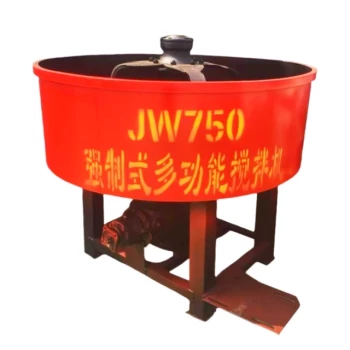
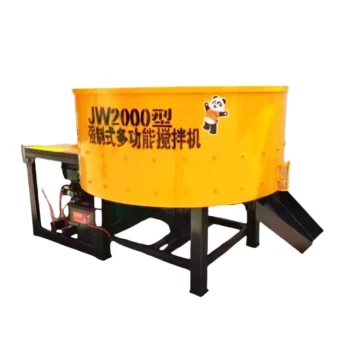
In short, continuous concrete mixers are best suited for two primary scenarios: large-scale projects that demand a massive, uninterrupted flow of concrete, and jobsites where logistical challenges make traditional batch plant delivery impractical. They excel in applications like dams, major infrastructure, and remote construction, where producing concrete on-site and on-demand is a critical advantage.
The core value of a continuous mixer isn't just its high output. It's the strategic advantage of transforming the job site into a self-sufficient, on-demand concrete production facility, giving you ultimate control over your supply chain.
The Core Principle: A Mobile Concrete Plant
To understand where continuous mixers shine, you must first understand what makes them different from the traditional ready-mix truck that delivers pre-mixed concrete from a central batch plant.
How Continuous Mixing Works
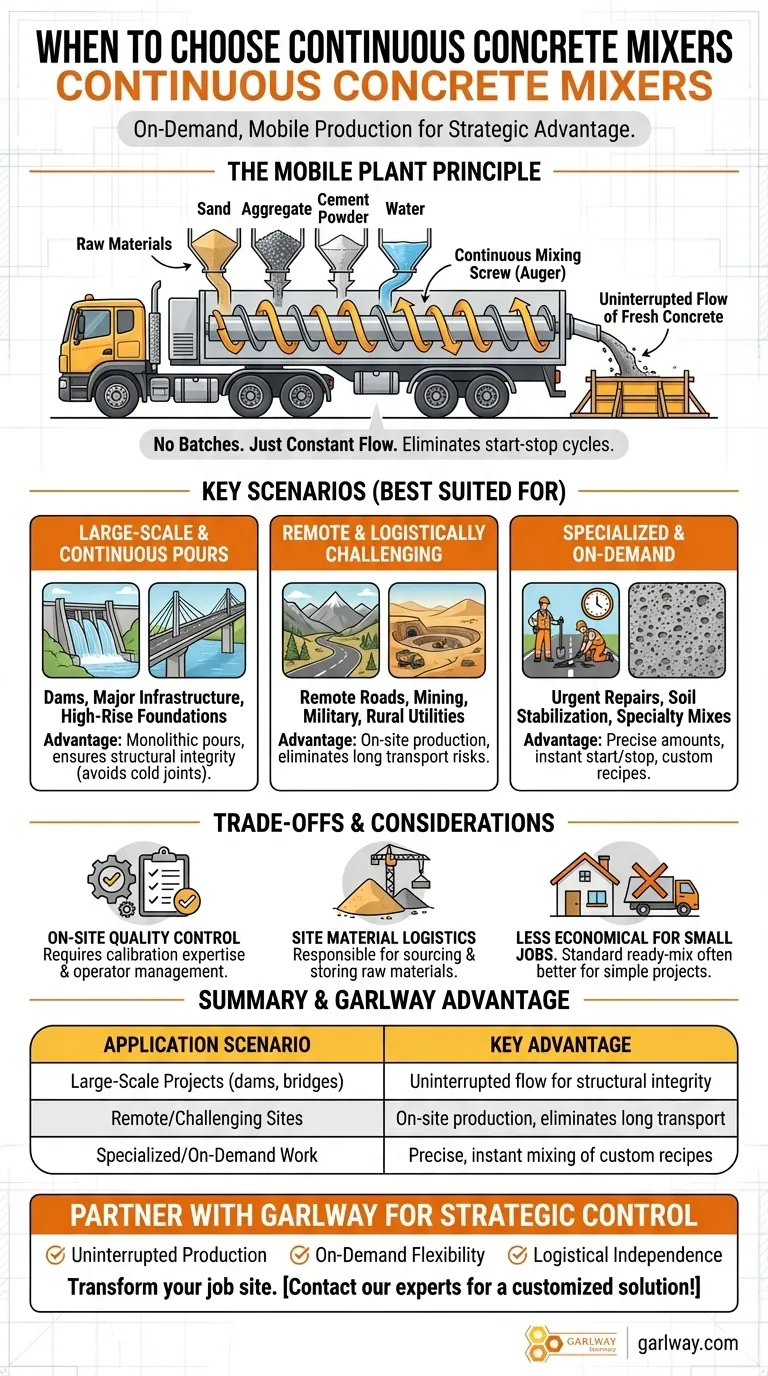
A continuous mixer does not mix a finite "batch." Instead, raw materials like sand, aggregate, cement powder, and water are stored in separate hoppers on the machine.
When production starts, these materials are fed continuously into a mixing chamber, typically using an auger or mixing screw. The concrete is mixed as it travels along the auger and is discharged from a chute, ready for use.
The End of the Batching Cycle
This process eliminates the discrete start-and-stop cycle of a traditional batch plant. The machine produces a steady, uninterrupted stream of fresh concrete as long as raw materials are supplied. This fundamental difference is what unlocks its specific advantages.
When Continuous Mixers Excel: Key Scenarios
The unique nature of continuous mixing makes it the superior choice in several distinct situations where traditional methods fall short.
For High-Volume, Continuous Pours
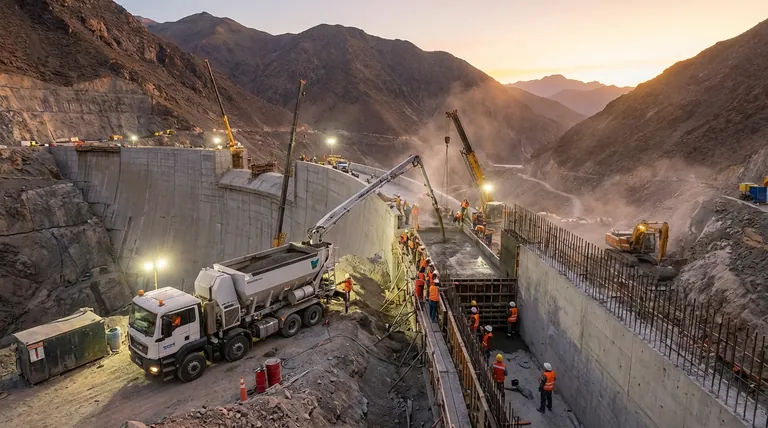
On massive construction projects like dams, large bridge decks, and high-rise foundations, stopping a pour can create "cold joints," which are planes of weakness in the final structure.
A continuous mixer provides a constant flow, ensuring a monolithic pour without interruption. This improves structural integrity and project efficiency by matching production speed directly to the placement rate.
For Logistically Challenging and Remote Sites
Continuous mixers are often mobile (also known as volumetric mixers), making them ideal for projects far from a central batch plant.
This is critical for remote road construction, mining operations, military projects, and rural utilities. Instead of relying on ready-mix trucks facing long travel times—risking premature hardening of the concrete—you bring the raw materials and the "plant" directly to the site.
For Specialized and On-Demand Projects
The ability to start and stop production instantly and mix the exact amount needed makes continuous mixers highly versatile.
This is perfect for applications with variable demand, such as soil stabilization, or for projects requiring specific, often fast-setting, mixes for urgent road or runway repairs. It also excels with specialty materials like pervious concrete, where a precise, fresh mix is essential.
Understanding the Trade-offs
While powerful, continuous mixers are not a universal solution. Understanding their limitations is key to making an informed decision.
On-Site Quality Control is Critical
Because the mixing happens at the job site, quality control shifts from the controlled environment of a batch plant to the field. Consistent, high-quality concrete depends on the proper calibration of the machine and the expertise of the operator to manage material flow rates.
Material Handling Shifts to the Site
Using a continuous mixer means you are responsible for sourcing, delivering, and storing large quantities of raw aggregate, sand, and cement on-site. This introduces a different set of logistical challenges compared to simply ordering a finished product.
Less Economical for Small, Standard Jobs
If your project is small, easily accessible, and located near a batch plant, a standard ready-mix truck is often the more straightforward and cost-effective solution. The setup and material logistics of a continuous mixer may be overkill.
Making the Right Choice for Your Project
Choosing between a continuous mixer and traditional batching depends entirely on your project's primary constraint.
- If your primary focus is structural integrity on a massive pour: The uninterrupted flow from a continuous mixer is your greatest asset for avoiding cold joints.
- If your primary focus is overcoming location and logistics: A mobile continuous mixer acts as your on-site plant, giving you independence from distant suppliers.
- If your primary focus is specialty mixes or eliminating waste: A continuous mixer provides precise, on-demand production of exactly what you need, when you need it.
Ultimately, selecting a continuous mixer is a strategic decision to take direct control over the timing, location, and specification of your concrete supply.
Summary Table:
| Application Scenario | Key Advantage |
|---|---|
| Large-Scale Projects (dams, bridges) | Uninterrupted flow for structural integrity |
| Remote/Challenging Sites | On-site production, eliminates long transport |
| Specialized/On-Demand Work | Precise, instant mixing of custom recipes |
Ready to take control of your concrete supply chain?
For construction companies and contractors tackling large-scale or logistically complex projects, GARLWAY's continuous concrete mixers provide a strategic advantage. We offer robust, reliable machinery that transforms your job site into a self-sufficient production facility.
Partner with GARLWAY for:
- Uninterrupted Production: Ensure monolithic pours for critical structures.
- On-Demand Flexibility: Produce the exact amount and type of concrete you need, when you need it.
- Logistical Independence: Overcome remote locations and eliminate reliance on distant batch plants.
Let's discuss how our concrete mixers and batching plants can optimize your next project. Contact our experts today for a customized solution!
Visual Guide
Related Products
- JS1000 Volumetric Concrete Mortar Mixer for Sale Skid Steer Cement Mixer
- Portable Concrete Mixer Machine Equipment for Mixing Concrete
- Hydraulic Concrete Mixer Machine Cement Mixing Equipment for Mixture Concrete
- JDY350 Electric Hydraulic Mortar Mud Concrete Mixer
- Portable Cement Mixer with Lift Concrete Machine
People Also Ask
- What is the basic working principle of volumetric concrete mixers? On-Demand Mixing for Zero Waste
- What are the advantages of using volumetric mixers for small concrete jobs? Save Costs and Gain On-Site Control
- What are the advantages of volumetric concrete mixers compared to drum mixers? Achieve On-Demand Mixing & Zero Waste
- What are some innovations in volumetric concrete mixers? Boost Efficiency with On-Demand Production
- Why do volumetric mixers provide better ROI? Maximize Profit with On-Demand Concrete Production