
In short, construction companies prefer concrete mixing plant containers because they transform a major logistical dependency into a controllable, on-site asset. This shift provides significant advantages in flexibility, cost-effectiveness, and quality control, especially for projects in remote or challenging locations.
The core advantage is moving concrete production from a fixed, off-site facility to a mobile, project-specific operation. This strategic change dramatically reduces logistical overhead, improves material quality, and unlocks projects that would be financially or logistically unfeasible with traditional ready-mix delivery.
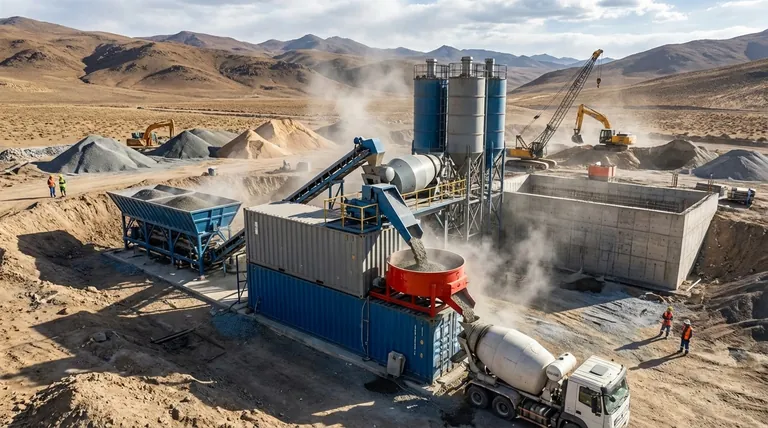
The Operational Advantage of On-Site Production
The primary driver for adopting containerized plants is the ability to produce concrete precisely where and when it is needed. This eliminates the significant constraints tied to relying on off-site, stationary batch plants.
Eliminating Logistical Bottlenecks
Traditional ready-mix concrete delivery is a major point of failure in project timelines. Traffic, distance, and plant availability can cause costly delays on-site.
A containerized plant produces concrete on-demand, making the construction schedule independent of external delivery logistics.
Unlocking Remote or Constrained Sites
Projects located far from urban centers often face prohibitive transportation costs and long travel times for ready-mix trucks. This can make a project economically non-viable.
By shipping the plant directly to the location, companies can produce fresh concrete anywhere, from remote infrastructure projects to dense urban sites with limited access.
Ensuring Just-in-Time Material Availability
Large-scale pours require a continuous, reliable supply of concrete. A container plant ensures this supply is available exactly when needed, synchronized with the crew's pace.
The Financial and Quality Case
Beyond logistics, containerized plants present a compelling argument through direct cost savings and superior product quality.
Reducing Material Transport Costs
The cost of transporting wet, heavy ready-mix concrete over long distances is substantial.
Shipping dry aggregate and cement to the site once is far more cost-effective than paying for dozens or hundreds of individual ready-mix truck deliveries.
Superior Quality Control
The quality of concrete begins to degrade the moment it is mixed with water. Long transit times can lead to a loss of workability (slump) and inconsistent strength.
On-site mixing reduces the time from batching to pouring to mere minutes, ensuring the concrete meets its exact design specifications for maximum strength and durability.
Lowering Environmental Impact
Fewer truck trips for ready-mix concrete directly translate to reduced fuel consumption and lower carbon emissions. Producing on-demand also minimizes the waste associated with over-ordered batches.
Understanding the Trade-offs
While highly advantageous, containerized plants are not a universal solution. Understanding their limitations is key to making an informed decision.
Scale and Output Limitations
Containerized plants are designed for project-specific scale. They typically cannot match the high-volume, continuous output of a large, permanent commercial batch plant designed to serve an entire metropolitan area.
Site Footprint and Setup
While mobile, these plants still require a dedicated footprint on the construction site for the unit itself, as well as for storing raw materials like aggregate, sand, and cement. Initial setup and calibration require skilled personnel.
Maintenance and Support Logistics
Operating an on-site plant makes the construction company responsible for all maintenance, repairs, and quality assurance. This requires having trained staff and a plan for sourcing spare parts, especially in remote locations.
Making the Right Choice for Your Project
The decision to use a containerized plant must align with the specific goals and constraints of your construction project.
- If your primary focus is a remote project: A containerized plant is often the only feasible way to ensure a reliable supply of high-quality concrete.
- If your primary focus is cost control on a mid-sized project: The savings on ready-mix transport and reduced waste can provide a significant financial advantage.
- If your primary focus is maximum quality and consistency: On-site batching gives you unparalleled control over the mix, which is critical for high-performance or specialized concrete applications.
Ultimately, adopting a containerized concrete plant is a strategic move to gain control over a critical component of your supply chain.
Summary Table:
| Feature | Containerized Plant | Traditional Plant |
|---|---|---|
| Mobility & Setup | Highly mobile, shipped to site | Fixed, permanent location |
| Ideal For | Remote sites, constrained access, mid-sized projects | Large-scale, high-volume urban projects |
| Logistical Control | High (on-site production) | Low (dependent on delivery) |
| Cost Efficiency | High (reduces transport costs) | Lower (high transport costs) |
| Quality Control | Superior (fresh concrete on-demand) | Variable (depends on transit time) |
Ready to take control of your concrete supply and project costs?
GARLWAY specializes in providing robust and efficient containerized concrete batching plants for construction companies and contractors worldwide. Our solutions are engineered to deliver the flexibility, cost savings, and quality assurance your projects demand.
Contact GARLWAY today to discuss how our concrete mixing plants can be tailored to your specific site requirements and help you build more efficiently.
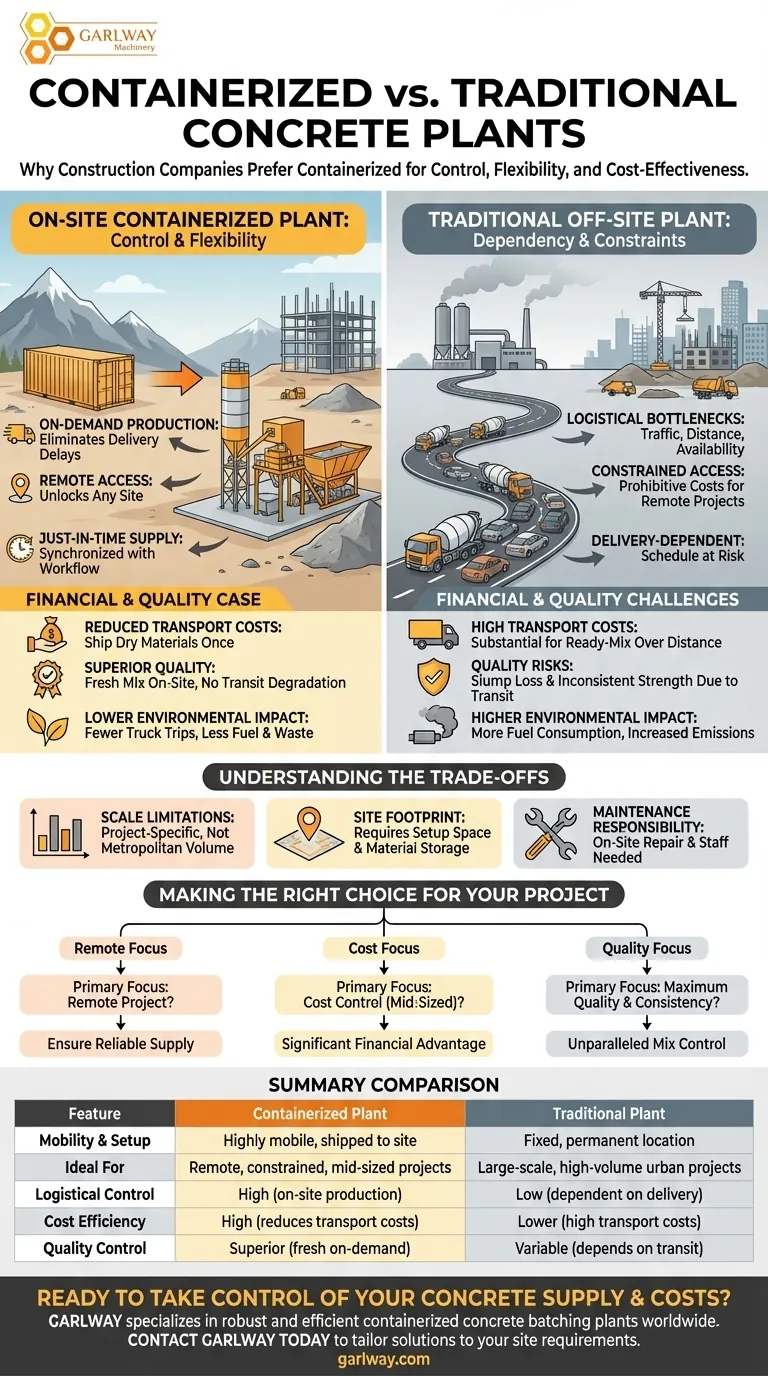
Visual Guide
Related Products
- HZS35 Small Cement Concrete Mixing Batch Plant
- Construction Products Concrete Plant Machine Mixing Concrete Mixer
- HZS75 Concrete Batching Plant Cement Mixer Price Concrete Mixer Bunnings Mixing Plant
- HZS120 Ready Mix Concrete Batching Plant Commercial Mud Cement Mixer
- Commercial Electric Concrete Mixer Machine HZS 50 Small Batch Plant for Sale
People Also Ask
- Why buy concrete batch plant parts only from the manufacturer? Protect Your Investment and Maximize Uptime
- Why is proper maintenance important for a concrete batch mix plant? Maximize Uptime & Profitability
- What is the advantage of a mobile concrete batching plant? Achieve On-Site Production & Total Control
- What are the advantages and disadvantages of concrete batching plants? Maximize Quality & Efficiency
- What are the two methods of material charging in a concrete mixing station? Single vs. Multiple Charging Explained




