The most critical component of a cement tank's power system to maintain is the dust collection unit, specifically its induced draft fan. Regular operational checks of this fan and ensuring the entire system is properly sealed are the foundation of reliable performance and longevity.
Your focus should not be on the static tank itself, but on the active systems that manage air pressure and material flow. Proactive maintenance of the fan and system seals prevents equipment failure, material loss, and safety issues.
Deconstructing the "Power System"
The term "power system" for a cement tank primarily refers to the electrically-powered auxiliary equipment that ensures the tank operates correctly and safely. Understanding these components is the first step to effective maintenance.
The Induced Draft Fan
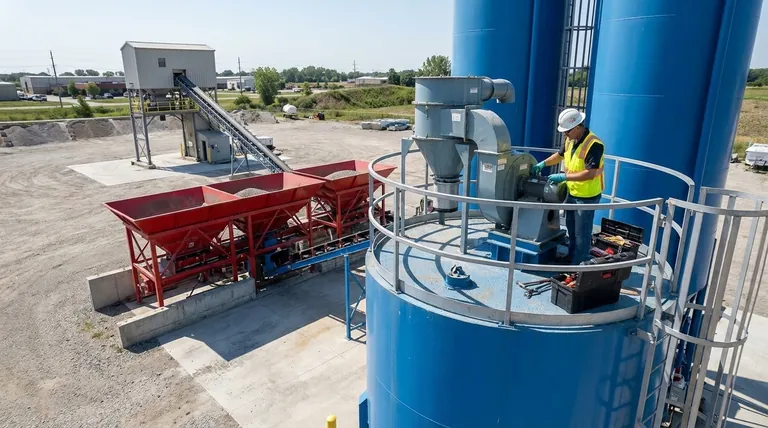
The induced draft fan is the heart of the tank's dust collection system. Its primary job is to create negative pressure within the tank, venting displaced air while capturing cement dust.
You must check if this fan is operating normally as part of your daily routine. Listen for unusual noises or vibrations, which can indicate bearing failure or imbalance.
Note that some top-mounted dust collectors are passive and may not have an integrated fan. These systems typically rely on a larger, centralized dust collection system for the entire plant.
System Sealing and Integrity
The effectiveness of the fan and the entire pneumatic system depends on proper sealing. Air leaks compromise the system's ability to manage pressure.
Regularly inspect all gaskets, hatches, and connection points for wear and tear. A poor seal forces the fan to work harder, leading to premature failure and energy waste.
Common Maintenance Pitfalls and Their Consequences
Neglecting the power system's components can lead to significant operational and financial problems. Understanding these risks highlights the importance of a consistent maintenance schedule.
The Risk of Material Caking
If the dust collector is not functioning correctly, moisture can mix with cement dust, leading to caking and blockages.
This can obstruct airflow entirely, causing dangerous pressure buildup inside the silo during filling operations. You must remove any caking immediately to restore normal function.
The Consequence of Overflow
A malfunctioning dust collector can fail to vent air properly during pneumatic filling. This can lead to over-pressurization and cause the pressure relief valve to open, venting valuable cement into the environment.
This results in direct material loss, environmental cleanup costs, and potential regulatory fines.
Making the Right Choice for Your Goal
Your maintenance strategy should align with your primary operational objectives.
- If your primary focus is maximizing equipment lifespan: Implement a daily check of the induced draft fan's operation and a weekly inspection of all system seals.
- If your primary focus is operational safety and efficiency: Prioritize regular cleaning of the dust collector filters and immediately address any signs of material caking or air leaks.
Consistent, proactive maintenance is the key to transforming your cement tank from a potential liability into a reliable asset.
Summary Table:
| Component | Key Maintenance Action | Primary Risk of Neglect |
|---|---|---|
| Induced Draft Fan | Daily operational checks for noise/vibration. | Premature failure, loss of negative pressure. |
| System Seals & Gaskets | Weekly inspection of hatches and connections. | Air leaks, reduced efficiency, energy waste. |
| Dust Collector Filters | Regular cleaning to prevent cement dust buildup. | Material caking, blockages, pressure buildup. |
Ensure your cement tank's power system operates at peak reliability.
GARLWAY specializes in providing durable construction machinery and expert support for construction companies and contractors globally. Our range of equipment, including robust concrete batching plants and mixers, is designed for demanding environments.
Let our experts help you implement a proactive maintenance strategy to maximize equipment lifespan and operational safety.
Contact GARLWAY today for a consultation and discover how we can support your project's success.
Visual Guide

Related Products
- JS500 Electric Cement Concrete Mixer for Sale
- JDY350 Electric Hydraulic Mortar Mud Concrete Mixer
- HZS35 Small Cement Concrete Mixing Batch Plant
- HZS180 Ready Mix Concrete Plant for Foundations with Sand and Cement
- Hydraulic Concrete Mixer Machine Cement Mixing Equipment for Mixture Concrete
People Also Ask
- What are the benefits of electric concrete mixers? Quiet, Clean, and Low-Maintenance Mixing
- What are the four factors to consider when selecting a concrete mixer? Optimize Your Construction Project
- What are the two main types of concrete mixers and their uses? Choose the Right Mixer for Your Project
- What is a concrete mixer used for? Achieve Consistent, High-Quality Concrete
- How can a concrete mixer be used to remove rust from metal parts? A Powerful, Large-Scale Cleaning Method