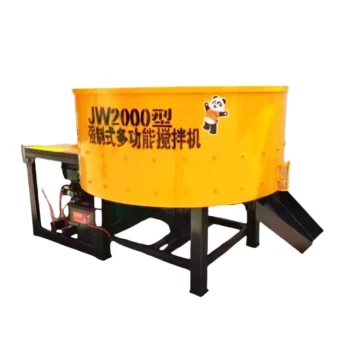
To clean a cement tank properly, the focus must be on careful, methodical maintenance rather than aggressive force. The process involves manually removing hardened material using only appropriate tools like chisels, servicing the dust collection system to prevent hazards, and thoroughly drying the tank afterward to prevent corrosion.
The goal of cleaning a cement tank is not just to empty it, but to preserve its structural integrity and ensure operational safety. The correct approach prioritizes preventing damage and mitigating risks over simply removing residue.
The Core Principles of Tank Maintenance
Understanding the "why" behind the cleaning process is crucial for extending the life and performance of your equipment. The entire procedure is built on three foundational principles.
Preserving Structural Integrity
The steel walls and protective paint of your tank are its primary defense against the elements.
Using excessive force, such as striking the tank with a hammer to dislodge hardened concrete, can cause permanent deformation. This not only weakens the structure but also damages the paint, creating an entry point for rust.
Ensuring Operational Safety
A cement tank is part of a larger system, and its components directly impact safety.
The dust collection system is a critical safety feature. Neglecting to clean its filter bags can lead to blockages, which in the worst-case scenario, can create conditions for a dust explosion. Always wear appropriate personal protective equipment, like a mask, when dealing with cement dust.
Preventing Corrosion and Contamination
Moisture is the primary enemy of a steel cement tank.
After any cleaning that involves water, the tank must be dried completely. Any remaining moisture will accelerate the formation of rust, compromising the tank's structure and potentially contaminating future material batches.
A Step-by-Step Guide to Cleaning
Follow this structured approach to ensure a thorough and safe cleaning process.
Step 1: Manual Material Removal
Begin by addressing the accumulated material inside the tank.
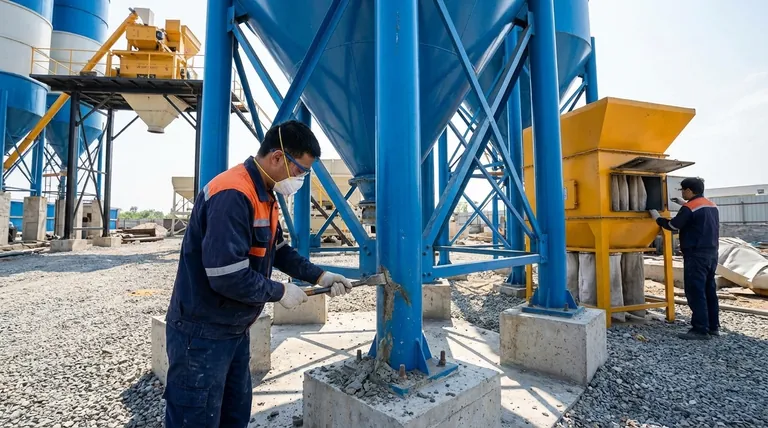
The cardinal rule is to prohibit the use of hammers. Instead, use a chisel to carefully break away and remove any hardened concrete. Work methodically to avoid denting the tank walls or chipping the interior paint.
Step 2: Servicing the Dust Collector
The dust collector requires regular, detailed attention.
Inspect the system for any blockages or damage. Empty the dust collector bags completely to maintain airflow and prevent pressure buildup. Depending on your system's design, use the appropriate mechanical or pulse cleaning function as specified by the manufacturer.
Step 3: Post-Cleaning Inspection and Drying
The final step is crucial for long-term protection.
Once the tank is clear of debris, conduct a thorough visual inspection of the interior and exterior. Look for any signs of rust, corrosion, or paint damage. Most importantly, ensure the tank interior is entirely dry before sealing it or refilling it with material.
Understanding the Risks and Pitfalls
Avoiding common mistakes is as important as following the correct procedure. Knowing the potential consequences reinforces the need for a careful approach.
The Danger of Excessive Force
The desire to clean quickly can lead to costly damage. Using a hammer or other blunt-force tools is a false economy that trades short-term speed for long-term structural failure and rust issues.
The Hidden Risk of a Neglected Dust System
A clogged dust collector is more than an inefficiency; it is a significant safety hazard. Blockages can impede material flow and, more critically, create an environment where a dangerous pressure event or dust explosion can occur.
The Corrosive Effect of Moisture
Leaving a tank damp after cleaning is a direct invitation for rust. Corrosion weakens the steel over time, reducing the tank's load-bearing capacity and shortening its operational lifespan.
How to Apply This to Your Operation
Use these points to guide your maintenance strategy based on your primary objectives.
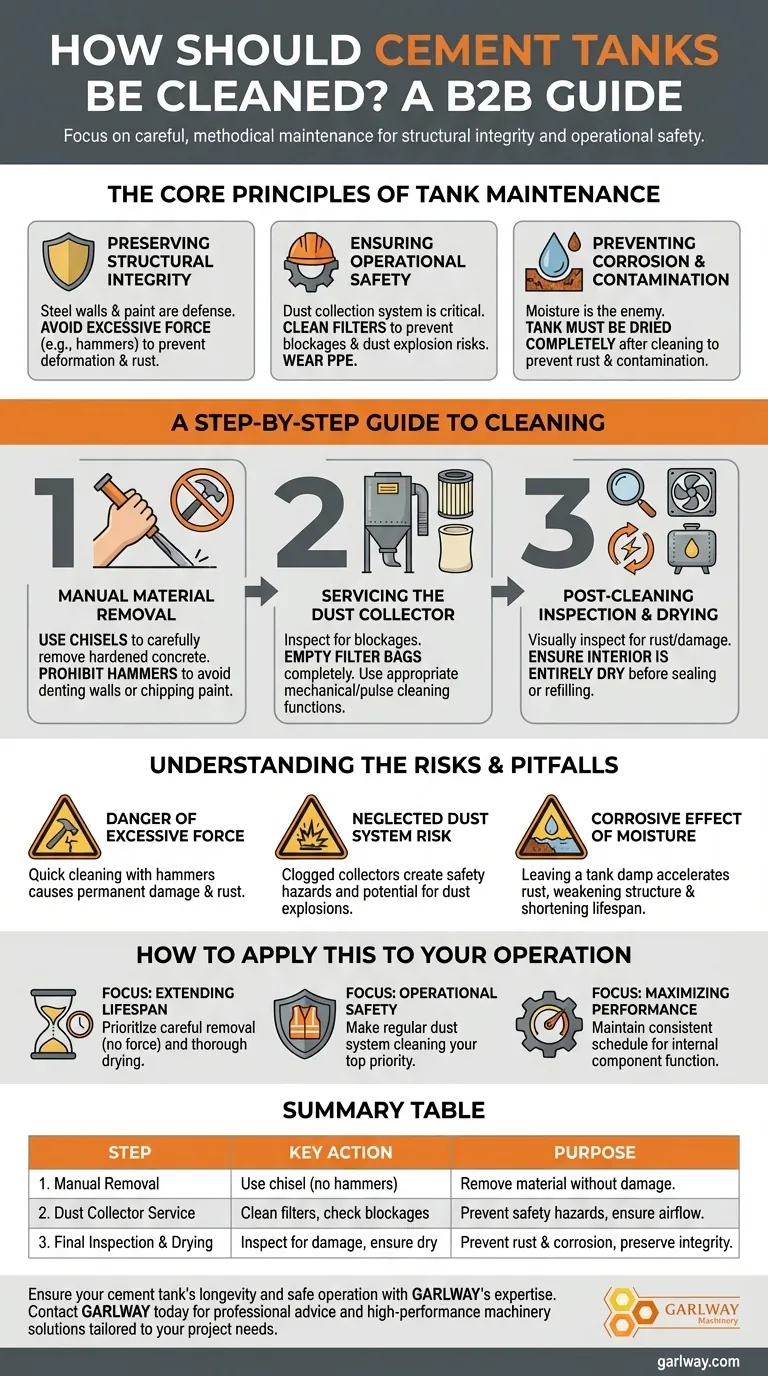
- If your primary focus is extending the tank's lifespan: Prioritize careful material removal without force and ensure the tank is always thoroughly dried to prevent rust.
- If your primary focus is operational safety: Make regular inspection and cleaning of the dust collection system your top priority to prevent hazardous blockages.
- If your primary focus is maximizing performance: Maintain a consistent cleaning schedule to ensure internal components like arch-breaking devices function correctly and material flow is never impeded.
Proper, regular maintenance is a direct investment in the safety, reliability, and longevity of your equipment.
Summary Table:
| Step | Key Action | Purpose |
|---|---|---|
| 1. Manual Removal | Use a chisel (no hammers) | Remove hardened material without damaging the tank's structure. |
| 2. Dust Collector Service | Clean filter bags and check for blockages | Prevent safety hazards like dust explosions and ensure proper airflow. |
| 3. Final Inspection & Drying | Inspect for damage and ensure the tank is completely dry | Prevent rust and corrosion, preserving the tank's integrity. |
Ensure your cement tank's longevity and safe operation with GARLWAY's expertise.
As a specialist in construction machinery, we understand the critical importance of proper equipment maintenance for construction companies and contractors. Our range of durable products, including concrete batching plants, mixers, and winches, is designed for reliability. Let our team help you implement the best maintenance practices to protect your investment.
Contact GARLWAY today for professional advice and high-performance machinery solutions tailored to your project needs.
Visual Guide
Related Products
- Mini Cement Mortar Mixer Truck for Construction
- HZS35 Small Cement Concrete Mixing Batch Plant
- HZS120 Ready Mix Concrete Batching Plant Commercial Mud Cement Mixer
- HZS75 Concrete Batching Plant Cement Mixer Price Concrete Mixer Bunnings Mixing Plant
- Belle Cement Mixer JS2000 Volumetric Concrete Mixer for Harbor Freight
People Also Ask
- Why might mixing mortar in a cement truck be problematic? Avoid Costly Mixing Mistakes
- What are the main types of construction cement mixers available? Choose the Right Mixer for Your Project
- What are the two primary methods for filling a cement mixer truck? Central vs. Transit Mix Explained
- What are the common uses of cement mixer trucks? Boosting Construction Efficiency and Quality
- What are the primary methods to fill a cement mixer truck? Central Mix vs. Transit Mix Explained