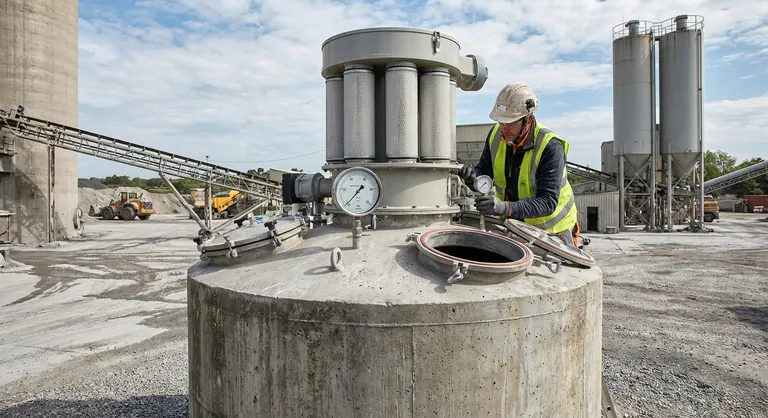
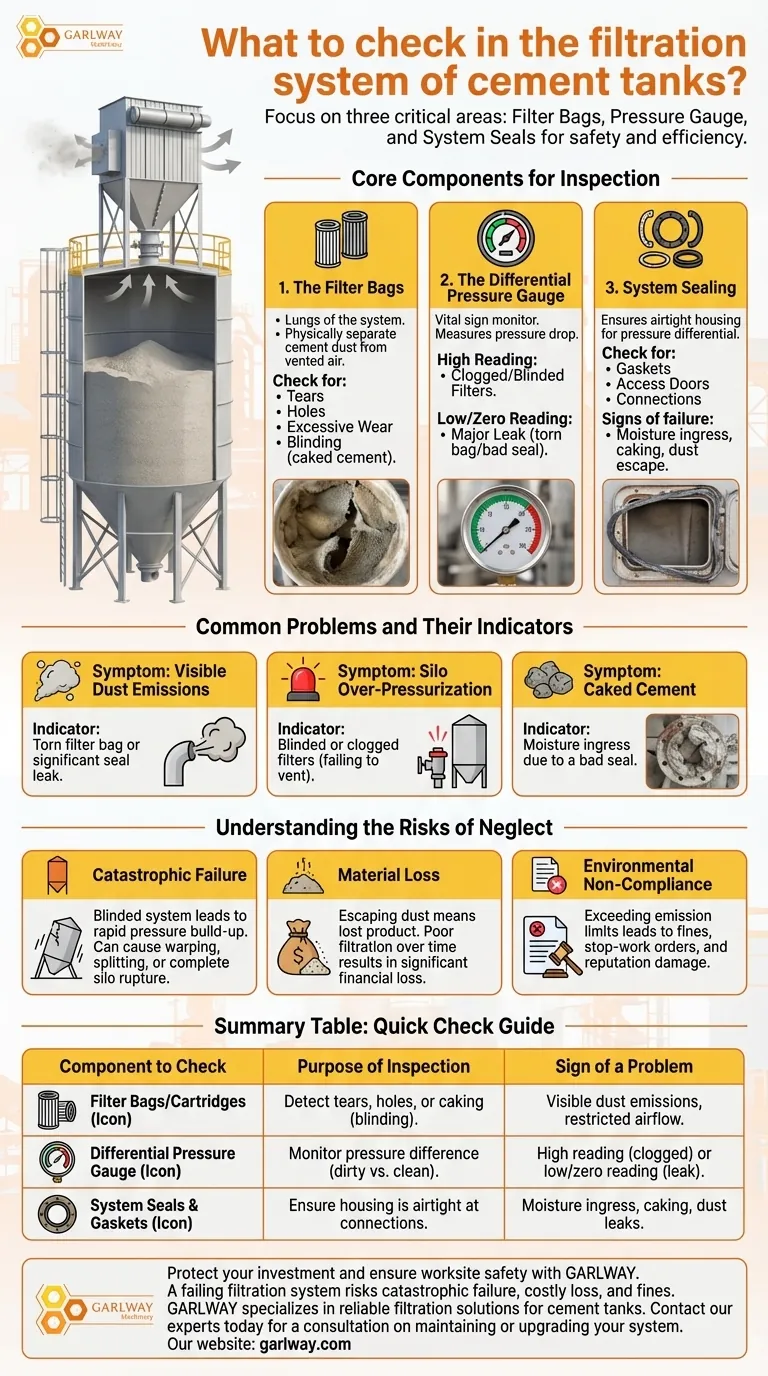
To properly inspect a cement tank's filtration system, you must focus on three critical areas: the condition of the internal filter bags, the reading on the differential pressure gauge, and the integrity of the system's seals. These components work together to control dust, manage pressure, and ensure the overall safety of the silo during filling operations.
A cement tank's filtration system, often called a dust collector, is more than an environmental control device—it is a critical safety mechanism. Its primary function is to allow air to escape the tank during pneumatic filling while capturing cement dust, preventing a dangerous over-pressurization that could damage the silo.
Core Components for Inspection
The health of your filtration system depends on the synergy between its key parts. A failure in one area will quickly compromise the entire operation.
The Filter Bags
The filter bags, or cartridges, are the lungs of the system. They physically separate the cement dust from the air that is being vented from the silo.
A direct visual inspection is necessary to check for any holes, tears, or excessive wear. You should also look for signs of "blinding," where the filter media has become caked with hardened cement, preventing air from passing through.
The Differential Pressure Gauge
This gauge is the system's most important vital sign monitor. It measures the difference in pressure between the "dirty" side (inside the filter housing) and the "clean" side (the atmosphere).
A high-pressure reading indicates that the filters are clogged or blinded, restricting airflow. A low or zero reading could signal a major leak, such as a torn filter bag or a compromised seal.
System Sealing
The entire dust collector housing must be airtight to function correctly. Air leaks compromise the system's ability to create the necessary pressure differential for efficient filtration.
Inspect all gaskets, access doors, and connection points for signs of wear, damage, or improper seating. A poor seal can allow moisture to enter, leading to cement caking, and can also allow dust to escape into the environment.
Common Problems and Their Indicators
Recognizing the symptoms of a failing filtration system allows you to intervene before a minor issue becomes a critical failure.
Symptom: Visible Dust Emissions
This is the most obvious sign of a problem. If you can see cement dust escaping from the dust collector's exhaust during a silo fill, it almost certainly means there is a torn filter bag or a significant leak in a system seal.
Symptom: Silo Over-Pressurization
If the pressure relief valve on the silo activates or if you get a high-pressure alarm, the filtration system is failing to vent air quickly enough. This is a dangerous situation that can lead to structural damage. The root cause is almost always blinded or clogged filters.
Symptom: Caked Cement
Finding hardened or caked cement on or around the dust collector is a clear indicator of moisture ingress. This is typically caused by a bad seal allowing humid air into the system, which then reacts with the fine cement dust.
Understanding the Risks of Neglect
Ignoring filtration maintenance is not a viable cost-saving measure. The potential consequences are severe and far outweigh the cost of routine inspections.
The Risk of Catastrophic Failure
A blinded filtration system can cause the pressure inside a cement tank to build rapidly during a pneumatic delivery. This can lead to the silo's structure warping, seams splitting, or in the worst-case scenario, a complete rupture of the tank.
The Cost of Material Loss
Every puff of dust that escapes the silo is lost product. Over time, a poorly performing filtration system can lead to significant and measurable material losses.
The Consequence of Environmental Non-Compliance
Regulatory bodies have strict limits on particulate emissions. A malfunctioning dust collector can lead to environmental fines, stop-work orders, and damage to your company's reputation.
Making the Right Choice for Your Goal
A structured approach to inspection ensures reliability and safety. Tailor your maintenance frequency to the operational tempo of your facility.
- If your primary focus is daily operational safety: Your operators should check the differential pressure gauge before every single silo filling operation.
- If your primary focus is routine preventative maintenance: Conduct weekly visual inspections of the unit for any audible air leaks or visible dust emissions during a fill.
- If your primary focus is long-term asset reliability: Schedule a complete internal inspection of the filter bags and collector housing on a semi-annual or annual basis, depending on usage.
Systematic inspection is the key to ensuring your cement storage system operates safely, efficiently, and within compliance.
Summary Table:
| Component to Check | Purpose of Inspection | Sign of a Problem |
|---|---|---|
| Filter Bags/Cartridges | Look for tears, holes, or cement caking (blinding). | Visible dust emissions, restricted airflow. |
| Differential Pressure Gauge | Monitor pressure difference between dirty and clean air sides. | High reading (clogged filters) or low/zero reading (leak). |
| System Seals & Gaskets | Ensure housing is airtight at all connections and doors. | Moisture ingress, cement caking, dust leaks. |
Protect your investment and ensure worksite safety with GARLWAY. A failing filtration system risks catastrophic silo failure, costly material loss, and environmental fines.
GARLWAY specializes in durable construction machinery, including reliable filtration solutions for cement tanks used by construction companies and contractors globally. Our expertise helps you maintain optimal performance and compliance.
Contact our experts today for a consultation on maintaining or upgrading your cement tank filtration system.
Visual Guide
Related Products
- HZS35 Small Cement Concrete Mixing Batch Plant
- Construction Products Concrete Plant Machine Mixing Concrete Mixer
- Auto Concrete Cement Mixer Machine New
- HZS180 Ready Mix Concrete Plant for Foundations with Sand and Cement
- HZS75 Concrete Batching Plant Cement Mixer Price Concrete Mixer Bunnings Mixing Plant
People Also Ask
- Why buy concrete batch plant parts only from the manufacturer? Protect Your Investment and Maximize Uptime
- Why is proper maintenance important for a concrete batch mix plant? Maximize Uptime & Profitability
- What is the advantage of a mobile concrete batching plant? Achieve On-Site Production & Total Control
- What are the advantages and disadvantages of concrete batching plants? Maximize Quality & Efficiency
- What are the two methods of material charging in a concrete mixing station? Single vs. Multiple Charging Explained