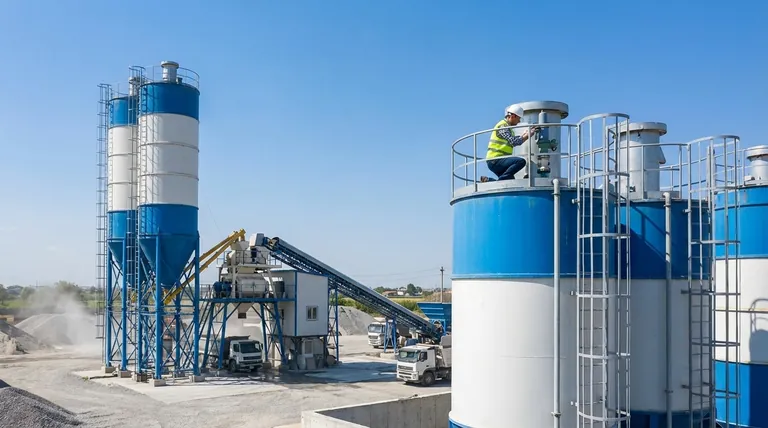
For a concrete mixing plant, the cement silo must be inspected every hour of operation. This frequent check is a critical safety measure focused primarily on the pressure relief valve located on the top of the silo.
The core purpose of regular silo inspection is to prevent catastrophic over-pressurization. The simple hourly check for dust is your first and most important line of defense against a major safety failure.
The Hourly Check: Your First Line of Defense
The most frequent inspection is also the most critical for immediate safety. It is a simple visual check that any trained operator can perform during their rounds.
The Core Task: Inspecting the Pressure Relief Valve
Your main focus during the hourly inspection is to observe the pressure relief valve on the silo's roof.
Specifically, you are looking for any signs of cement dust escaping or accumulating around this valve.
Why This Simple Check Matters
The pressure relief valve is the silo's last-resort safety device. Dust exiting this valve indicates that the primary dust collection system is failing and the silo is becoming pressurized during filling.
This pressure buildup is extremely dangerous and must be addressed immediately.
Immediate Corrective Action
If any dust is observed around the valve, you must take action.
Immediately clean the safety valve and the surrounding area to remove all powder. This prevents the cement dust from mixing with rain or moisture, which can cause it to harden into a solid clump and seize the valve, rendering it useless.
Beyond the Hourly Check: A Broader Maintenance Schedule
While the hourly check prevents immediate disaster, a structured, long-term maintenance plan ensures the silo's overall integrity and reliability.
The Semi-Annual Deep Clean
Every six months, the pressure relief valve requires more than a simple wipe-down.
It must be removed for a comprehensive cleaning and functional inspection. This ensures its internal components move freely and will operate correctly under pressure.
Verifying Structural Integrity
The physical structure of the silo itself demands regular attention. During planned shutdowns, check for:
- Corrosion: Look for rust spots, especially at welds, legs, and the base.
- Cracks: Inspect welds and foundation anchor points for any signs of stress cracking.
- Foundation: Ensure the concrete foundation is sound and has not settled or shifted.
Inspecting Ancillary Systems
Other components are vital for proper silo function. Periodically inspect the level indicators, aeration systems, and the dust collector itself to ensure they are all functioning as designed.
Understanding the Risk: The Cost of Negligence
Skipping these inspections introduces severe and unacceptable risks to your operation, your personnel, and your bottom line.
The Danger of Over-Pressurization
A silo is a pressure vessel. If the relief valve fails due to neglect, the pressure from pneumatic filling can cause the silo to rupture or explode, leading to catastrophic structural failure.
Operational Downtime and Material Loss
A failed silo brings production to a complete halt. Beyond the costly repairs, the loss of stored cement and the subsequent operational downtime can have a massive financial impact.
Regulatory and Environmental Liability
A silo rupture results in a significant release of fine particulate matter. This can lead to environmental fines and substantial cleanup costs, not to mention damage to your company's reputation.
Implementing an Effective Inspection Protocol
Your goal determines the rigor of your inspection process. A robust protocol transforms a silo from a potential liability into a reliable asset.
- If your primary focus is immediate operational safety: The non-negotiable hourly check of the pressure relief valve is your most critical task.
- If your primary focus is long-term asset reliability: Implement the full semi-annual deep clean and structural inspection schedule without fail.
- If your primary focus is total site compliance: Meticulously document every hourly check, semi-annual service, and corrective action in a dedicated maintenance log.
Consistent, documented inspection is the key to running a safe, efficient, and profitable plant.
Summary Table:
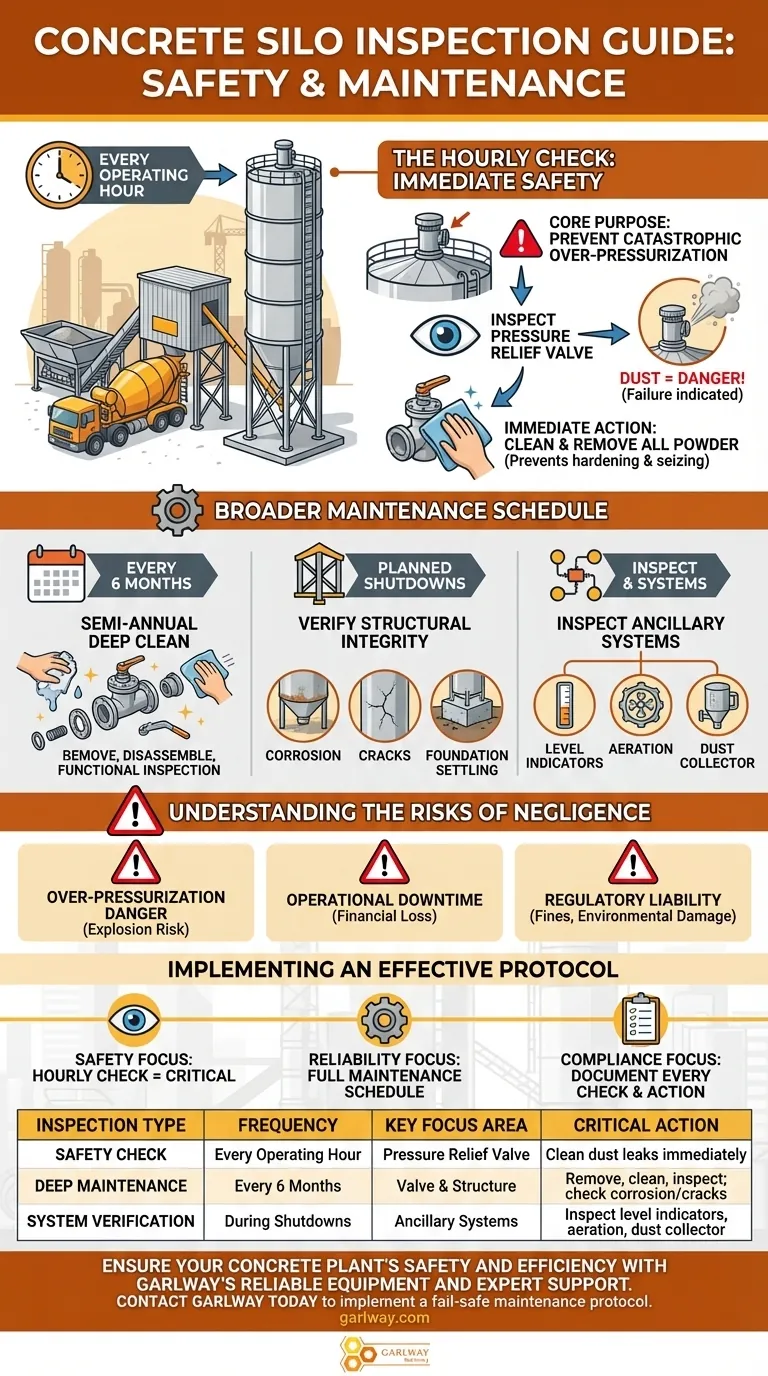
| Inspection Type | Frequency | Key Focus Area | Critical Action |
|---|---|---|---|
| Safety Check | Every Operating Hour | Pressure Relief Valve | Look for dust leaks; clean immediately if found. |
| Deep Maintenance | Every 6 Months | Valve & Structure | Remove, clean, and inspect valve; check for corrosion/cracks. |
| System Verification | During Shutdowns | Ancillary Systems | Inspect level indicators, aeration, and dust collector. |
Ensure your concrete plant's safety and efficiency with GARLWAY's reliable equipment and expert support.
As a specialist in construction machinery, including robust concrete batching plants and mixers, GARLWAY understands that consistent equipment inspection is key to preventing costly downtime and dangerous failures. Our solutions are designed for durability and ease of maintenance, helping contractors and construction companies globally maintain peak operational safety.
Contact GARLWAY today to discuss how our equipment and expertise can help you implement a fail-safe maintenance protocol for your plant.
Visual Guide
Related Products
- HZS35 Small Cement Concrete Mixing Batch Plant
- HZS120 Ready Mix Concrete Batching Plant Commercial Mud Cement Mixer
- JW1000 Mobile Cement Mixer Concrete Mixer Truck and Batching Plant
- Portable Cement Mixer with Lift Concrete Machine
- HZS75 Concrete Batching Plant Cement Mixer Price Concrete Mixer Bunnings Mixing Plant
People Also Ask
- Why buy concrete batch plant parts only from the manufacturer? Protect Your Investment and Maximize Uptime
- Why is proper maintenance important for a concrete batch mix plant? Maximize Uptime & Profitability
- What is the advantage of a mobile concrete batching plant? Achieve On-Site Production & Total Control
- What are the advantages and disadvantages of concrete batching plants? Maximize Quality & Efficiency
- What are the two methods of material charging in a concrete mixing station? Single vs. Multiple Charging Explained