
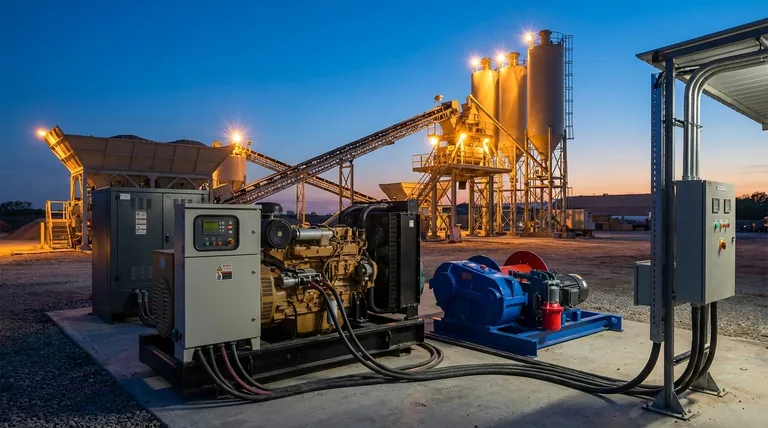
At its core, the electricity and generator system is important because it is the fundamental power source for every single electrical component and automated process within a concrete batching plant. Without a stable and continuous supply of power, the entire operation—from precise measurement to mixing and control—ceases to function, rendering the plant inoperable.
The power system is not merely an accessory; it is the essential lifeblood that enables the plant's core functions of precision, automation, and reliability. A backup generator acts as critical insurance, protecting against the catastrophic operational and financial costs of a power failure.
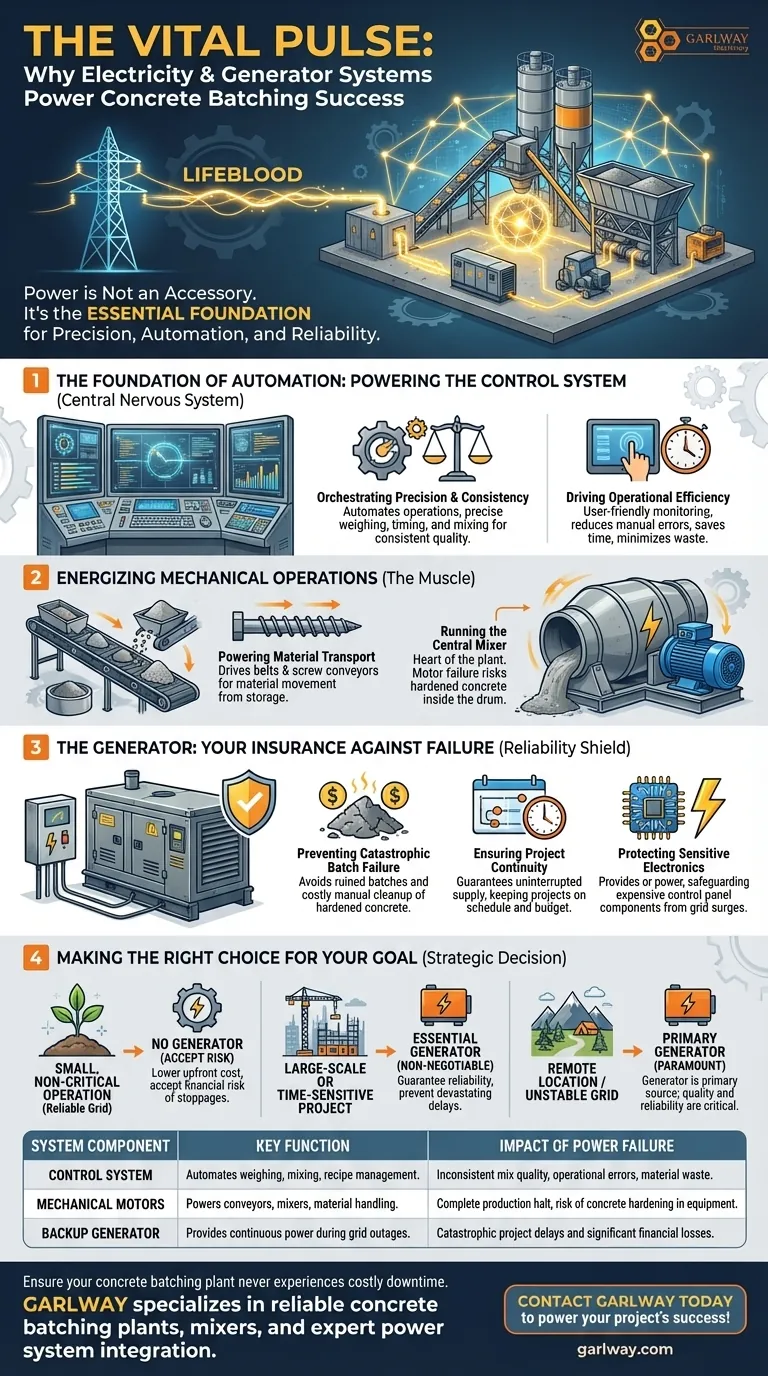
The Foundation of Automation: Powering the Control System
The control system is the central nervous system of a modern batching plant, and it runs entirely on electricity. Its role is to guarantee the quality and efficiency that defines automated concrete production.
Orchestrating Precision and Consistency
The control system automates operations based on pre-programmed mix designs. It requires a steady power supply to precisely open gates, weigh aggregates and cement, measure water, and time the mixing cycle. This electrical orchestration is what guarantees consistent concrete quality batch after batch.
Driving Operational Efficiency
A powered control panel allows operators to store recipes, make quick adjustments, and monitor the entire process from a user-friendly interface. This automation dramatically reduces the potential for manual errors, saves time, and minimizes material waste.
Energizing the Mechanical Operations
Beyond the digital controls, the sheer physical work of moving and mixing tons of material is accomplished by powerful electric motors and actuators.
Powering Material Transport
Electricity drives the conveyor belts that move aggregates from storage bins to the weigh hopper. It also powers the screw conveyors that draw cement and fly ash from their silos.
Running the Central Mixer
The heart of the plant is the mixer, which uses a large electric motor to blend all the components into homogenous concrete. A failure of this motor mid-batch can be disastrous, potentially leaving hardened concrete inside the drum.
The Generator: Your Insurance Against Failure
While the grid provides primary electricity, the backup generator is what provides operational certainty. In the world of construction, downtime is immensely expensive, and a power outage can halt an entire project.
Preventing Catastrophic Batch Failure
Losing power in the middle of a mixing cycle can ruin the entire batch of concrete. Even worse, it can lead to concrete hardening inside the mixer, requiring costly and time-consuming manual cleanup or even equipment replacement.
Ensuring Project Continuity
For any time-sensitive construction project, delays are unacceptable. A generator ensures that the batching plant can continue to supply concrete regardless of local power grid failures, keeping the project on schedule and on budget.
Protecting Sensitive Electronics
Sudden power outages or surges from an unstable grid can damage the delicate and expensive electronics within the main control panel. A generator paired with an automatic transfer switch can provide a cleaner, more stable source of power, protecting your investment.
Making the Right Choice for Your Goal
Selecting the right power configuration is a critical decision that should be based on your operational needs and risk tolerance, not just the lowest upfront cost.
- If your primary focus is a small, non-critical operation with a highly reliable power grid: You may choose to operate without a backup generator, but you must fully accept the financial risk of production stoppages.
- If your primary focus is a large-scale or time-sensitive project: An appropriately sized backup generator is an essential, non-negotiable component to guarantee reliability and prevent devastating delays.
- If your primary focus is operating in a remote location or an area with an unstable grid: The generator becomes your primary power source, and its quality and reliability are paramount to the success of your entire operation.
Ultimately, a robust electricity and generator system is the bedrock upon which the efficiency, quality, and reliability of modern concrete production are built.
Summary Table:
| System Component | Key Function | Impact of Power Failure |
|---|---|---|
| Control System | Automates weighing, mixing, and recipe management. | Inconsistent mix quality, operational errors, material waste. |
| Mechanical Motors | Powers conveyors, mixers, and material handling. | Complete production halt, risk of concrete hardening in equipment. |
| Backup Generator | Provides continuous power during grid outages. | Catastrophic project delays and significant financial losses. |
Ensure your concrete batching plant never experiences costly downtime. GARLWAY specializes in construction machinery, offering reliable concrete batching plants, mixers, and expert guidance on integrating robust power systems. Our solutions are designed for construction companies and contractors globally who demand uninterrupted production and operational reliability.
Contact GARLWAY today to discuss how we can power your project's success!
Visual Guide
Related Products
- HZS120 Ready Mix Concrete Batching Plant Commercial Mud Cement Mixer
- HZS35 Small Cement Concrete Mixing Batch Plant
- HZS75 Concrete Batching Plant Cement Mixer Price Concrete Mixer Bunnings Mixing Plant
- HZS180 Ready Mix Concrete Plant for Foundations with Sand and Cement
- Commercial Electric Concrete Mixer Machine HZS 50 Small Batch Plant for Sale
People Also Ask
- What is a ready mix concrete batching plant? The Engine of Modern Construction
- What is the name of the machine used in ready mix? Unpacking the Complete Concrete System
- What is the core component of a concrete batching plant? The Mixer Unit Defines Your Concrete Quality
- What are the types of concrete mixers used in batching plants? Choose the Right Mixer for Your Project
- What are the advantages and disadvantages of concrete batching plants? Maximize Quality & Efficiency





