
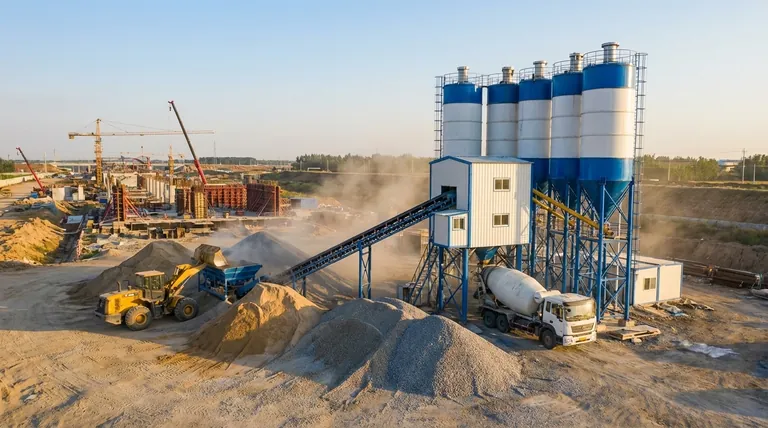
In short, a concrete batching plant is an industrial facility that manufactures concrete with high precision and volume. It's not just a simple mixer; it is a sophisticated system that combines specific amounts of aggregates, sand, water, cement, and admixtures according to a pre-defined recipe to create ready-mix concrete for construction projects.
The critical function of a batching plant is to move beyond manual mixing, ensuring every single batch of concrete meets exact engineering specifications for strength, consistency, and quality. It achieves this through automated systems for weighing, conveying, and mixing the core ingredients.
The Purpose: Why Batching Plants are Essential
The deep need for a batching plant stems from the demands of modern construction. Simply mixing ingredients by hand or with a small mixer is inadequate for large-scale projects that require thousands of cubic meters of concrete.
Achieving Unwavering Consistency
A batching plant automates the measurement of each component. This eliminates human error and guarantees that the concrete produced today is identical in quality and performance to the concrete produced tomorrow.
Meeting High-Volume Demand
Large civil and road construction projects require a continuous, reliable supply of concrete. Batching plants are designed for high-throughput production, capable of delivering precisely what is needed, when it is needed.
Adhering to Strict Specifications
Engineered structures rely on concrete that meets specific strength and durability standards. The plant's control system ensures that the mix design—the precise recipe for the concrete—is followed perfectly for every single load.
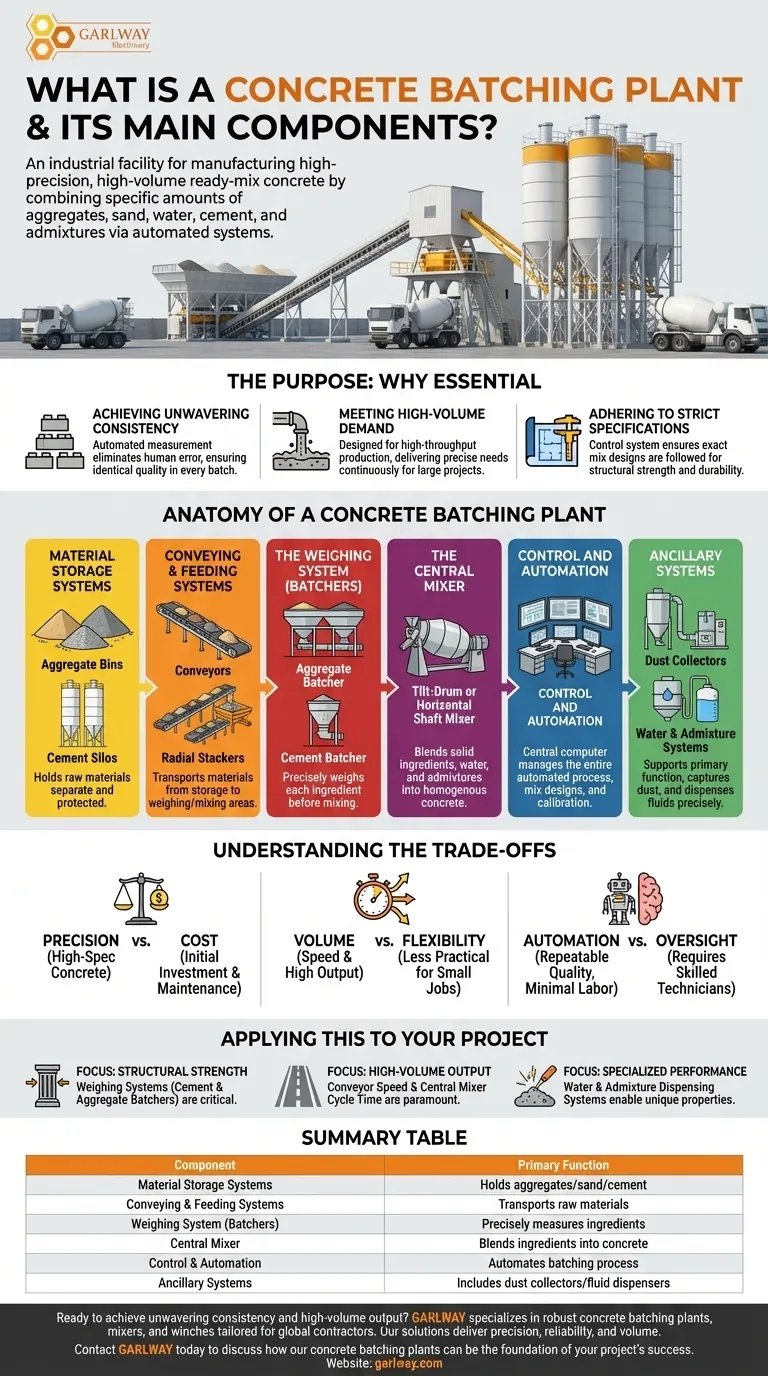
Anatomy of a Concrete Batching Plant
A batching plant is a collection of interconnected systems, each with a distinct role in transforming raw materials into finished concrete.
Material Storage Systems
This is the starting point of the process. Raw materials are kept separate and protected from the elements to maintain their quality.
- Aggregate Bins: These large hoppers hold different sizes of rock, gravel, and sand.
- Cement Silos: These tall, enclosed structures store cement and other fine powders like fly ash or silica fume, keeping them dry.
Conveying and Feeding Systems
These components move the raw materials from storage to the weighing and mixing areas.
- Conveyors: Belt conveyors are the most common method for transporting aggregates from the storage bins to the aggregate batcher.
- Radial Stackers: These are often used to create stockpiles of different aggregates that feed the plant.
The Weighing System (Batchers)
This is the heart of the plant's precision and what gives the "batch plant" its name. Each ingredient is weighed in a dedicated hopper, or "batcher," before being sent to the mixer.
- Aggregate Batcher: A large scale that weighs the precise amount of sand and different aggregates required by the recipe.
- Cement Batcher: A smaller, enclosed scale that accurately weighs cement and other powders.
The Central Mixer
Once all the solid ingredients are weighed, they are discharged into the central mixer. Here, water and chemical admixtures are added, and the components are blended into homogenous concrete. Common types include tilt-drum or horizontal shaft mixers.
Control and Automation
The entire operation is managed by a central computer. The control system houses the mix designs, operates the gates and conveyors, reads the scales, and controls the mixing time to ensure a fully automated and accurate process.
Ancillary Systems
Several other components support the primary function.
- Dust Collectors: These systems capture airborne cement dust during the loading and batching process, protecting the environment and workers.
- Water and Admixture Systems: Dedicated plumbing and dispensers add the precise amount of water and chemical admixtures needed to control the concrete's properties, such as its setting time or workability.
Understanding the Trade-offs
While essential for modern construction, using a batching plant involves clear trade-offs compared to simpler mixing methods.
Precision vs. Cost
A batching plant offers unparalleled precision, which is non-negotiable for high-specification concrete. This accuracy comes at the cost of significant initial investment in equipment and the complexity of maintaining it.
Volume vs. Flexibility
These plants are built for speed and high-volume output, making them ideal for large projects. They are less practical or cost-effective for very small, intermittent jobs where a portable mixer might suffice.
Automation vs. Oversight
The automated control system ensures repeatable quality with minimal labor. However, it requires skilled technicians to operate, calibrate, and troubleshoot the system to maintain that level of performance.
Applying This to Your Project
Understanding the components helps you appreciate how concrete quality is achieved and controlled on a professional job site.
- If your primary focus is consistent structural strength: The accuracy of the cement and aggregate batchers (weighing systems) is the most critical element.
- If your primary focus is high-volume output for paving: The speed of the conveyor systems and the cycle time of the central mixer are paramount.
- If your primary focus is specialized performance (e.g., rapid-setting): The precision of the water and admixture dispensing systems is what enables unique concrete properties.
By understanding that a batching plant is a system of coordinated parts, you can better appreciate the quality control that underpins all major modern construction.
Summary Table:
| Component | Primary Function |
|---|---|
| Material Storage Systems | Holds aggregates, sand, and cement in separate, protected hoppers and silos. |
| Conveying & Feeding Systems | Transports raw materials (e.g., via belt conveyors) from storage to the weighing area. |
| Weighing System (Batchers) | Precisely measures the exact amount of each ingredient (aggregates, cement) for the recipe. |
| Central Mixer | Blends all weighed ingredients with water and admixtures into homogenous concrete. |
| Control & Automation | A central computer that automates the entire batching process for accuracy and repeatability. |
| Ancillary Systems | Includes dust collectors and water/admixture dispensers for safety and concrete properties. |
Ready to achieve unwavering consistency and high-volume output for your construction project?
GARLWAY specializes in providing robust and efficient construction machinery, including concrete batching plants, concrete mixers, and winches, tailored for construction companies and contractors globally. Our solutions are engineered to deliver the precision, reliability, and volume your projects demand.
Contact GARLWAY today to discuss how our concrete batching plants can be the foundation of your project's success.
Visual Guide
Related Products
- HZS120 Ready Mix Concrete Batching Plant Commercial Mud Cement Mixer
- HZS35 Small Cement Concrete Mixing Batch Plant
- HZS75 Concrete Batching Plant Cement Mixer Price Concrete Mixer Bunnings Mixing Plant
- HZS180 Ready Mix Concrete Plant for Foundations with Sand and Cement
- Commercial Electric Concrete Mixer Machine HZS 50 Small Batch Plant for Sale
People Also Ask
- What is a ready mix concrete batching plant? The Engine of Modern Construction
- What is the name of the machine used in ready mix? Unpacking the Complete Concrete System
- What is the core component of a concrete batching plant? The Mixer Unit Defines Your Concrete Quality
- What are the types of concrete mixers used in batching plants? Choose the Right Mixer for Your Project
- What are the advantages and disadvantages of concrete batching plants? Maximize Quality & Efficiency





