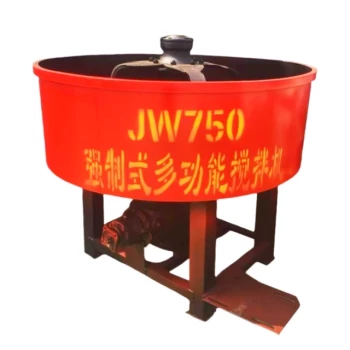
The primary advantages of a centralized concrete mixing plant are superior quality control, significant operational efficiency, and a reduced environmental footprint. By producing concrete in a controlled environment, these plants deliver a highly consistent product that streamlines on-site operations like pumping and pouring, ultimately leading to faster, more reliable construction.
Centralizing concrete production shifts the focus from managing raw materials on a chaotic job site to receiving a consistent, high-quality, ready-to-use product. This trade-off requires a higher initial investment but pays dividends in project speed, structural integrity, and sustainability.
The Core Advantage: Unmatched Quality Control
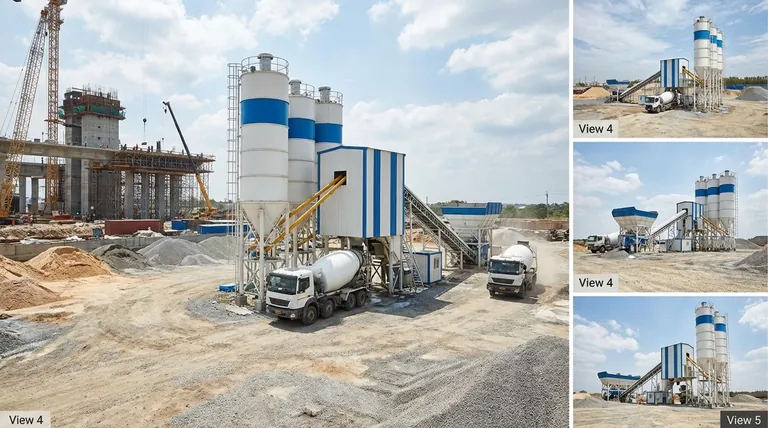
Centralized plants, often called ready-mix or central-mix plants, remove the variability of on-site mixing. This controlled environment is the foundation of their value.
Achieving High Consistency and Uniformity
By using precise, automated batching systems, central plants ensure that every batch of concrete has the exact same proportions of cement, water, and aggregates. This eliminates the human error common in site mixing. The result is pre-mixed concrete with exceptional consistency and uniformity, which is critical for meeting stringent engineering specifications.
Centralized Expertise and Monitoring
These facilities are managed by trained technicians who continuously monitor the mixing process. They can adjust for variables like moisture content in aggregates, ensuring the final product meets all quality standards before it ever leaves the plant.
Streamlining On-Site Operations
Receiving ready-made concrete dramatically simplifies the logistics and workflow at the construction site.
Enabling Efficient Pumping and Pouring
The consistent quality of centrally mixed concrete makes it ideal for use with concrete pumps. This facilitates a combined and continuous operation of mixing, transporting, and pouring machinery, which is essential for large-scale projects that require a high volume of concrete placed quickly.
Faster Batching and Immediate Use
With a central plant, large volumes of concrete are batched much faster than with on-site mixers. The concrete arrives at the site ready for immediate use, reducing downtime and keeping the project on schedule.
Economic and Environmental Impact
Centralization offers tangible benefits beyond the immediate construction process, impacting both cost and sustainability.
Reducing Material Waste
A controlled plant environment minimizes the spillage and waste of cement, sand, and aggregates that often occurs with on-site storage and mixing. This efficient use of materials leads to direct cost savings.
Improving Energy Efficiency
Modern centralized plants, particularly mobile or containerized versions, are designed for energy efficiency. They consume less fuel and produce fewer emissions compared to operating multiple smaller mixers across a construction site. Reducing the need for raw material transportation to the site further lowers the project's overall carbon footprint.
Understanding the Trade-offs
While the advantages are significant, choosing a centralized plant involves important considerations.
Higher Initial Investment
The primary drawback is the cost of the equipment. Central mix plants are more technologically advanced and require a larger capital outlay than simple on-site mixers. This investment must be justified by the scale and quality requirements of the project.
Logistical Dependency
Using a central plant makes the project dependent on transportation. Any delays in traffic or issues with the delivery trucks can halt work on-site. This requires careful planning and coordination between the plant and the construction team.
How to Apply This to Your Project
Your decision should be based on the specific demands and constraints of your construction work.
- If your primary focus is large-scale construction with tight deadlines: A centralized plant is superior due to its high output and ability to support continuous pouring operations.
- If your primary focus is meeting high-performance specifications: The unparalleled quality control and consistency of a central plant make it the only reliable choice.
- If your primary focus is environmental sustainability and waste reduction: A centralized plant offers significant advantages by optimizing material use and reducing on-site emissions.
Ultimately, adopting a centralized concrete mixing strategy is an investment in predictability, quality, and efficiency for any serious construction project.
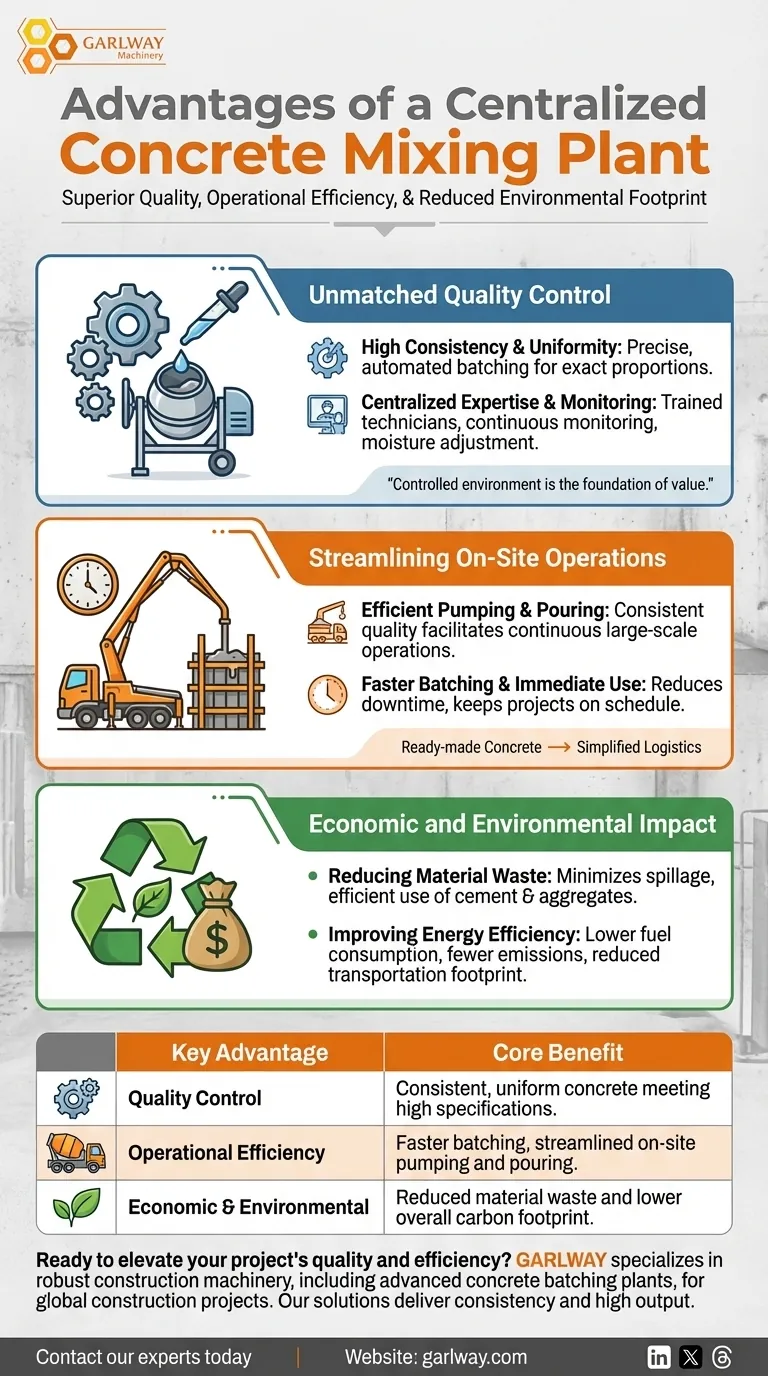
Summary Table:
| Key Advantage | Core Benefit |
|---|---|
| Quality Control | Consistent, uniform concrete meeting high specifications. |
| Operational Efficiency | Faster batching, streamlined on-site pumping and pouring. |
| Economic & Environmental | Reduced material waste and lower overall carbon footprint. |
Ready to elevate your project's quality and efficiency? GARLWAY specializes in providing robust construction machinery, including advanced concrete batching plants, for construction companies and contractors globally. Our solutions are designed to deliver the consistency and high output your large-scale projects demand. Contact our experts today to discuss how we can support your success.
Visual Guide
Related Products
- HZS35 Small Cement Concrete Mixing Batch Plant
- HZS180 Ready Mix Concrete Plant for Foundations with Sand and Cement
- HZS75 Concrete Batching Plant Cement Mixer Price Concrete Mixer Bunnings Mixing Plant
- HZS120 Ready Mix Concrete Batching Plant Commercial Mud Cement Mixer
- Commercial Electric Concrete Mixer Machine HZS 50 Small Batch Plant for Sale
People Also Ask
- Why buy concrete batch plant parts only from the manufacturer? Protect Your Investment and Maximize Uptime
- Why is proper maintenance important for a concrete batch mix plant? Maximize Uptime & Profitability
- What is the advantage of a mobile concrete batching plant? Achieve On-Site Production & Total Control
- What are the advantages and disadvantages of concrete batching plants? Maximize Quality & Efficiency
- What are the two methods of material charging in a concrete mixing station? Single vs. Multiple Charging Explained