The skill level of your operators is a critical factor that directly correlates with the appropriate complexity and automation of the concrete batching plant you should choose. Smaller plants with simple controls are suitable for less experienced staff, while larger, highly automated plants demand skilled technicians to operate them effectively and safely.
The choice isn't just about the machine; it's about the human-machine system. Aligning the plant's complexity with your team's capabilities is essential to prevent costly errors, protect your investment, and ensure consistent concrete quality.

The Link Between Plant Complexity and Operator Skill
The relationship is straightforward: as the technological sophistication of the batching plant increases, so do the technical demands placed on the operator.
Simple Plants: Lower Barrier to Entry
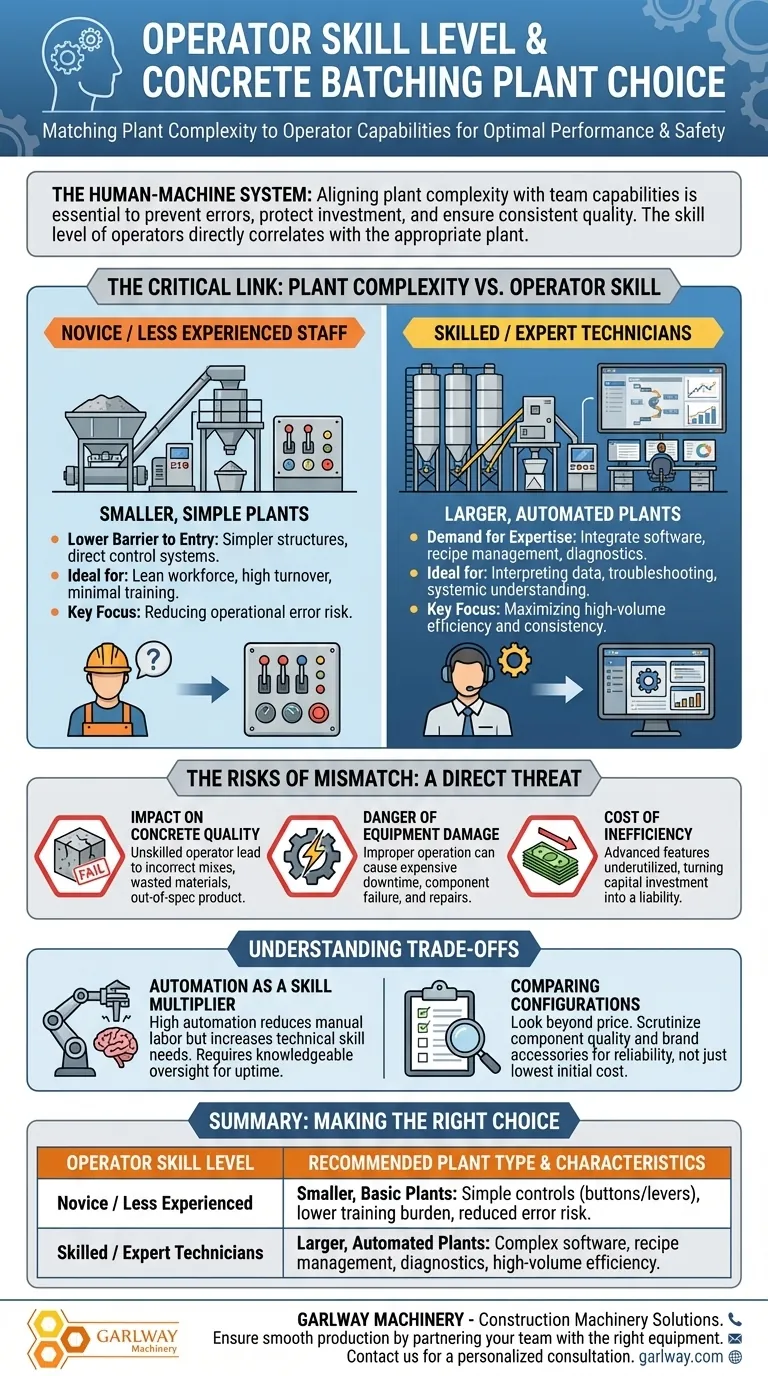
Smaller or more basic batching plants often feature simpler structures and more direct control systems, such as buttons and levers.
This design requires less specialized knowledge to operate on a daily basis, making it a practical choice for businesses with a less experienced workforce or higher staff turnover.
Advanced Plants: The Demand for Expertise
Larger, modern plants are highly automated, running on complex control systems that integrate software for recipe management, moisture control, and diagnostics.
Operating these systems requires more than just pushing buttons. It demands an operator who can interpret data, manage software parameters, troubleshoot error codes, and understand the entire production process at a systemic level.
Why a Mismatch Creates Significant Risk
Placing an operator with the wrong skill level on a plant is not just inefficient; it's a direct risk to your production, equipment, and bottom line.
The Impact on Concrete Quality
A skilled operator on an advanced plant can leverage automation to produce highly consistent, high-quality concrete batch after batch.
An unskilled operator on the same machine may struggle with the controls, leading to incorrect mixes, wasted materials, and a final product that fails to meet specifications.
The Danger of Equipment Damage
Sophisticated plants have intricate mechanical and electrical systems. Improper operation, born from a lack of understanding, can easily lead to component failure or significant damage.
This results in expensive downtime and repairs that could have been avoided with a properly trained operator.
The Cost of Inefficiency
An advanced plant's primary benefit is high-volume, efficient production. If an operator cannot utilize its features correctly, the plant will not perform at its rated capacity.
You end up paying for advanced technology without reaping any of its economic benefits, turning a capital investment into a liability.
Understanding the Trade-offs
Choosing a plant isn't about simply picking the "best" one available; it's about selecting the most effective tool for your specific operational context.
Automation as a Skill Multiplier
High automation reduces the need for manual labor but increases the need for technical skill. It automates repetitive tasks but requires a knowledgeable operator to oversee the system.
Don't mistake "automated" for "unattended." A skilled technician is crucial for maximizing the uptime and performance of an automated system.
Comparing Manufacturer Configurations
When comparing prices, look beyond the total cost and scrutinize the configuration list, including the brands of key accessories.
A cheaper plant may use lower-quality components that are less reliable. The goal is to find the most economical and effective choice that fits your operational needs, not just the lowest initial price.
Making the Right Choice for Your Team
Your decision should be guided by a realistic assessment of your current and future workforce capabilities.
- If your primary focus is leveraging a novice or lean workforce: Opt for a smaller plant with a simpler, more manual control system to minimize the training burden and reduce the risk of operational errors.
- If your primary focus is maximizing output and consistency with a skilled team: Invest in a larger, more automated plant, as your operators will be able to fully utilize its advanced features for peak performance.
Ultimately, a successful operation depends on a seamless partnership between your equipment and the people who run it.
Summary Table:
| Operator Skill Level | Recommended Plant Type | Key Characteristics |
|---|---|---|
| Novice / Less Experienced | Smaller, Basic Plants | Simple controls (buttons/levers), lower training burden, reduced error risk |
| Skilled / Expert Technicians | Larger, Automated Plants | Complex software, recipe management, diagnostics, high-volume efficiency |
Ensure your concrete production runs smoothly by partnering your team with the right equipment. GARLWAY specializes in construction machinery, offering a range of concrete batching plants, mixers, and winches designed for construction companies and contractors globally. Whether you need a simple, robust plant for a novice team or a high-tech, automated system for your experts, we can help you make the perfect match to protect your investment and ensure consistent quality. Contact GARLWAY today for a personalized consultation and quote!
Visual Guide
Related Products
- HZS35 Small Cement Concrete Mixing Batch Plant
- HZS120 Ready Mix Concrete Batching Plant Commercial Mud Cement Mixer
- HZS75 Concrete Batching Plant Cement Mixer Price Concrete Mixer Bunnings Mixing Plant
- HZS180 Ready Mix Concrete Plant for Foundations with Sand and Cement
- Commercial Electric Concrete Mixer Machine HZS 50 Small Batch Plant for Sale
People Also Ask
- Why buy concrete batch plant parts only from the manufacturer? Protect Your Investment and Maximize Uptime
- Why is proper maintenance important for a concrete batch mix plant? Maximize Uptime & Profitability
- What is the advantage of a mobile concrete batching plant? Achieve On-Site Production & Total Control
- What are the advantages and disadvantages of concrete batching plants? Maximize Quality & Efficiency
- What are the two methods of material charging in a concrete mixing station? Single vs. Multiple Charging Explained