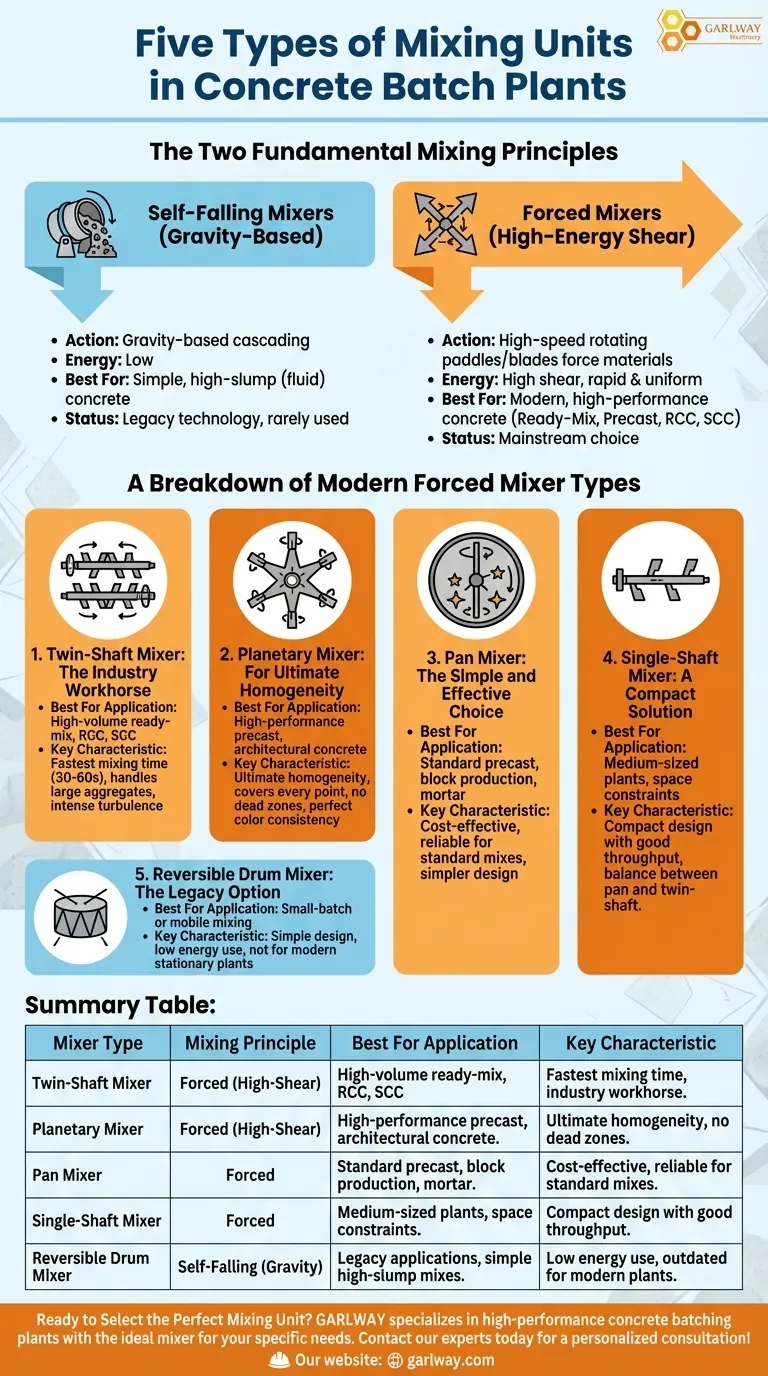
In concrete batch plants, there are five primary types of mixing units. These are the reversible drum mixer, single-shaft mixer, twin-shaft mixer, pan mixer, and planetary mixer. They are broadly categorized into two fundamental mixing principles: self-falling and forced mixing, with forced mixers being the dominant technology in modern applications.
The core difference between mixer types comes down to mixing energy and action. While older plants used gravity-based drum mixers, today's performance concrete demands the high-shear, mechanical action of forced mixers like the twin-shaft and planetary models to achieve necessary strength and consistency.
The Two Fundamental Mixing Principles
Before comparing specific mixer models, it's essential to understand the two core philosophies behind how they work. This distinction is the most important factor in a plant's capability.
Self-Falling Mixers (Gravity-Based)
Self-falling mixers, primarily the reversible drum type, use gravity to mix materials. The drum lifts the aggregate and cement, which then tumble back down, creating a cascading effect.
This method uses low energy and is only suitable for mixing simple, high-slump (fluid) concrete. It is considered legacy technology and is rarely used in modern stationary batch plants.
Forced Mixers (High-Energy Shear)
Forced mixers use paddles or blades rotating at high speed to force materials to move and shear against each other. This high-energy action ensures a rapid, uniform, and consistent mixture.
This is the mainstream choice for all modern concrete plants. It is essential for producing everything from standard ready-mix to high-performance, semi-dry, or dry-hard concrete. The single-shaft, twin-shaft, pan, and planetary mixers all fall into this category.
A Breakdown of Modern Forced Mixer Types
Choosing a forced mixer depends on the specific application, required output, and desired concrete quality.
The Twin-Shaft Mixer: The Industry Workhorse
The twin-shaft mixer is the most common mixer found in high-production concrete batch plants today. Two horizontal shafts with attached paddles rotate in opposite directions, creating intense turbulence and shear in the center of the mixer.
This powerful action guarantees a homogenous mix in a very short time, typically 30-60 seconds. It excels at handling large aggregate sizes and producing difficult mixes like Roller-Compacted Concrete (RCC) and Self-Consolidating Concrete (SCC).
The Planetary Mixer: For Ultimate Homogeneity
A planetary mixer, also known as a counter-current mixer, provides the most complex and thorough mixing action. It features one or two rotating "stars" with mixing paddles that revolve around the mixer's central axis while also rotating on their own.
This ensures that the paddles cover every point within the mixer drum, eliminating dead zones and producing an exceptionally uniform batch. It is the preferred choice for high-performance precast applications, architectural concrete, and products requiring perfect color consistency.
The Pan Mixer: The Simple and Effective Choice
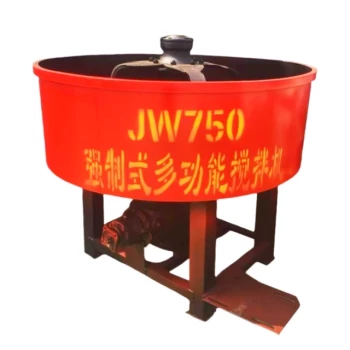
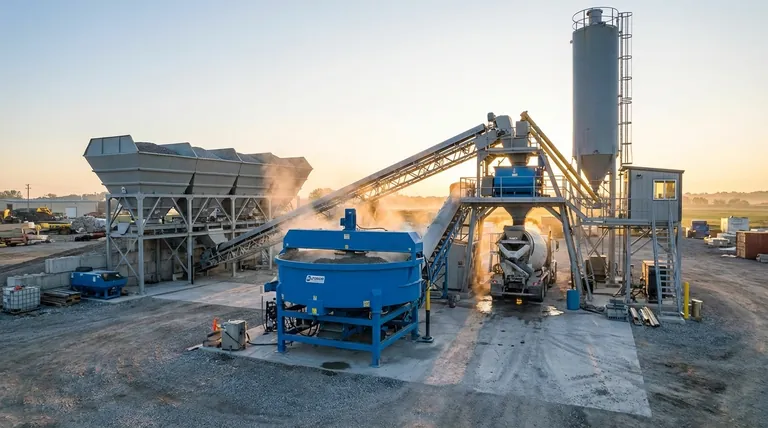
The pan mixer consists of a stationary circular pan where mixing stars with paddles rotate on a vertical axis. It's a simpler and more economical design compared to a planetary mixer.
While its mixing action is less intense than a planetary or twin-shaft, it is a reliable and effective solution for standard precast operations, block manufacturing, and mortar production.
The Single-Shaft Mixer: A Compact Solution
As the name implies, this mixer uses a single horizontal shaft with paddles. It functions as a balance between the compact design of a pan mixer and the throughput capabilities of a twin-shaft.
It is a capable forced mixer often used in medium-sized plants where space or production demands don't warrant a full twin-shaft system.
Understanding the Trade-offs
The ideal mixer is not a one-size-fits-all solution. Your choice involves balancing performance, cost, and operational requirements.
Mixing Energy vs. Cost
Higher mixing energy comes at a price. Planetary and twin-shaft mixers represent a significant capital investment but deliver unparalleled performance for demanding applications. Pan and single-shaft mixers offer a lower initial cost for less critical mixing tasks.
Speed vs. Homogeneity
Twin-shaft mixers are engineered for speed, making them ideal for high-volume ready-mix plants where cycle time is critical. While also fast, planetary mixers prioritize absolute batch uniformity, which is non-negotiable for architectural and high-spec precast concrete.
Maintenance and Wear
The aggressive, high-shear action of forced mixers results in wear on components like liners and paddles. The complexity of a planetary mixer's geartrain can also lead to higher maintenance costs compared to the simpler design of a pan mixer.
Selecting the Right Mixer for Your Application
Your final decision should be driven by the primary type of concrete you intend to produce.
- If your primary focus is high-volume ready-mix production: A twin-shaft mixer is the industry standard, offering the best combination of speed, power, and versatility.
- If your primary focus is high-performance precast or architectural concrete: A planetary mixer is essential for achieving the required homogeneity and flawless consistency.
- If your primary focus is standard block production or a mid-size operation: A pan or single-shaft mixer provides a reliable and cost-effective mixing solution.
- If your primary focus is small-batch or mobile mixing: A reversible drum mixer can be a viable option, but it is not suitable for a modern stationary plant.
Ultimately, the mixing unit is the heart of the concrete plant, and its capabilities directly define the quality and type of product you can deliver.
Summary Table:
| Mixer Type | Mixing Principle | Best For Application | Key Characteristic |
|---|---|---|---|
| Twin-Shaft Mixer | Forced (High-Shear) | High-volume ready-mix, RCC, SCC | Fastest mixing time, industry workhorse |
| Planetary Mixer | Forced (High-Shear) | High-performance precast, architectural concrete | Ultimate homogeneity, no dead zones |
| Pan Mixer | Forced | Standard precast, block production, mortar | Cost-effective, reliable for standard mixes |
| Single-Shaft Mixer | Forced | Medium-sized plants, space constraints | Compact design with good throughput |
| Reversible Drum Mixer | Self-Falling (Gravity) | Legacy applications, simple high-slump mixes | Low energy use, outdated for modern plants |
Ready to Select the Perfect Mixing Unit for Your Concrete Plant?
The heart of your batch plant defines your product quality. GARLWAY specializes in engineering high-performance concrete batching plants with the ideal mixer for your specific needs, whether it's a high-volume twin-shaft for ready-mix or a precision planetary mixer for architectural precast.
We provide construction companies and contractors worldwide with durable and efficient solutions, including winches, concrete mixers, and complete batching plants, to ensure your project's success.
Contact our experts today for a personalized consultation and let us help you build with confidence.
Visual Guide
Related Products
- HZS120 Ready Mix Concrete Batching Plant Commercial Mud Cement Mixer
- HZS35 Small Cement Concrete Mixing Batch Plant
- HZS180 Ready Mix Concrete Plant for Foundations with Sand and Cement
- HZS90 Large Multiquip Concrete Mixers for Construction
- HZS75 Concrete Batching Plant Cement Mixer Price Concrete Mixer Bunnings Mixing Plant
People Also Ask
- What is a ready mix concrete batching plant? The Engine of Modern Construction
- What is the name of the machine used in ready mix? Unpacking the Complete Concrete System
- What is the core component of a concrete batching plant? The Mixer Unit Defines Your Concrete Quality
- What are the types of concrete mixers used in batching plants? Choose the Right Mixer for Your Project
- What are the advantages and disadvantages of concrete batching plants? Maximize Quality & Efficiency