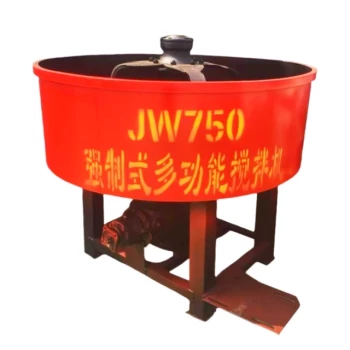
At its core, the control system of a concrete mixing plant is the central brain that automates and synchronizes every stage of production. It acts as the central nervous system, coordinating all components to translate a specific concrete recipe into a finished product with precision, speed, and minimal human error.
A concrete plant's control system is not just a series of buttons; it is an integrated platform designed to execute a specific mix recipe with absolute accuracy, ensuring every batch is consistent, safe, and produced efficiently.
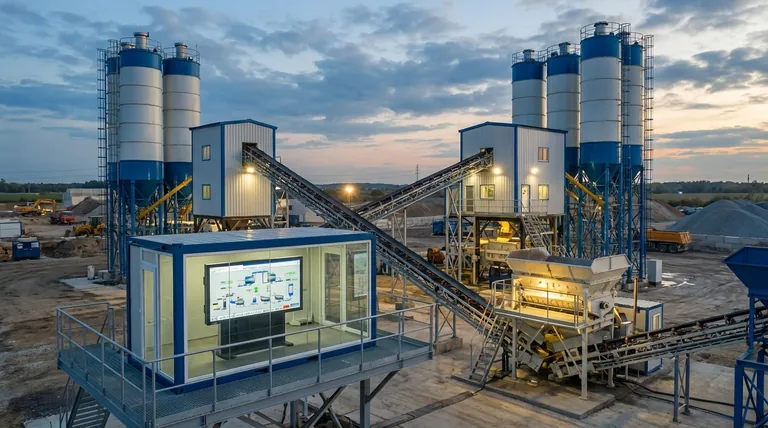
The Core Systems Under Control
The effectiveness of a mixing plant hinges on the control system's ability to seamlessly manage five interconnected systems. It dictates the sequence, timing, and volume for each step of the process.
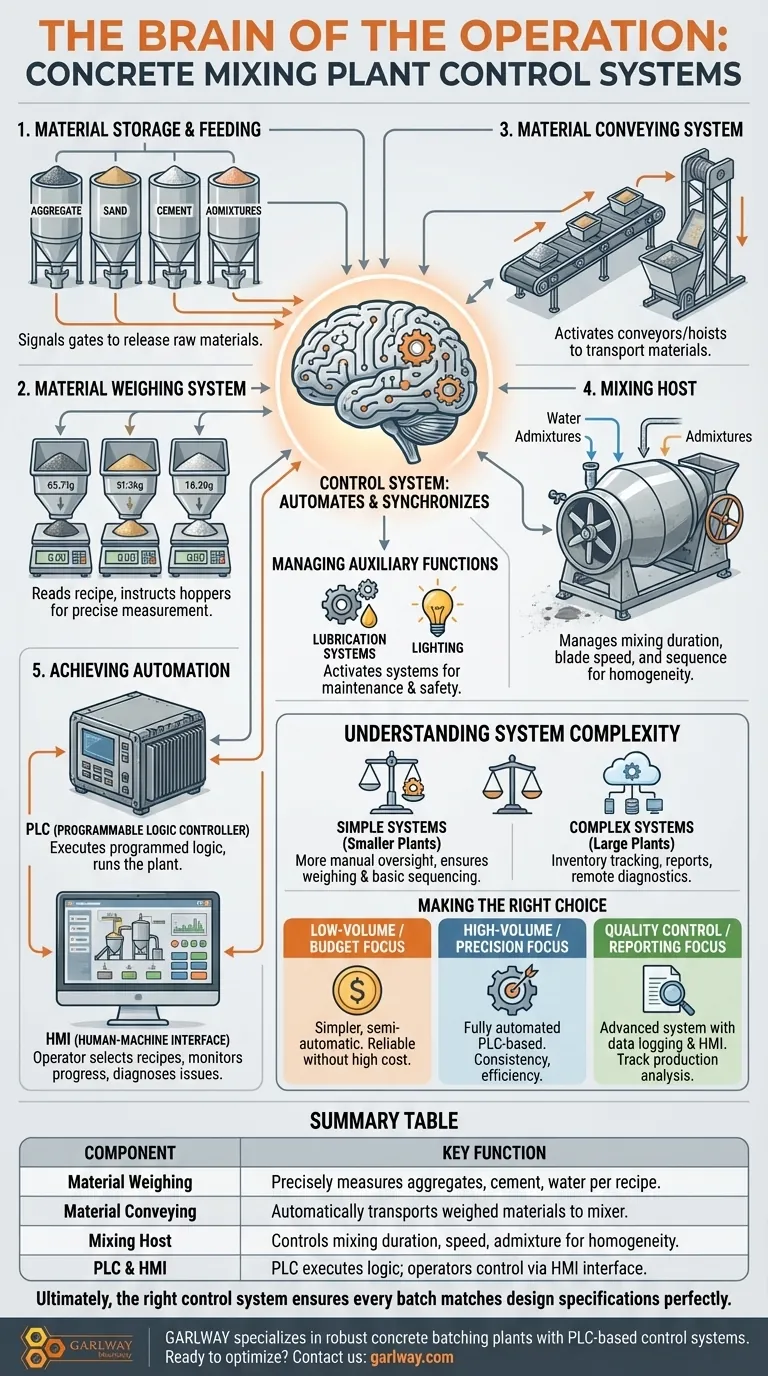
Material Storage and Feeding
The process begins with raw materials. The control system signals the appropriate gates and feeders to release aggregates, sand, cement, and admixtures from their respective silos and storage bins.
The Material Weighing System
This is where precision is paramount. The control system reads the selected concrete recipe and instructs the weighing hoppers to measure the exact required weight for each individual material, ensuring the mix design is followed perfectly.
The Material Conveying System
Once weighed, materials must be moved to the mixer. The control system activates and synchronizes belt conveyors or skip hoists to transport the materials automatically, reducing labor and shortening the production cycle.
The Mixing Host
The control system manages the heart of the plant: the mixer. It dictates the mixing duration, the sequence for adding water and liquid admixtures, and the speed of the mixing blades to ensure a homogenous final product.
How the Control System Achieves Automation
Automation is achieved through a combination of industrial hardware and software that forms a feedback loop, allowing an operator to manage a complex process from a single point.
The Role of the PLC
The entire operation is typically run by a Programmable Logic Controller (PLC). This is a rugged industrial computer that executes the programmed logic for the entire plant—from reading sensor data on the weighing scales to turning on the motors for the conveyor belts.
User Interface and Operation
Operators interact with the PLC through a Human-Machine Interface (HMI), which is usually a computer screen with a graphical layout of the plant. From here, they can select recipes, start and stop batches, monitor progress, and diagnose issues.
Managing Auxiliary Functions
A comprehensive control system also manages the plant's auxiliary facilities. This includes activating automated lubrication systems to maintain equipment health and controlling the plant's lighting for safe nighttime operation.
Understanding the Trade-offs: System Complexity
Not all control systems are created equal. Their configuration is directly tied to the scale of the operation and the specific needs of the user.
Simple Systems for Smaller Plants
For smaller or mobile plants, the control system may be semi-automatic. This often involves more manual oversight, where an operator might initiate each stage of the process, but the system still ensures accurate weighing and basic sequencing.
Complex Systems for Large Plants
Large-scale commercial plants require fully automated, complex control systems. These advanced systems handle everything from inventory tracking of raw materials to generating detailed production reports, often with capabilities for remote diagnostics and management.
Making the Right Choice for Your Goal
Selecting the appropriate control system is critical for aligning the plant's capabilities with its operational objectives.
- If your primary focus is low-volume or budget-conscious operations: A simpler, semi-automatic control system offers reliability without the higher cost and complexity of full automation.
- If your primary focus is high-volume, precision production: A fully automated, PLC-based system is essential for maintaining consistency, reducing labor costs, and maximizing plant throughput.
- If your primary focus is quality control and detailed reporting: You require an advanced system with data logging and HMI capabilities to track every aspect of production for analysis and certification.
Ultimately, the right control system ensures every batch of concrete perfectly and consistently matches its design specifications.
Summary Table:
| System Component | Key Function |
|---|---|
| Material Weighing | Precisely measures aggregates, cement, and water according to the recipe. |
| Material Conveying | Automatically transports weighed materials to the mixer via conveyors or skip hoists. |
| Mixing Host | Controls mixing duration, blade speed, and admixture addition for a homogenous mix. |
| PLC & HMI | The central computer (PLC) executes logic; operators control it via a graphical interface (HMI). |
Ready to optimize your concrete production with a reliable control system?
GARLWAY specializes in providing robust construction machinery, including advanced concrete batching plants with PLC-based control systems. Our solutions are designed for construction companies and contractors who demand precision, efficiency, and consistent batch quality.
We can help you:
- Increase Production Efficiency with automated, error-free batching.
- Ensure Batch Consistency by perfectly following mix designs every time.
- Reduce Operational Costs through minimized labor and waste.
Contact GARLWAY today to discuss the ideal control system for your plant's scale and goals!
Visual Guide
Related Products
- Construction Products Concrete Plant Machine Mixing Concrete Mixer
- Commercial Electric Concrete Mixer Machine HZS 50 Small Batch Plant for Sale
- HZS35 Small Cement Concrete Mixing Batch Plant
- HZS120 Ready Mix Concrete Batching Plant Commercial Mud Cement Mixer
- HZS75 Concrete Batching Plant Cement Mixer Price Concrete Mixer Bunnings Mixing Plant
People Also Ask
- What factors should be considered when choosing between volumetric and traditional mixers? Optimize Your Concrete Project Strategy
- What is the difference between pan and planetary mixers? Choose the Right Mixer for Your Concrete Project
- When was the first concrete mixer developed and by whom? Discover the 1900 Breakthrough
- What is the average lifespan of a concrete mixer? Maximize Your Equipment's Lifespan & ROI
- What are the two broad types of concrete mixers? Choose the Right Mixer for Your Project