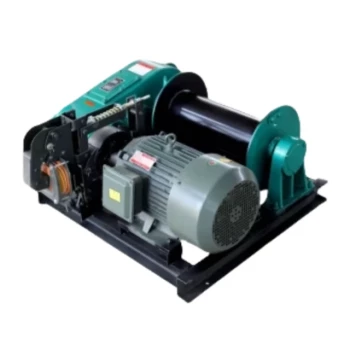
Ultimately, a winch improves safety by replacing the uncontrolled, high-risk act of manually pushing or driving a car onto a trailer with a slow, precise, and predictable mechanical force. This shift from human effort to mechanical control is the core of its safety advantage, minimizing the potential for vehicle damage, property loss, or serious personal injury.
The fundamental safety problem in trailer loading is managing uncontrolled momentum and human error. A winch mitigates this by transforming a potentially chaotic, multi-person struggle into a controlled, one-person operation where force is applied smoothly and predictably.
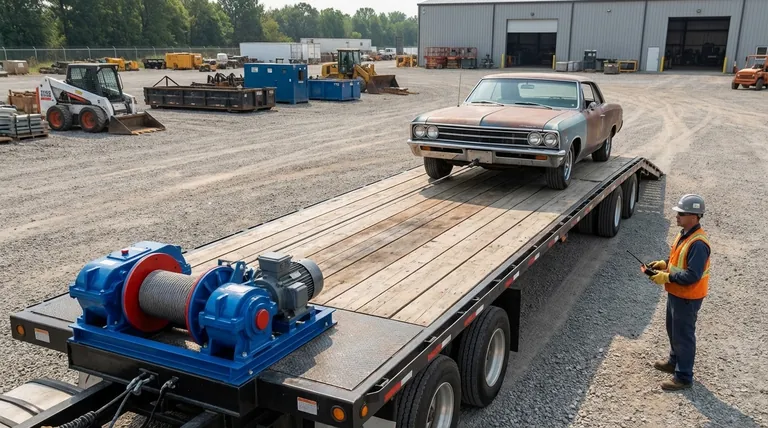
The Risks of Loading Without a Winch
Before understanding a winch's benefits, it's crucial to appreciate the inherent dangers of the alternatives. Manually loading a vehicle, especially a disabled one, introduces significant and often underestimated risks.
The Problem of Uncontrolled Momentum
When you push a car up inclined ramps, you are fighting gravity. Any hesitation, slip, or miscommunication can cause the vehicle to roll back unexpectedly.
This can lead to misalignment, causing the car to fall off the ramps, or result in damage to the trailer or the car itself.
The Challenge of Human Coordination
Pushing a multi-thousand-pound vehicle requires immense, coordinated physical effort, often from several people. This process is physically taxing and introduces a high risk of slips, falls, and strain-related injuries.
One person's misstep can jeopardize the safety of everyone involved and the security of the vehicle.
The Strain on Vehicle Components
For a running vehicle, driving it onto the trailer—especially on a steep incline—puts significant stress on the clutch. This repeated strain can cause premature wear and lead to costly repairs over time.
How a Winch Creates a Controlled Environment
A winch systematically eliminates the primary risks associated with manual loading by introducing mechanical precision and control.
Precise and Steady Movement
A winch pulls the vehicle onto the trailer with a slow, constant speed. This eliminates the risk of sudden rolling or jerking movements.
This precision allows a single operator to make micro-adjustments to steering, ensuring the car remains perfectly aligned on the ramps from start to finish.
Eliminating Physical Exertion
The most obvious benefit is the removal of intense physical labor. This dramatically reduces the risk of back injuries, strains, and other physical harm.
It transforms the loading process into a one-person job that can be performed safely without assistance.
Mastering Difficult Conditions
Adverse conditions like wet ramps, uneven ground, or a steep incline make manual loading exponentially more dangerous.
A winch operates with the same reliable force regardless of the conditions, providing a secure and consistent pull when traction is low and risks are high.
Managing Disabled Vehicles
For a non-running car, a locked drivetrain, or a vehicle with damage, a winch isn't just a convenience—it's often the only safe method. It allows you to load a completely disabled vehicle without any need to get it started or put it in neutral.
Understanding the Trade-offs and Alternatives
While a winch offers superior safety, it's important to weigh its cost against other methods.
The Initial Investment
An electric winch is an upfront cost. However, for those who frequently transport vehicles, this cost is often justified by the long-term savings from preventing clutch wear and avoiding potentially catastrophic damage from a loading accident.
Alternative: The Hand-Crank Come-Along
A come-along is a manual, hand-cranked winch. It provides better control than pushing but is far more labor-intensive and slower than an electric winch.
This is a lower-cost solution for very occasional use where safety is still a priority over speed and convenience.
Alternative: The Tow Vehicle Pull Method
This involves disconnecting the trailer, pulling it forward, and using a strap to pull the car onto the trailer with the tow vehicle itself. This method is complex, requires significant space, and introduces its own risks if not executed perfectly.
Making the Right Choice for Your Needs
- If your primary focus is loading disabled or project cars: A winch is an essential tool for safety and efficiency.
- If your primary focus is preserving your running vehicle: A winch eliminates clutch wear and prevents accidental damage during loading.
- If your primary focus is safety in all conditions: A winch is the only method that provides consistent control on wet or inclined surfaces.
- If your budget is the main constraint for infrequent use: A manual come-along offers a safer alternative to pushing without the cost of an electric winch.
By investing in the right equipment, you take direct control over the risks inherent in loading a vehicle.
Summary Table:
| Safety Risk Without a Winch | How a Winch Mitigates the Risk |
|---|---|
| Uncontrolled vehicle momentum | Provides slow, precise, and steady pulling force |
| Physical strain and injury | Eliminates need for intense manual labor |
| Vehicle misalignment on ramps | Allows for easy micro-adjustments to steering |
| Dangerous conditions (wet, steep) | Delivers consistent, reliable power in any environment |
| Loading disabled/non-running cars | Enables safe loading without needing to start the vehicle |
Ready to transform your vehicle loading process from a high-risk chore into a safe, one-person operation?
At GARLWAY, we specialize in robust construction machinery, including powerful and reliable winches designed for the demanding needs of contractors and construction companies. Our winches provide the precise mechanical control you need to protect your valuable assets and ensure operator safety every time.
Stop risking damage and injury. Contact our experts today to find the perfect winch solution for your trailer and secure your peace of mind.
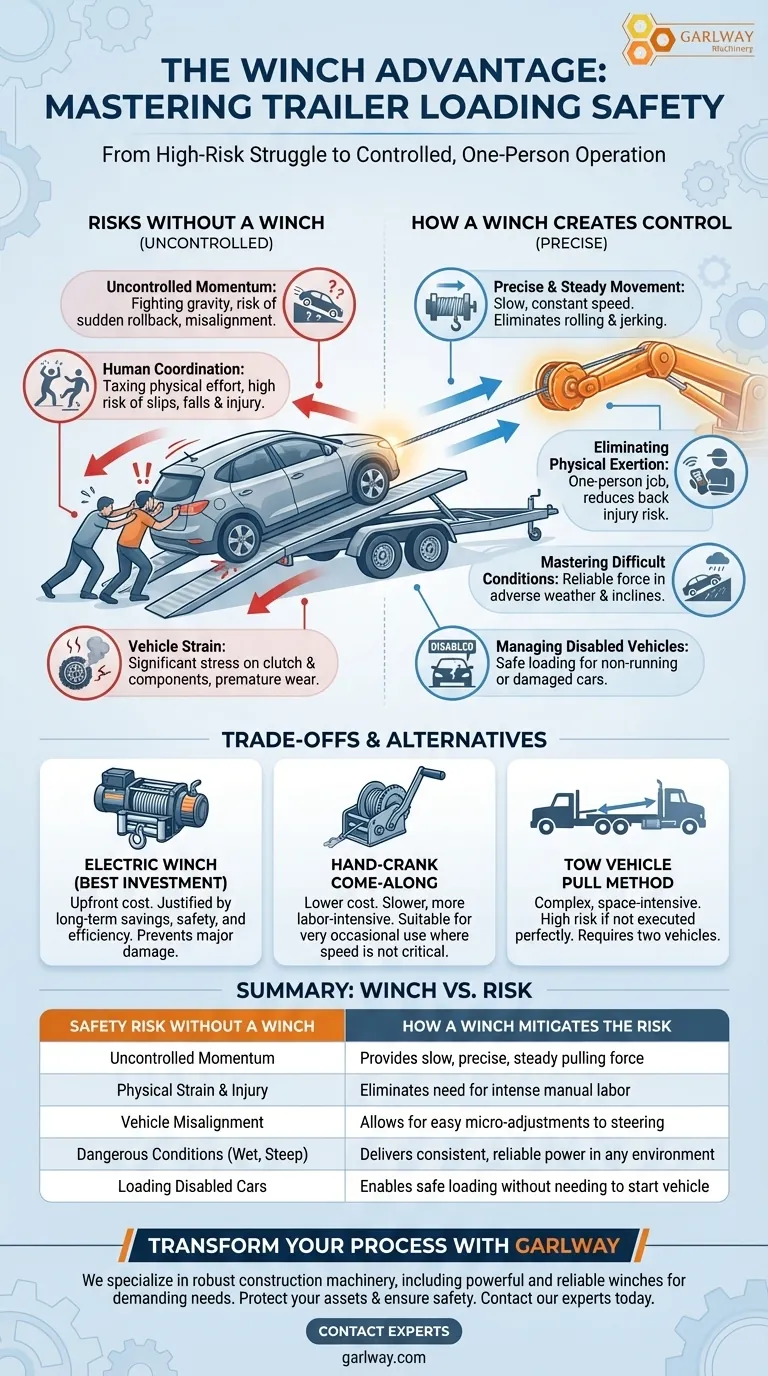
Visual Guide
Related Products
- Warn Winch Windlass Boat Trailer Winch
- Electric and Hydraulic Winch for Heavy Duty Applications
- Small Electric Winch 120V and 240V for Compact Applications
- 12000 lb Electric Boat Trailer Winch with Windlass Anchor Warn
- Quick Windlass Portable Winch for Truck and Boat Best Boat Winch
People Also Ask
- What are the main components of a boat trailer winch? A Guide to Safe & Efficient Boat Loading
- What factors should be considered when choosing a boat trailer winch? Ensure Safe and Effortless Boat Loading
- What is the purpose of boat trailer winches? Safely and Efficiently Load Your Boat
- What are the two main types of boat trailer winches? Manual vs. Electric Explained
- How often should a boat trailer winch be replaced? Your Guide to Safety and Longevity