
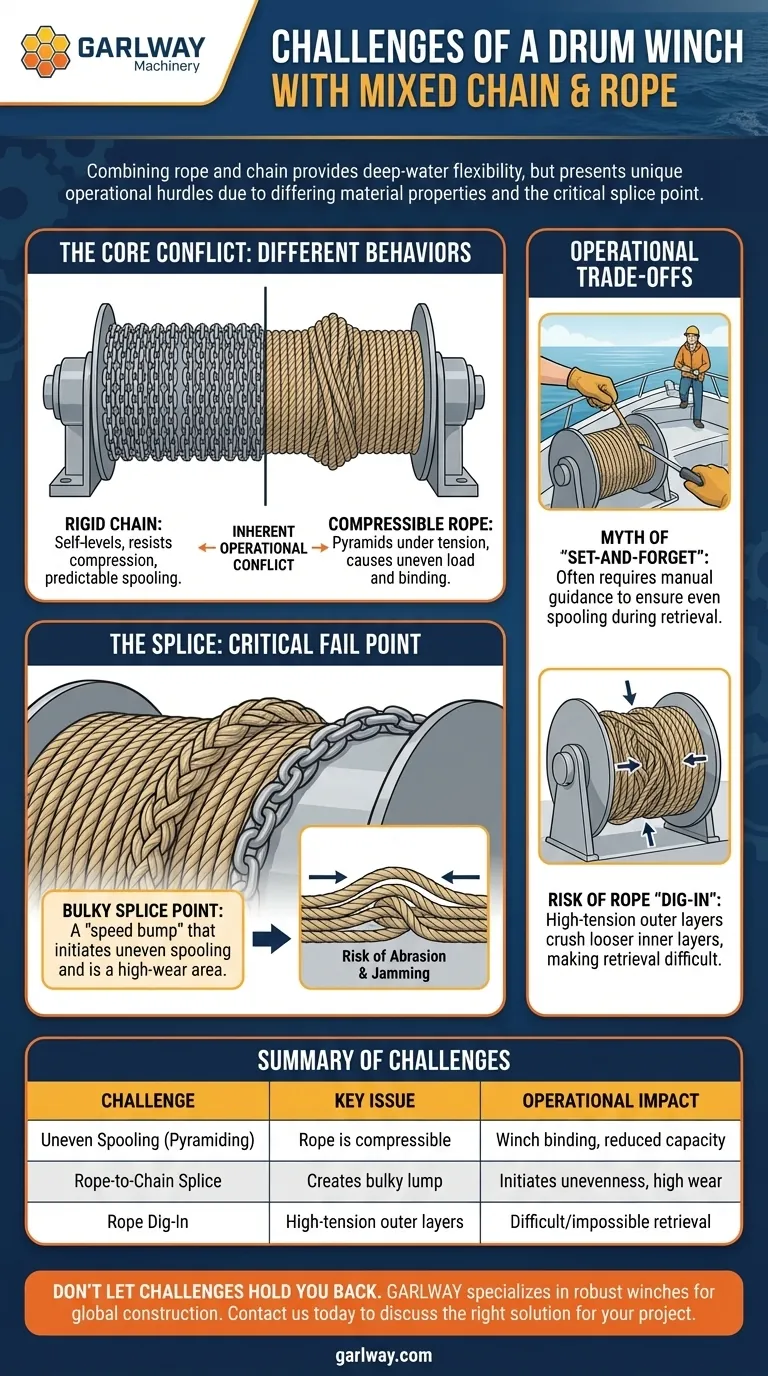
The fundamental challenges of using a drum winch with a mixed chain and rope rode stem from the very different physical properties of the two materials. The core issues are ensuring the rope spools evenly without bunching, managing the bulky splice point where rope meets chain, and preventing the rope from digging into lower layers on the drum under high tension.
While a mixed-rode drum winch offers excellent flexibility for deep-water anchoring, its reliability is not automatic. The system's success hinges on managing the transition from compressible rope to rigid chain to prevent uneven spooling and potential jamming during retrieval.
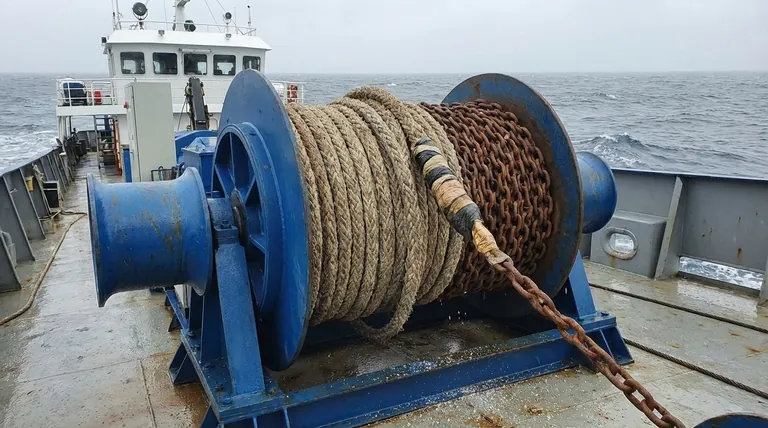
The Core Conflict: How Rope and Chain Behave
A drum winch relies on the anchor rode winding tightly and evenly onto the drum. However, rope and chain behave in fundamentally different ways during this process, creating an inherent operational conflict.
The Predictability of Chain
Chain is rigid and uniform. As it is retrieved, each link settles predictably next to the last, creating a level, stable base on the drum. It naturally self-levels and resists compression.
The Compressible Nature of Rope
Nylon rope, by contrast, is soft and compressible. Under tension, it stretches and flattens. As it winds onto the drum, it lacks the structure to self-level perfectly.
The Problem of "Pyramiding"
This difference often leads to the rope "pyramiding"—piling up in the center of the drum or on one side. This creates an uneven load, can cause the winch to bind, and significantly reduces the functional capacity of your drum.
The Splice: A Critical Point of Failure
The connection point where the rope is spliced to the chain is the system's most significant and unique challenge. This is not a simple knot; it's a specialized splice designed to handle immense loads.
Why the Splice Creates a Lump
Even the most professional, low-profile rope-to-chain splice creates a lump that is thicker and less flexible than the rope around it. This disruption is the primary cause of uneven spooling.
Impact on Spooling
As the winch retrieves the rode, this lump comes onto the drum and creates a "speed bump." Subsequent layers of rope must pass over this bump, which almost guarantees they will not lie perfectly flat, initiating the pyramiding effect.
The Risk of Abrasion
The splice point is also a high-wear area. As it gets buried under subsequent layers of tensioned rope, it is subjected to significant crushing and friction, requiring regular inspection for chafe and wear.
Understanding the Operational Trade-offs
The benefits of a mixed rode are clear, but you must accept the operational realities. Understanding the trade-offs is key to avoiding frustration and potential equipment failure.
The Myth of "Set-and-Forget" Operation
Unlike an all-chain system that can often be left unattended, a mixed-rode drum winch frequently requires manual guidance. This means having someone at the bow using their foot or a dedicated tool to guide the rope evenly across the face of the drum as it's retrieved.
The Risk of Rope "Dig-In"
If you anchor in deep water, the initial layers of rope are wound onto the drum under relatively low tension. When the anchor finally sets and the vessel pulls back, the final wraps of rope are under very high tension. This can cause the taut outer layers to crush and dig into the looser layers beneath, making the anchor difficult or impossible to retrieve later.
Making the Right Choice for Your Goal
To decide if this system is right for you, evaluate it against your primary anchoring needs.
- If your primary focus is deep-water anchoring: A mixed rode is an excellent solution for reducing weight, but you must accept that manual guidance during retrieval is often a necessary part of the process.
- If your primary focus is maximum simplicity and reliability: An all-chain rode with a vertical windlass is more foolproof, as it eliminates all rope-related spooling and compression issues.
- If your primary focus is performance in varied conditions: A mixed-rode drum winch offers unmatched flexibility, provided you invest in a high-quality, professional splice and remain vigilant during operation.
Ultimately, mastering a mixed-rode drum winch means treating it not as an automatic device, but as a powerful tool that requires your understanding and attention.
Summary Table:
| Challenge | Key Issue | Operational Impact |
|---|---|---|
| Uneven Spooling (Pyramiding) | Rope is compressible, unlike rigid chain. | Can cause winch binding, reduces drum capacity. |
| The Rope-to-Chain Splice | Creates a bulky, inflexible lump on the drum. | Initiates uneven spooling, is a high-wear point. |
| Rope Dig-In | High-tension outer layers crush loose inner layers. | Can make anchor retrieval difficult or impossible. |
Don't let anchoring challenges hold you back. GARLWAY specializes in robust construction machinery, offering reliable winches and concrete equipment for construction companies and contractors globally. Our expertise ensures your operations run smoothly and efficiently. Contact GARLWAY today to discuss the right winch solution for your project's demands.
Visual Guide
Related Products
- Best 18000 Pound Drum Anchor Trailer Winch
- Warn Winch Windlass Boat Trailer Winch
- Portable Small Trailer Winch
- Electric 120V Boat Winch by Badlands
- Heavy Duty Electric Boat Winch Windlass Anchor
People Also Ask
- In what scenarios is a winch particularly useful for trailers? Load Heavy Items Safely & Efficiently
- How do you install a trailer winch? A Step-by-Step Guide for a Safe & Secure Setup
- What should be considered when mounting a winch on a trailer? Ensure a Safe, Aligned Installation
- What are the considerations for equipping a trailer with a winch for hauling a car? A Guide to Safe and Efficient Vehicle Loading
- What are the main types of trailer winches? Choose the Right Power Source for Your Load



