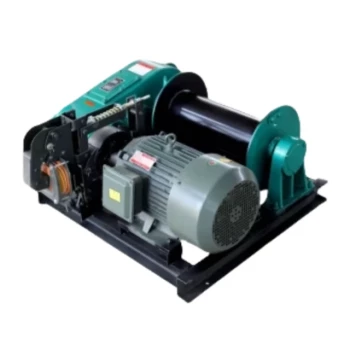
The short answer is that drum winches handle virtually any type of rope, chain, or combination with exceptional ease. Their design fundamentally eliminates the compatibility issues and wear points that are common with traditional anchor windlasses.
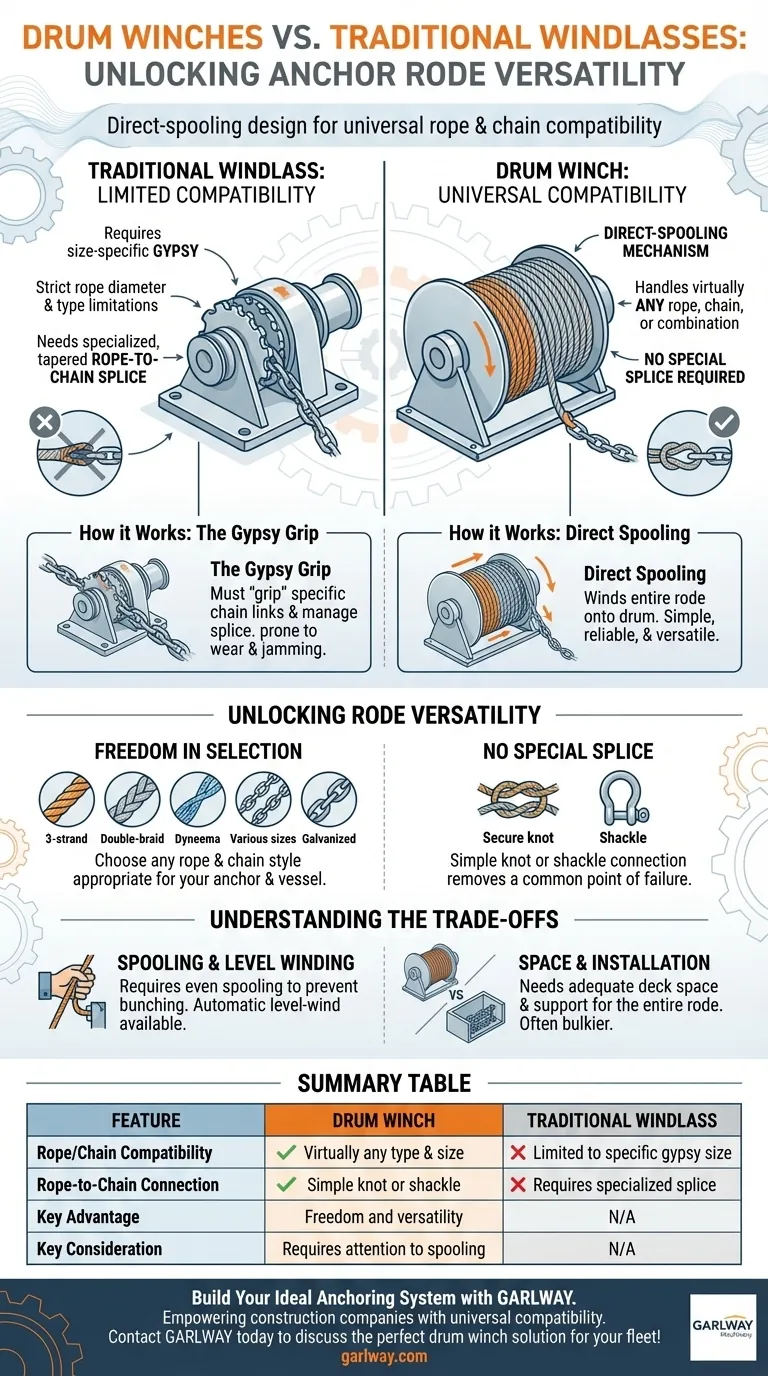
The core advantage of a drum winch lies in its direct-spooling mechanism. By winding the entire anchor rode onto a large drum, it bypasses the need for a size-specific gypsy, granting you complete freedom in your choice of rope and chain.
The Core Design Advantage: Direct Spooling
To understand why a drum winch is so versatile, it's helpful to compare it to a traditional windlass. The key difference is the absence of a component called a "gypsy."
How a Traditional Windlass Works
A standard windlass uses a gypsy, which is a special notched wheel designed to grip the links of a specific size of anchor chain. It also handles the transition from rope to chain.
This design imposes strict limitations. The rope must be the correct diameter and type, and it requires a special, tapered rope-to-chain splice to feed smoothly through the gypsy. Using the wrong combination results in slipping, jamming, and premature wear.
How a Drum Winch Works
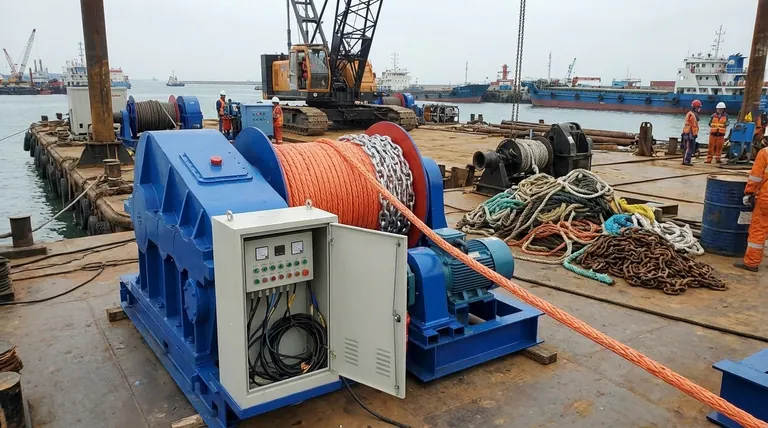
A drum winch operates on a much simpler principle, much like a large fishing reel. It simply spools the entire anchor rode—both rope and chain—directly onto the drum.
The winch does not need to "grip" the chain links or manage a splice. Its job is simply to wind the rode under tension. This elegant simplicity is what makes it universally compatible.
Unlocking Rode Versatility
This direct-spooling design gives you complete control over your anchoring system, free from the constraints of a windlass.
Freedom in Rope and Chain Selection
Because the rode doesn't pass through a sensitive gripping mechanism, you can use nearly any type of line. This includes 3-strand nylon, double-braid, or even advanced lines like Dyneema.
Similarly, the system is indifferent to the chain. You can pair your rope with any size or style of chain appropriate for your anchor and vessel.
No Special Splice Required
Perhaps the most significant operational benefit is the elimination of the specialized rope-to-chain splice.
A secure knot or shackle is all that's needed to connect your rope and chain. This removes a common point of failure and maintenance associated with traditional windlasses.
Understanding the Trade-offs
While highly versatile, drum winches are not without their own set of considerations. Understanding these is key to making an informed decision.
Spooling and Level Winding
The rode must be guided evenly onto the drum as it's retrieved. If the rope or chain "bunches up" on one side, it can reduce the drum's capacity and potentially jam the system.
Many operators guide the line by hand, while some high-end models incorporate an automatic level-wind mechanism to ensure even spooling.
Space and Installation
A drum winch must be large enough to hold your entire anchor rode on deck. This often makes them bulkier and heavier than a comparable vertical windlass, where the rode drops into a chain locker below deck.
You must ensure you have adequate deck space and structural support for the winch and the full weight of the rode when it is wet.
Making the Right Choice for Your Goal
With a drum winch, you can tailor your anchor rode precisely to your needs.
- If your primary focus is durability and holding power in various conditions: Use a rode with a higher ratio of chain to rope for maximum abrasion resistance.
- If your primary focus is deep-water anchoring or weight reduction: Use a high-strength, low-stretch synthetic rope for the majority of the rode, with just enough chain at the end for proper anchor set and chafe protection.
- If your primary focus is a balanced, cost-effective system: A standard combination of nylon rope (for its shock-absorbing stretch) and galvanized chain is a proven and reliable choice.
Ultimately, the drum winch empowers you to build the ideal anchoring system without compromise.
Summary Table:
| Feature | Drum Winch | Traditional Windlass |
|---|---|---|
| Rope/Chain Compatibility | Virtually any type and size | Limited to specific gypsy size |
| Rope-to-Chain Connection | Simple knot or shackle | Requires a specialized splice |
| Key Advantage | Freedom and versatility | N/A |
| Key Consideration | Requires attention to spooling | N/A |
Build Your Ideal Anchoring System with GARLWAY
Tired of being limited by your windlass's gypsy? A GARLWAY drum winch empowers construction companies and contractors to use the exact rope and chain combination their project demands, without compromise. Enjoy the freedom of universal compatibility and eliminate the hassle of specialized splices.
Our robust winches are engineered for the toughest job sites, providing reliable performance for your marine construction and heavy-lifting needs.
Contact GARLWAY today to discuss the perfect drum winch solution for your fleet!
Visual Guide
Related Products
- Best 18000 Pound Drum Anchor Trailer Winch
- Warn Winch Windlass Boat Trailer Winch
- Portable Small Trailer Winch
- Heavy Duty Electric Boat Winch Windlass Anchor
- Quick Windlass Portable Winch for Truck and Boat Best Boat Winch
People Also Ask
- In what scenarios is a winch particularly useful for trailers? Load Heavy Items Safely & Efficiently
- How do you install a trailer winch? A Step-by-Step Guide for a Safe & Secure Setup
- What should be considered when mounting a winch on a trailer? Ensure a Safe, Aligned Installation
- What are the considerations for equipping a trailer with a winch for hauling a car? A Guide to Safe and Efficient Vehicle Loading
- What are the main types of trailer winches? Choose the Right Power Source for Your Load