
The primary role of a high-load capacity windlass is to reliably retrieve a vessel's ground tackle—the combined weight of its anchor and rode (the line or chain connecting it to the boat). While these powerful tools are available for boats of all sizes, their suitability is defined not by the boat's length, but by the weight of the anchoring system they are expected to lift vertically from the seabed.
A windlass is engineered for a single, critical task: lifting the dead weight of your anchor and rode. It is not designed to break the anchor free from the bottom or to bear the immense loads of a boat straining at anchor—those jobs belong to your engine and your mooring cleats.
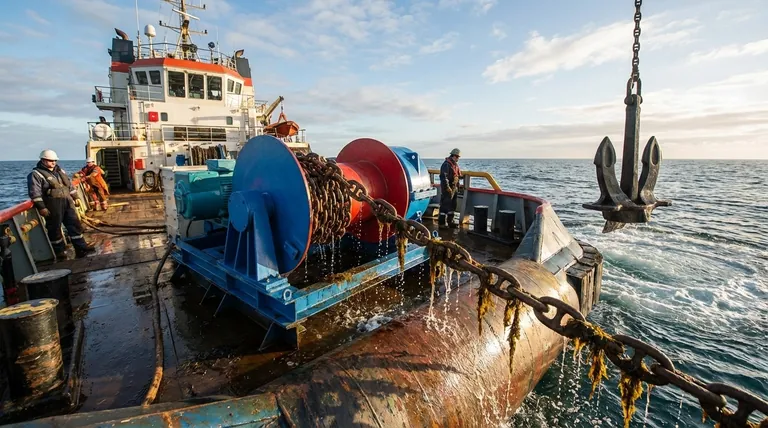
The True Role of a Windlass
Understanding the specific function of a windlass is the most important step in selecting the right one and avoiding costly damage. Its power is meant for lifting, not for pulling or securing.
Its Job is Vertical Lifting
A windlass is essentially a powerful winch optimized for retrieving hundreds of feet of chain and a heavy anchor. Its "load capacity" refers to its maximum continuous pulling power for this vertical lift.
A Common and Costly Misconception
Many operators mistakenly use the windlass to pull the boat forward toward the anchor. This puts an enormous strain on the windlass motor, gears, and mounting, for which it was not designed.
Understanding "High-Load Capacity"
The term "high-load capacity" doesn't refer to the boat's weight or displacement. It's a direct measure of the pulling force the windlass can exert on the rode.
Sizing Based on Ground Tackle
The general rule is to select a windlass with a maximum pulling power of at least three times the total weight of your ground tackle (anchor + all-chain rode or chain/rope equivalent).
The Importance of a Safety Margin
A "high-load" model provides a greater safety margin. This ensures it can handle the added weight of mud or kelp caked onto the chain and anchor, providing reliable retrieval even in difficult conditions.
Critical Operating Principles to Avoid Damage
Improper use is the leading cause of windlass failure. Following two simple principles will protect your investment and ensure safe operation.
Let the Engine Do the Hard Work
Never use the windlass to break the anchor free from the seabed. Instead, motor the boat slowly forward, directly over the anchor. As the rode becomes vertical, the boat's momentum will gently and easily break the anchor's hold.
Secure the Rode to a Load-Bearing Point
Once the anchor is set, the rode must be secured to a samson post, mooring cleat, or a chain stopper. The windlass shaft and gearbox should never bear the load of the boat at anchor.
Why Belaying is Non-Negotiable
Leaving the load on the windlass can lead to slippage, damage to the internal gears, or even catastrophic failure of the unit itself. Securing the line properly transfers these high stresses to the structural points of the boat designed to handle them.
Making the Right Choice for Your Goal
Selecting the right windlass is about matching its capacity to your ground tackle and anchoring style, not just your boat's size.
- If your primary focus is coastal cruising in moderate conditions: A windlass rated for three times the total weight of your anchor and rode is a reliable and sufficient choice.
- If your primary focus is offshore passage-making or anchoring in demanding areas: Opt for a higher safety margin, choosing a windlass rated for four times your ground tackle weight to ensure performance under adverse conditions.
Ultimately, viewing your windlass as a specialized retrieval tool, not a brute-force winch, is the key to its longevity and your safety.
Summary Table:
| Key Consideration | Details |
|---|---|
| Primary Function | Vertical lifting of anchor and rode (ground tackle). |
| Sizing Rule | Windlass capacity should be at least 3x the total weight of your ground tackle. |
| Safety Margin | A 'high-load' model provides extra power for mud, kelp, or adverse conditions. |
| Critical Operation | Use the engine to break the anchor free; never use the windlass for this. |
| Load Security | Once anchored, secure the rode to a cleat or samson post; never leave the load on the windlass. |
Ensure your vessel's safety with the right equipment.
Choosing the correct high-load capacity windlass is critical for safe and efficient anchoring. GARLWAY specializes in robust machinery for demanding applications. Our expertise in durable winches and engineering can be applied to help you select or develop a solution for your specific marine or heavy-lifting needs.
Contact GARLWAY today to discuss your requirements and ensure reliable performance for your operations.
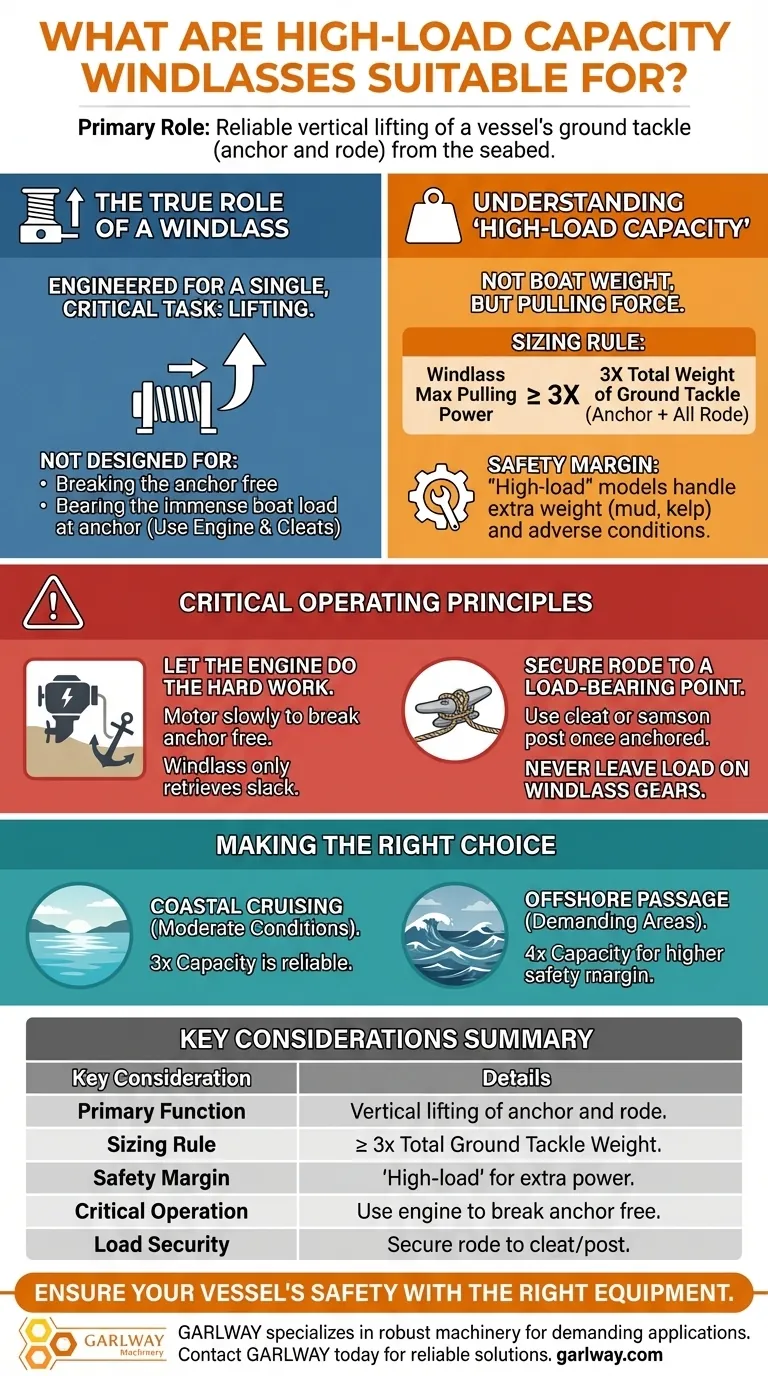
Visual Guide
Related Products
- Heavy Duty Electric Boat Winch Windlass Anchor
- Quick Windlass Portable Winch for Truck and Boat Best Boat Winch
- 12000 lb Electric Boat Trailer Winch with Windlass Anchor Warn
- Warn Winch Windlass Boat Trailer Winch
- Electric Hoist Winch Boat Anchor Windlass for Marine Applications
People Also Ask
- How do electric boat winches work? Unlock Effortless Launching & Retrieval
- How much current does an electric boat winch draw? Plan Your Electrical System for Peak Performance
- Can an electric winch be used as a hoist? Understand the Critical Safety Differences
- What is the major advantage of an electric-powered winch? Unmatched Self-Recovery When Your Engine Fails
- What makes electric winches suitable for off-road use? Key Features for Reliable Vehicle Recovery


