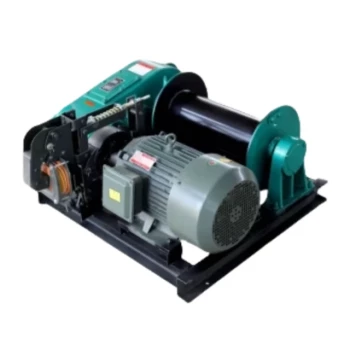
At its core, an electrically driven winch is a system of five key components working in concert. It consists of an electric motor that provides power, a gearbox (or reducer) to multiply torque, a drum to wind the cable, a braking system for safety, and a frame that holds everything together. These components convert electrical energy into the immense pulling force required for lifting or traction tasks.
The power of an electric winch doesn't come from the motor alone. It's the result of a system where a gearbox transforms the motor's high speed into low-speed, high-torque rotational force, enabling the drum to pull heavy loads safely and effectively.
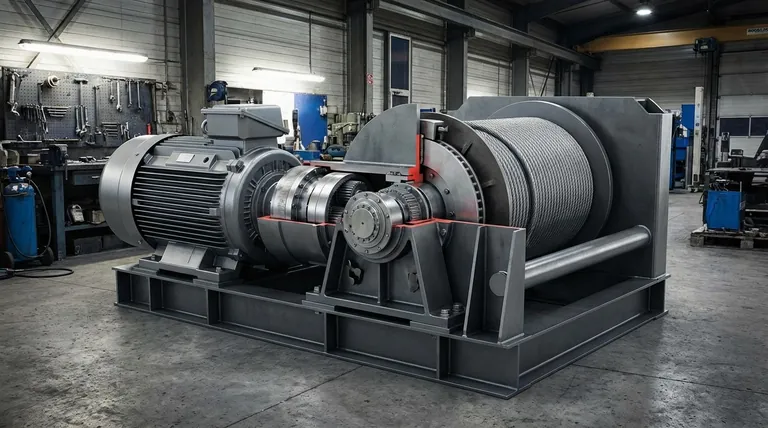
Deconstructing the Winch: The Role of Each Core Component
To truly understand an electric winch, you must look at how its individual parts contribute to the final output. Each component has a distinct and critical function in the chain of power transmission and control.
The Motor: The Heart of the Operation
The electric motor is the prime mover. It converts electrical energy, typically from a vehicle's battery or another power source, into the initial mechanical rotation. The motor's power rating is a key factor in the winch's overall capacity.
The Gearbox: The Power Multiplier
The gearbox, also called a gear reducer, is arguably the most critical component for generating pulling power. It takes the high-speed, low-torque rotation from the motor and transforms it into the low-speed, high-torque force necessary to turn the drum under load. This gear reduction is what allows a relatively small motor to pull thousands of pounds.
The Drum and Cable: The Pulling Mechanism
The drum is the cylinder onto which the steel or synthetic cable (or rope) is wound. As the drum rotates, it pulls the cable in, creating the winching action. The drum's size influences both the cable length capacity and the line speed.
The Braking System: The Critical Safety Feature
An automatic brake is a non-negotiable safety feature. It engages the moment the motor stops, preventing the drum from unwinding and releasing the load. This ensures that a heavy object remains securely held in place, even if power is interrupted.
The Frame and Controls: The Foundation and Interface
The frame, or housing, is the structural backbone that mounts all these components together into a single, robust unit. The control system, often a wired or wireless remote, allows the operator to engage the motor safely from a distance, controlling the direction of the drum's rotation.
Understanding the Trade-offs
Choosing or evaluating a winch requires understanding the inherent trade-offs in its design. These balances determine the winch's performance characteristics for specific tasks.
Gear Ratio: Speed vs. Torque
The gear ratio within the gearbox dictates the winch's core performance. A high gear ratio results in more torque (pulling power) but a slower line speed. A low gear ratio provides a faster line speed but less raw pulling force.
Motor Power vs. Current Draw
A more powerful motor can deliver greater traction and speed. However, this increased performance comes at the cost of a higher electrical current draw, which can place significant strain on the battery and electrical system.
Cable Type: Steel vs. Synthetic
The choice of cable material involves a classic trade-off. Steel cable is highly durable and resistant to abrasion but is also heavy and can be dangerous if it snaps. Synthetic rope is significantly lighter and safer, but it is more vulnerable to UV degradation and abrasion damage.
Matching Components to Your Application
The ideal winch configuration depends entirely on its intended use. Understanding the components allows you to select the right tool for the job.
- If your primary focus is heavy lifting or industrial traction: You need a winch with a high-power motor, a robust gearbox with a high gear ratio for maximum torque, and a durable steel cable.
- If your primary focus is fast vehicle recovery: A winch with a lower gear ratio for increased line speed and a lightweight, manageable synthetic rope is often the better choice.
- If your primary focus is safety and precision control: Prioritize a winch with a highly reliable automatic braking system and a responsive, intuitive remote control.
By understanding how each part contributes to the whole, you can make a truly informed decision based on performance, not just specifications.
Summary Table:
| Component | Key Function |
|---|---|
| Electric Motor | Converts electrical energy into rotational force. |
| Gearbox (Reducer) | Transforms high speed into high-torque pulling power. |
| Drum & Cable | Winds the cable to create the pulling action. |
| Braking System | Automatically engages to hold the load securely. |
| Frame & Controls | Provides structural integrity and safe operation. |
Ready to specify the perfect winch for your project's needs?
GARLWAY specializes in robust construction machinery, offering a full range of electric winches, concrete mixers, and batching plants. Our experts can help you select the ideal winch configuration—whether you need maximum torque for heavy lifting or faster line speed for recovery—ensuring safety, reliability, and performance for your construction company or contracting business.
Contact GARLWAY today for a consultation and let us power your success.
Visual Guide

Related Products
- Electric 120V Boat Winch by Badlands
- Electric and Hydraulic Winch for Heavy Duty Applications
- Small Electric Winch 120V and 240V for Compact Applications
- 12000 lb Electric Boat Trailer Winch with Windlass Anchor Warn
- Electric Hoist Winch Boat Anchor Windlass for Marine Applications
People Also Ask
- How do electric boat winches work? Unlock Effortless Launching & Retrieval
- How much current does an electric boat winch draw? Plan Your Electrical System for Peak Performance
- Can I run a winch straight from a battery? Essential Power Setup for Safe Operation
- What are the types of electric winches available? Choose the Right Winch for Your Job
- What are the uses of electric winches in mining and tunneling? Enhance Safety and Efficiency Underground