The Illusion of Simplicity
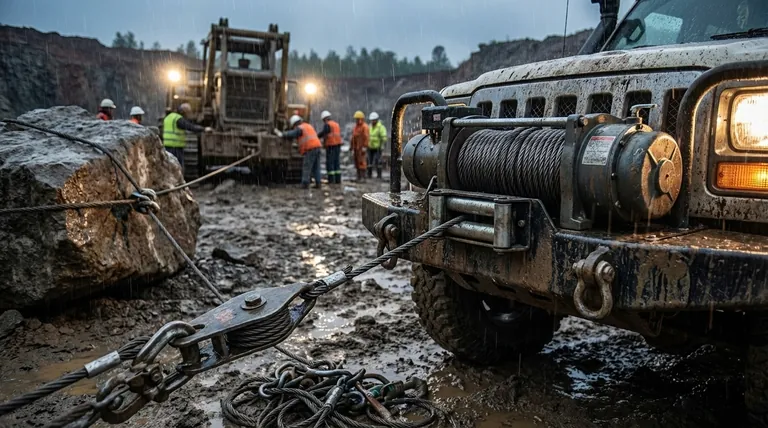
A heavy load is stuck. A vehicle is immobilized. The solution seems simple: a winch. It’s a primal display of mechanical advantage—a motor, a drum, a cable, and immense pulling force.
But this simplicity is an illusion.
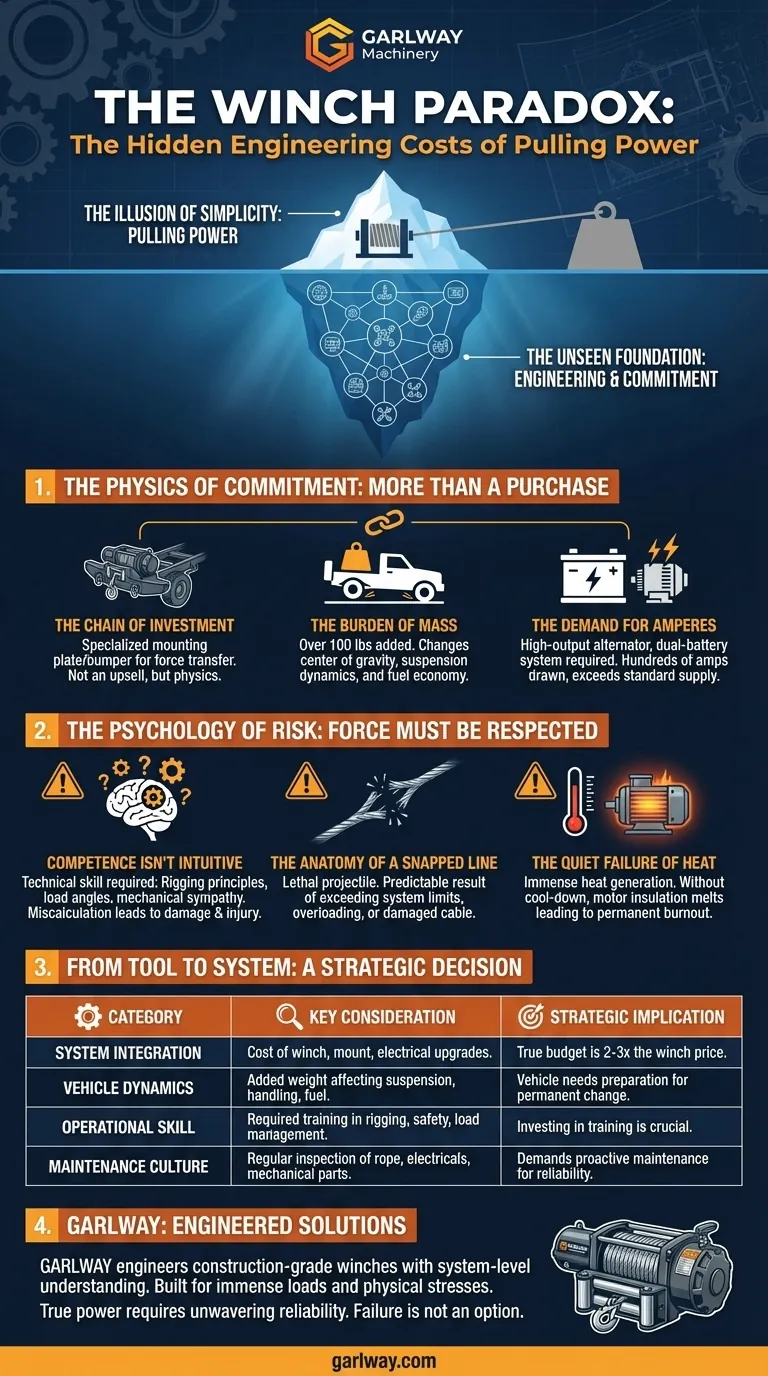
Like an iceberg, the visible power of a winch is supported by a massive, unseen foundation of engineering demands, financial commitment, and operational discipline. The real challenge of a winch isn't using it; it's everything that happens before and during the pull. This is the winch paradox: the more power you want to exert simply, the more complex your system must become.
The Physics of Commitment: More Than a Purchase
Acquiring a winch is not a transaction; it's an integration. It's a commitment that sends ripples through your entire operational setup, demanding a cascade of secondary investments.
The Chain of Investment
The sticker price is merely the first link in a long chain. A winch capable of pulling several tons cannot be bolted onto a standard bumper. It requires a specialized, heavy-duty mounting plate or a purpose-built bumper designed to transfer immense forces directly to the vehicle's frame.
This isn't an upsell; it's physics. Without it, the winch would simply tear itself off its mount, turning a recovery operation into a catastrophic failure.
The Burden of Mass
Winches are dense with steel and copper, easily adding over 100 pounds to the front of a vehicle. This isn't just dead weight. It’s a permanent alteration to the vehicle's center of gravity and suspension dynamics.
The suspension will sag. Handling characteristics will change. Fuel economy will decrease. It's a constant tax paid for the capability you might only use intermittently.
The Demand for Amperes
An electric winch under load is one of the most power-hungry devices you can attach to a vehicle. It can draw hundreds of amperes, a demand far exceeding what a standard alternator or single battery can safely supply.
This necessitates a systemic upgrade: a high-output alternator, a dual-battery system, or both. Neglecting this is like trying to fuel a rocket with a garden hose. You risk draining your primary battery, leaving you stranded, or even causing electrical fires.
The Psychology of Risk: Force Must Be Respected
The most profound costs of a winch are not financial but operational. The forces a winch generates are unforgiving of ignorance and overconfidence.
Competence Isn't Intuitive
Operating a winch seems straightforward, but safe and effective use is a highly technical skill. It requires a deep understanding of rigging principles, load angles, and mechanical sympathy.
- What's the safe working load of your snatch block?
- How does a double-line pull affect the forces on your anchor?
- Do you know how to properly spool the rope under tension to prevent damage?
Miscalculation doesn't just mean the winch fails; it means vehicles get damaged, frames get bent, and people get hurt.
The Anatomy of a Snapped Line
The most infamous danger is a line breaking under tension. A steel cable stores a phenomenal amount of kinetic energy. If it snaps, it becomes a lethal projectile, whipping through the air faster than the eye can see.
This isn't a random accident. It's the predictable result of exceeding a system's limits—whether by overloading the line, using a damaged cable, or rigging to an insecure anchor. The respect for this danger is what separates a professional from an amateur.
The Quiet Failure of Heat
During a long, hard pull, the winch motor generates immense heat. Without careful monitoring and cool-down periods, the motor's insulation can melt, leading to a permanent burnout.
This is a quiet, insidious failure. It happens not with a bang, but with the slow degradation of a critical tool, often discovered only when it's needed most.
From Tool to System: A Strategic Decision
Understanding these drawbacks is not an argument against winches. It's an argument for seeing them for what they are: a specialized, high-consequence system, not a simple accessory.
The decision to integrate a winch requires a sober assessment of these factors against your actual needs.
| Category | Key Consideration | Strategic Implication |
|---|---|---|
| System Integration | Cost of winch, mount, and electrical upgrades. | The true budget is often 2-3x the price of the winch itself. |
| Vehicle Dynamics | Added weight affecting suspension, handling, and fuel. | The vehicle must be prepared for a permanent change in its physical characteristics. |
| Operational Skill | Required training in rigging, safety, and load management. | Investing in training is as crucial as investing in the hardware. |
| Maintenance Culture | Regular inspection of rope, electricals, and mechanical parts. | The winch demands a proactive maintenance schedule to ensure reliability. |
For industrial and construction applications, these considerations are non-negotiable. On a professional job site, reliability isn't a luxury; it's a core component of safety and efficiency. The "disadvantages" are simply engineering parameters that must be solved by a robust, well-designed system.
At GARLWAY, we engineer our construction-grade winches with this system-level understanding. We know that in a professional environment, failure is not an option. Our solutions are built to handle the immense electrical loads and physical stresses of daily industrial use, designed for operators who understand that true power requires unwavering reliability.
If your project demands pulling power you can count on, it's time to move beyond the accessory mindset and invest in an engineered solution. Contact Our Experts
Visual Guide
Related Products
- Warn Winch Windlass Boat Trailer Winch
- Electric and Hydraulic Winch for Heavy Duty Applications
- Small Electric Winch 120V and 240V for Compact Applications
- 12000 lb Electric Boat Trailer Winch with Windlass Anchor Warn
- Quick Windlass Portable Winch for Truck and Boat Best Boat Winch
Related Articles
- Beyond the Bumper: The Critical System Choice in Powering Your Trailer Winch
- Force vs. Mass: The Critical Difference in Sizing a Boat Winch
- Lines of Force: The Unseen Geometry of a Boat Winch
- More Than a Number: The Engineering Psychology of Choosing a Boat Winch
- How to Choose and Optimize Winch Speed for Maximum Efficiency