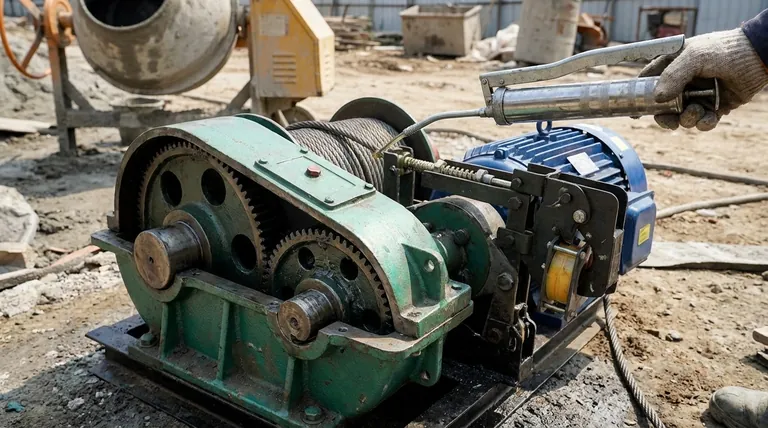
The Illusion of Readiness
A winch is a paradox. It sits idle 99% of the time, a silent monument of potential energy. But in that critical 1%—when a multi-ton load hangs in the balance on a construction site—it must perform flawlessly.
We tend to judge a machine's health by its immediate response. If the motor whirs to life, we assume it's ready. This is a dangerous cognitive shortcut. The most catastrophic failures don't announce themselves; they are the result of a slow, silent decay that began months earlier with a single missed maintenance check.
Failing to lubricate a winch isn't a timesaver. It's an unwritten acceptance of future failure.
The Unseen Forces of Decay
A winch is a concentration of immense mechanical force. Lubrication is the primary defense against the two fundamental forces that work to tear it apart: friction and corrosion.
A Battle Against Friction
The grease applied at the factory is merely a placeholder. It's designed for storage and initial break-in, not for a lifetime of service under load.
Without a consistent film of the correct lubricant, the friction between internal gears and moving components generates immense heat and wear. Metal grinds against metal, slowly shearing away material, weakening tolerances, and setting the stage for a catastrophic breakdown. Proper lubrication isn't about making things slick; it's about preserving the engineered integrity of the system.
An Insurance Policy Against the Elements
Lubricant does more than reduce friction. It creates an impermeable barrier against moisture, dirt, and grit. On any construction site, these elements are constants.
Corrosion is a quiet killer. It doesn't just create cosmetic rust; it pits the surfaces of high-stress components and seizes moving parts. A well-lubricated winch sheds water and contaminants, preserving the steel for when you need its full strength.
The Two Systems That Demand Attention
Effective lubrication is a targeted strategy, not a blanket spray. A winch has two distinct systems, each with unique demands. Applying the wrong product is often as damaging as applying none at all.
The Wire Rope: A Machine Within a Machine
A steel winch cable is not a solid object. It's a complex assembly of individual wires twisted into strands, which are then wound around a core. Under tension, these strands slide against each other.
- Required Lubricant: A penetrating wire rope lubricant.
- Why: Its low viscosity allows it to seep deep into the rope's core, lubricating it from the inside out. This prevents internal abrasion and rust—the two main causes of unexpected cable snaps. Using thick grease or engine oil will only coat the surface, trapping moisture and abrasive grit inside.
The Gearbox: The Heart of the Operation
The gearbox multiplies the motor's power into raw pulling force. The pressures inside are astronomical.
- Required Lubricant: A high-pressure, heavy-duty grease (e.g., marine-grade).
- Why: This type of grease is designed to maintain its film strength under extreme loads, preventing metal-on-metal contact between the gear teeth. This process requires partial disassembly but is the single most important act for ensuring mechanical longevity.
The Psychology of Maintenance Missteps
We are wired to solve visible problems. This makes preventative maintenance feel counterintuitive, leading to common errors that undermine reliability.
- The Lure of the "Quick Fix": Using a generic spray like WD-40 is tempting. It's fast and easy. But such thin lubricants are not designed for high pressure. They attract dust, forming an abrasive paste that actively accelerates wear on the cable.
- The Blind Spot of a Partial Check: A freshly oiled cable on a winch with corroded electrical contacts is a classic example of seeing the trees but not the forest. A complete maintenance routine includes inspecting electrical systems, brake function, and the fairlead rollers.
- The Neglected Fairlead: The fairlead guides the rope onto the drum. If its rollers are seized from rust, they will shred and weaken the cable with every use. A moment's attention with general-purpose grease keeps them spinning freely.
Quick Reference: Lubrication Strategy
| Component | Recommended Lubricant | Primary Purpose |
|---|---|---|
| Wire Rope | Penetrating Wire Rope Lubricant | Prevents internal rust & inter-strand friction |
| Internal Gears | Heavy-Duty, Marine-Grade Grease | Withstands high pressure, reduces gear wear |
| Fairlead Rollers | General-Purpose Grease | Ensures smooth spooling, prevents cable abrasion |
At GARLWAY, we engineer our winches, concrete mixers, and batching plants for the punishing realities of the modern construction site. We understand that world-class engineering is the foundation of reliability. But the bridge between a well-built machine and its performance on day one versus day one thousand is a disciplined maintenance routine.
Protecting your investment, your schedule, and your team's safety starts with understanding and respecting these fundamental mechanical principles. To ensure your equipment is always ready for that critical 1%, Contact Our Experts.
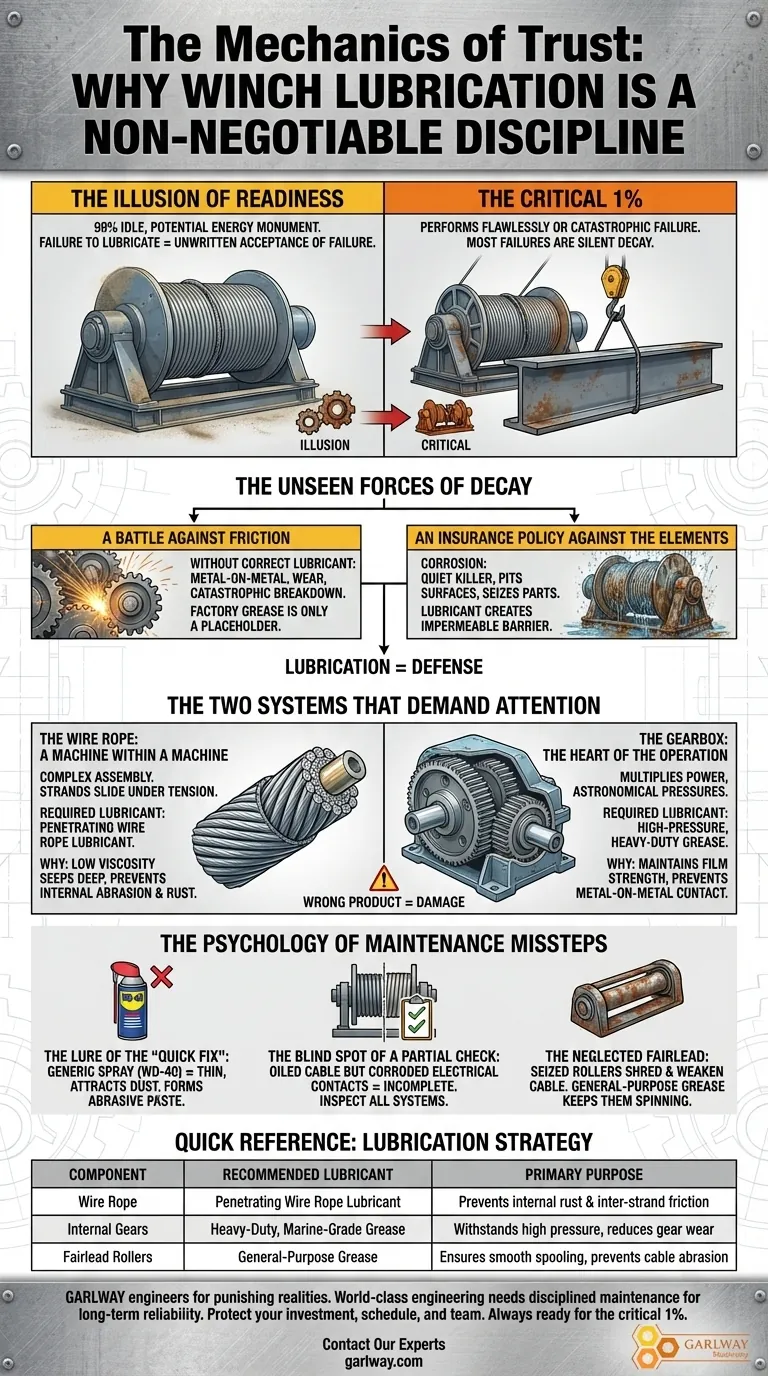
Visual Guide
Related Products
- Warn Winch Windlass Boat Trailer Winch
- Electric and Hydraulic Winch for Heavy Duty Applications
- Small Electric Winch 120V and 240V for Compact Applications
- Quick Windlass Portable Winch for Truck and Boat Best Boat Winch
- Hydraulic Winding Engine Harbor Freight Winch
Related Articles
- Beyond the Bumper: The Critical System Choice in Powering Your Trailer Winch
- Force vs. Mass: The Critical Difference in Sizing a Boat Winch
- Lines of Force: The Unseen Geometry of a Boat Winch
- More Than a Number: The Engineering Psychology of Choosing a Boat Winch
- How to Choose and Optimize Winch Speed for Maximum Efficiency





