Introduction
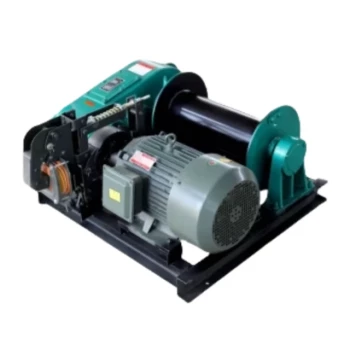
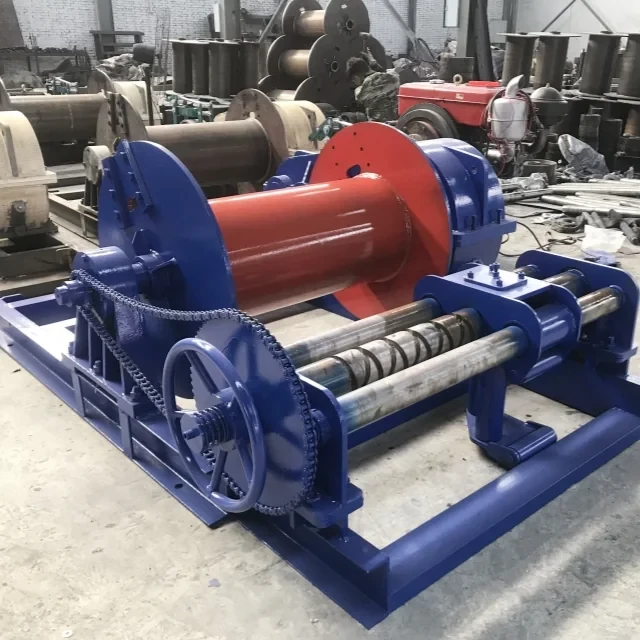
In industries where heavy lifting and material movement are daily challenges, trailer-mounted winches are revolutionizing workflows by consolidating equipment needs. These mobile systems eliminate the dependency on cranes, forklifts, and additional transport vehicles—slashing equipment rental costs and reducing on-site congestion. This article breaks down the operational efficiencies, cost savings, and technical advantages of integrating winches into your projects, backed by real-world applications and safety insights.
Trailer-Mounted Winches as a Logistics Game-Changer
How On-Site Maneuverability Eliminates Equipment Dependencies
Traditional material handling often requires multiple machines: a crane for vertical lifts, a forklift for horizontal transport, and a truck for relocation. Trailer-mounted winches combine these functions into a single unit. Their mobility allows operators to reposition loads without needing separate towing vehicles or setup time.
Key benefits:
- Reduced equipment footprint: One winch replaces 2–3 machines, minimizing rental fees and storage space.
- Faster deployment: No assembly or disassembly of cranes; hitch to a vehicle and go.
- Versatility: Adapts to uneven terrain where fixed cranes struggle.
Ever wondered how much time your team loses switching between equipment?
Cost-Benefit Analysis: Traditional vs. Winch-Driven Workflows
A construction site using traditional methods might spend:
- $1,200/day for a crane rental
- $400/day for a forklift
- $300/day for transport trucks
A trailer-mounted winch from Garlway averages $600/day with no auxiliary costs. Over a 30-day project, this saves $39,000—enough to fund additional labor or materials.
Industry-Specific Applications and Workflow Optimization
Case Study: Construction Site Material Handling
A bridge construction team in Texas replaced their crane-and-truck combo with a Garlway winch system. Results:
- 40% faster material delivery to work zones
- Zero downtime from crane repositioning
- 15% lower fuel costs (fewer vehicles idling)
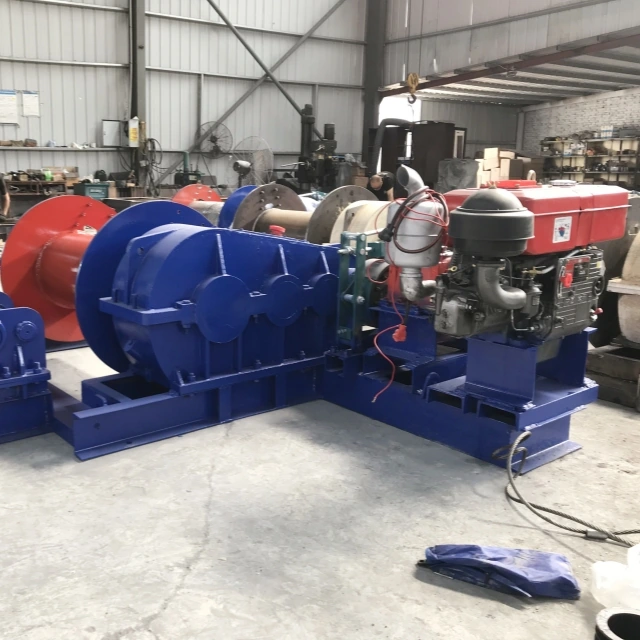
Case Study: Emergency Recovery in Tight Spaces
When a logging truck overturned on a narrow mountain road, a winch-equipped trailer:
- Freed the vehicle without blocking traffic (unlike stationary cranes)
- Required only one operator vs. a 3-person crane team
- Completed the recovery 2 hours faster than standard protocols
Could your current equipment handle such confined-space scenarios?
Technical Features That Enable Autonomous Operation
Load Capacity and Towing Vehicle Compatibility
Modern winches support loads up to 20 tons and integrate with standard pickup trucks or SUVs. Key specs:
- Adjustable hitch heights for compatibility across vehicles
- Dynamic braking systems to handle sudden load shifts
- Remote controls for precision placement
Safety Mechanisms for Standalone Deployment
Per industry standards, Garlway winches include:
- Automatic load-holding brakes to prevent rollback
- Overload sensors that trigger shutdowns at 110% capacity
- Emergency stop buttons within operator reach
Maintenance checklist (from reference materials):
- Lubricate gears weekly
- Inspect wire ropes for fraying
- Test brakes before each use
Conclusion and Actionable Steps
Trailer-mounted winches aren’t just tools—they’re strategic assets that reduce costs, save time, and simplify complex tasks. To implement them effectively:
- Audit your current equipment costs to identify winch-driven savings.
- Train teams on winch safety protocols (refer to Garlway’s operational guides).
- Start with a pilot project—like material staging or confined-space recovery—to measure ROI.
By centralizing lifting, pulling, and transport functions, these systems redefine efficiency. Whether you’re moving steel beams or rescuing vehicles, the right winch turns logistical headaches into streamlined workflows.
Related Products
- Warn Winch Windlass Boat Trailer Winch
- 12000 lb Electric Boat Trailer Winch with Windlass Anchor Warn
- Best 18000 Pound Drum Anchor Trailer Winch
- Portable Small Trailer Winch
- Electric and Hydraulic Winch for Heavy Duty Applications
Related Articles
- Beyond the Bumper: The Critical System Choice in Powering Your Trailer Winch
- Force vs. Mass: The Critical Difference in Sizing a Boat Winch
- Lines of Force: The Unseen Geometry of a Boat Winch
- More Than a Number: The Engineering Psychology of Choosing a Boat Winch
- How to Choose and Optimize Winch Speed for Maximum Efficiency