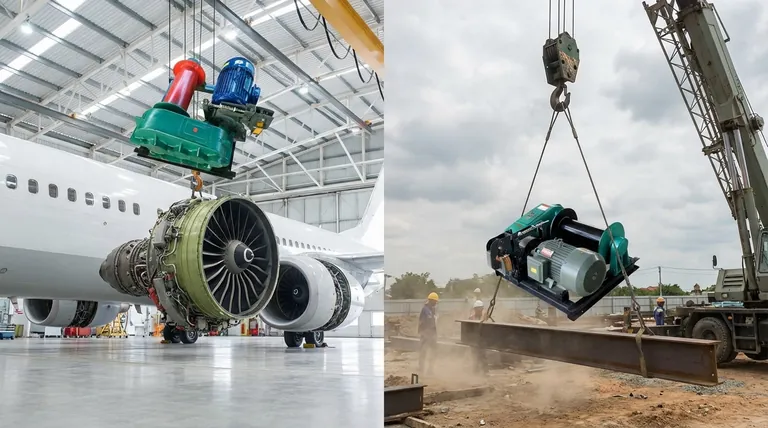
Selecting the optimal hoisting device isn’t just about lifting capacity—it’s about matching power, safety, and cost to your specific operational demands. Whether you’re lifting aircraft components or steel beams, the wrong choice can lead to inefficiencies, compliance risks, or even accidents. This guide breaks down the critical differences between manual, electric, and hydraulic hoists, highlights industry-specific best practices, and provides actionable insights to align your equipment with real-world requirements.
Hoisting Devices Demystified
Manual vs. Electric vs. Hydraulic: Key Operational Differences
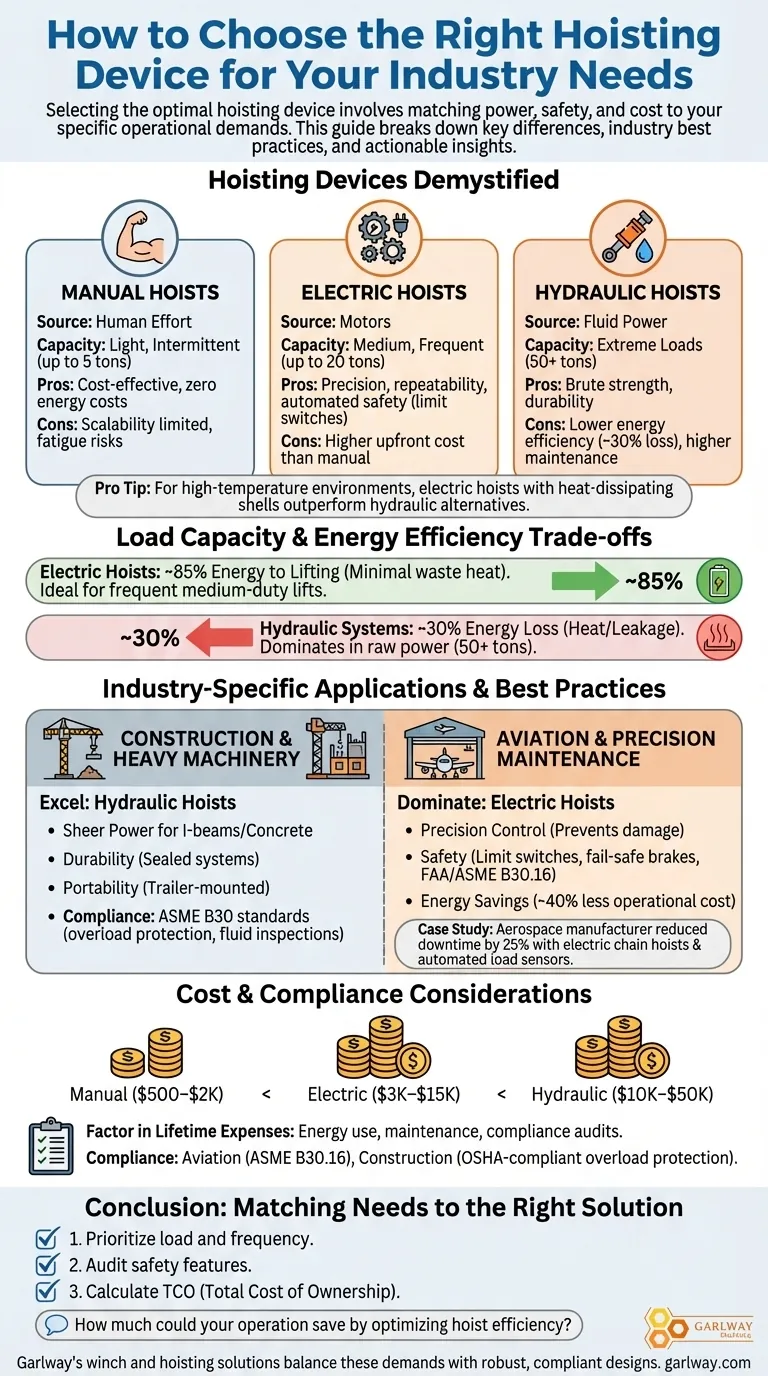
Manual hoists rely on human effort, making them cost-effective for light, intermittent tasks (e.g., small workshops). However, they lack scalability for heavy loads and introduce fatigue-related safety risks.
Electric hoists, powered by motors, excel in precision and repeatability. They’re ideal for environments like aviation hangars, where controlled movement and energy efficiency are priorities. Their automated features (e.g., limit switches) reduce human error.
Hydraulic hoists leverage fluid power for brute strength, dominating in construction and heavy machinery applications. They handle extreme loads but trade off energy efficiency and require more maintenance.
Ever wondered why some industries swear by electric models while others rely on hydraulics? The answer lies in their core operational demands.
Load Capacity and Energy Efficiency Trade-offs
- Electric hoists convert ~85% of electrical energy into mechanical lifting, with minimal waste heat (thanks to cooling fans). They’re optimal for frequent, medium-duty lifts (up to 20 tons).
- Hydraulic systems lose ~30% of energy to heat and leakage but outperform in raw power (50+ tons). Their fuel dependency increases long-term costs.
- Manual hoists have zero energy costs but are impractical beyond 5 tons.
Pro Tip: For high-temperature environments (e.g., steel mills), electric hoists with heat-dissipating shells outperform hydraulic alternatives prone to fluid degradation.
Industry-Specific Applications and Best Practices
Construction and Heavy Machinery: When Hydraulic Hoists Excel
Hydraulic hoists dominate here due to:
- Sheer power: Lifting I-beams or concrete panels demands torque, not finesse.
- Durability: Sealed systems withstand dust and debris better than electric motors.
- Portability: Many models are trailer-mounted for job-site mobility.
Compliance Note: ASME B30 standards require overload protection and regular fluid inspections—key for avoiding OSHA violations.
Aviation and Precision Maintenance: Why Electric Hoists Dominate
Electric models are the backbone of hangars because:
- Precision control: Smooth operation prevents damage to delicate aircraft parts.
- Safety: Limit switches and fail-safe brakes align with FAA and ASME B30.16 standards.
- Energy savings: Hangars running multiple lifts reduce operational costs by ~40% compared to hydraulic alternatives.
Case in Point: A leading aerospace manufacturer reduced downtime by 25% after switching to electric chain hoists with automated load sensors.
Cost and Compliance Considerations
- Upfront costs: Manual ($500–$2K) < Electric ($3K–$15K) < Hydraulic ($10K–$50K).
- Lifetime expenses: Factor in energy use, maintenance, and compliance audits.
- Regulations: Aviation requires ASME B30.16 certification, while construction sites prioritize OSHA-compliant overload protection.
Conclusion: Matching Your Needs to the Right Solution
- Prioritize load and frequency: Electric for medium, repetitive lifts; hydraulic for extreme weights.
- Audit safety features: Ensure limit switches, cooling systems, and certifications match your industry.
- Calculate TCO: Energy savings often justify electric hoists’ higher initial price.
For industries like construction and aviation, Garlway’s winch and hoisting solutions balance these demands with robust, compliant designs. Whether you need the precision of electric or the power of hydraulic, the right choice hinges on aligning equipment capabilities with your operational reality.
Final Thought: How much could your operation save by optimizing hoist efficiency? The answer might reshape your equipment strategy.
Visual Guide
Related Products
- Electric Hoist Winch Boat Anchor Windlass for Marine Applications
- Electric and Hydraulic Winch for Heavy Duty Applications
- Hydraulic Winding Engine Harbor Freight Winch
- Portable Small Trailer Winch
- Quick Windlass Portable Winch for Truck and Boat Best Boat Winch
Related Articles
- How Boat Anchor Winches Prevent Injuries and Enhance Marine Safety
- Why Boat Anchor Winches Earn "Best Accessory" Status: A Deep Dive into User Satisfaction Drivers
- How to Install a Hoist Winch Safely: Avoiding Critical Mistakes
- How to Debug Hoist Winches Safely: Electrical Checks & Mechanical Adjustments
- How to Optimize Hoist Winch Safety: A Systematic Protocol for Accident Prevention




