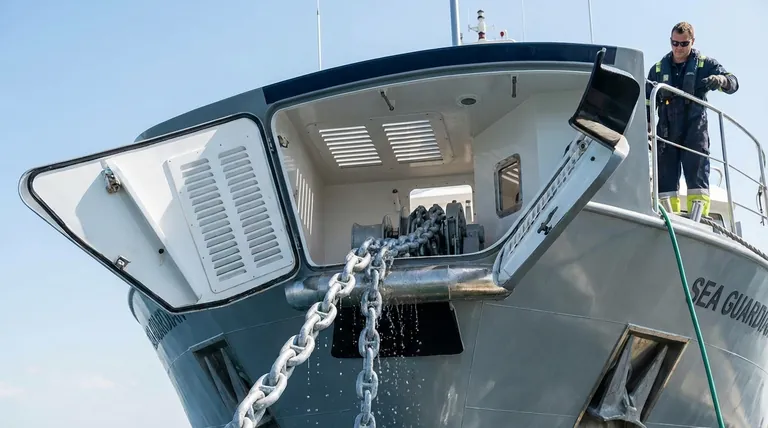
Proper chain locker ventilation is not just a maintenance task; it is a critical safety measure for any vessel. Its primary purpose is to allow trapped moisture from a wet anchor chain and rode to evaporate and escape. This constant airflow prevents the dark, damp conditions that accelerate metal corrosion and foster microbial growth, both of which can significantly weaken your ground tackle over time.
Without adequate airflow, a wet chain in an enclosed locker creates a perfect environment for accelerated corrosion and biological decay. This silently weakens the single most critical component of your anchoring system, creating a significant and avoidable risk.
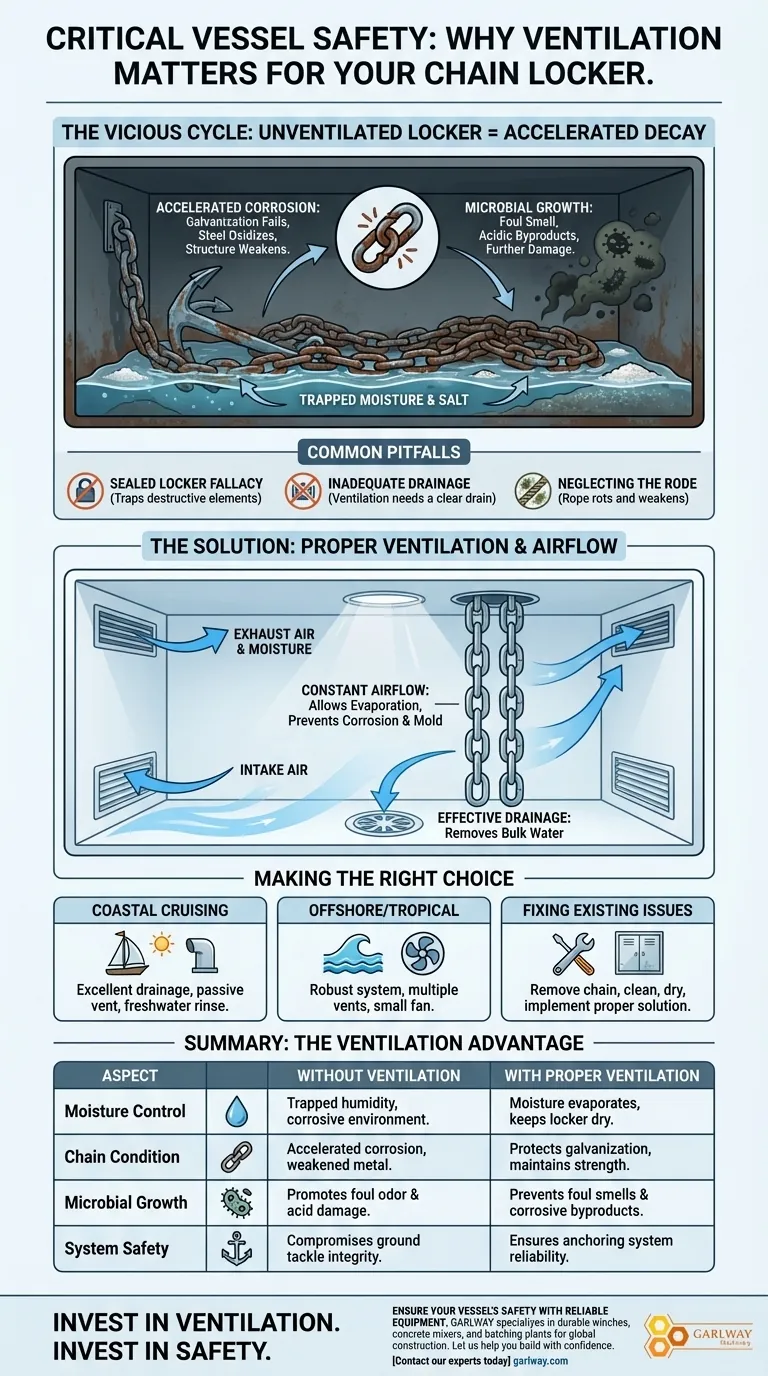
The Vicious Cycle: How a Lack of Airflow Destroys Your Chain
Understanding the process inside an unventilated locker reveals why airflow is so crucial. When a wet anchor is retrieved, it introduces a significant amount of water—often saltwater—into an enclosed space.
The Enemy: Trapped Moisture
A sealed chain locker becomes a humidity chamber. With no path for evaporation, the moisture from the wet rode remains in constant contact with the metal chain and the locker's interior surfaces.
The Result: Accelerated Corrosion
This trapped moisture, especially when combined with salt, creates a highly corrosive environment. It attacks the galvanization on the chain, exposing the steel beneath to rapid oxidation (rust). This is not just cosmetic surface rust; it is a deep, structural degradation that reduces the chain's tensile strength.
The Hidden Threat: Microbial Growth
The damp, dark, and oxygen-poor conditions are ideal for anaerobic bacteria. This microbial growth is the source of the foul "chain locker smell" and produces corrosive acidic byproducts that further damage both the chain and the locker's bulkheads.
Understanding the Common Pitfalls
Many well-intentioned boat owners make simple mistakes that compromise their anchoring system. Recognizing these pitfalls is the first step toward a better solution.
The "Sealed Locker" Fallacy
Some believe a sealed locker protects the rest of the boat from moisture and odor. This approach is counterproductive, as it traps the destructive elements inside with the critical equipment it's meant to protect, ensuring its eventual failure.
Inadequate Drainage
Ventilation can only remove moisture from the air; it cannot remove standing water. A chain locker must first have a clear, unobstructed drain at its lowest point to deal with the bulk of the water. Ventilation and drainage work together as a system.
Neglecting the Rode
While we focus on the chain, any rope portion of the rode is also susceptible. Trapped moisture promotes mildew and rot in nylon or polyester lines, severely compromising their strength and making them unsafe under load.
Making the Right Choice for Your Vessel
Your strategy for chain locker health depends on your environment and usage. The goal is always the same: keep the chain and rode as dry as possible.
- If your primary focus is coastal cruising in a temperate climate: Ensure you have excellent drainage and at least one passive vent, and make a habit of rinsing the anchor rode with fresh water before stowing it.
- If your primary focus is offshore passage-making or tropical cruising: A robust system with multiple vents (e.g., a low intake and high exhaust) or even a small, ignition-protected fan is a wise investment to combat constant high humidity.
- If you are addressing an existing smelly or corroded system: The first step is to remove the chain, thoroughly clean and dry the locker, and then implement a proper drainage and ventilation solution before returning the rode.
By treating your chain locker as a system that needs to breathe, you are directly investing in the safety and reliability of your vessel.
Summary Table:
| Aspect | Without Ventilation | With Proper Ventilation |
|---|---|---|
| Moisture Control | Trapped humidity creates a corrosive environment. | Allows moisture to evaporate, keeping the locker dry. |
| Chain Condition | Accelerated corrosion weakens the metal. | Protects galvanization and maintains chain strength. |
| Microbial Growth | Promotes bacteria causing odor and acid damage. | Prevents foul smells and corrosive byproducts. |
| System Safety | Compromises the integrity of your ground tackle. | Ensures the reliability of your anchoring system. |
Ensure your vessel's safety with reliable equipment. Just as proper ventilation protects your chain locker, using high-quality machinery is essential for any project. GARLWAY specializes in construction machinery, offering durable winches, concrete mixers, and batching plants for construction companies and contractors globally. Let us help you build with confidence. Contact our experts today to discuss your project needs!
Visual Guide
Related Products
- HZS25 Best Cement Mixer for Quick Mix Concrete at Bunnings
- Small Electric Winch 120V and 240V for Compact Applications
- Auto Concrete Cement Mixer Machine New
- Shaft Mixer Machine for Cement and Regular Concrete Mixing
- Electric Hoist Winch Boat Anchor Windlass for Marine Applications
People Also Ask
- How do cement mixers enhance safety on construction sites? Reduce Strain, Hazards, and Accidents
- What are the main components of a cement mixer? A Guide to Core Parts & Functions
- What are some tips for using a cement mixer effectively? Maximize Your Mixer's Performance & Concrete Quality
- How does cleaning a cement mixer after use benefit its performance? Maximize Lifespan and Mix Quality
- Why is it important to clean the cement mixer after use? Prevent Costly Damage and Ensure Quality Concrete