To prevent leaks in hydraulic pipes and connections, you must implement a maintenance strategy that combines regular physical inspections, component replacement, and system stabilization. This involves using professional tools to verify that all connections are secure, immediately replacing any pipes or connectors showing signs of cracks or deformation, and installing anti-vibration clamps to minimize stress from external forces.
The most effective way to prevent hydraulic leaks is to shift from a reactive mindset of fixing failures to a proactive one of maintaining total system integrity. Leaks are not the problem; they are a symptom of underlying issues like vibration, material fatigue, or operational stress.
A Proactive Inspection Regimen
A consistent inspection schedule is the foundation of any reliable hydraulic system. It allows you to identify and address potential failure points before they result in costly downtime.
Verifying Connection Integrity
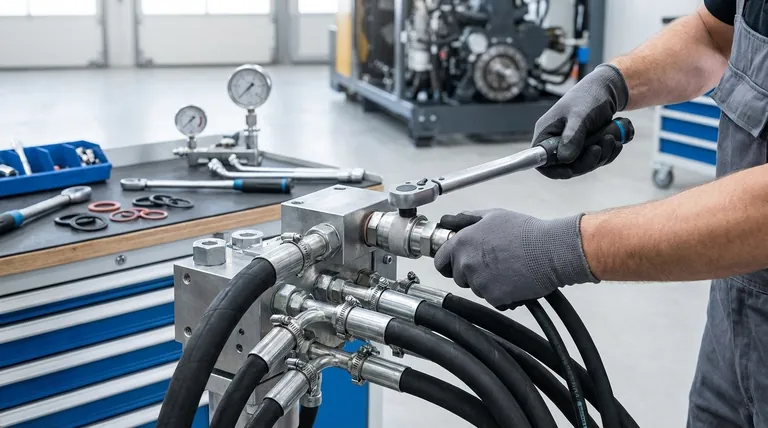
Every connection point is a potential leak source. Use professional tools, such as torque wrenches, to regularly confirm that all fittings and connections are tightened to their specified values without any looseness.
Identifying Material Fatigue
Visually inspect all pipes and connectors for signs of wear. Any component that has developed cracks, deformations, or significant corrosion due to prolonged use or stress must be replaced immediately.
Inspecting Beyond the Pipes
Leaks often originate from connected components. Check hydraulic motors and pumps for worn shaft seals, as internal wear can quickly manifest as a significant external leak. A thorough inspection should include key internal parts like pistons or vanes.
Mitigating Root Causes of System Stress
Preventing leaks requires more than just checking parts; it involves actively reducing the stressors that cause components to fail in the first place.
Dampening System Vibration
Vibration is a primary cause of loosened fittings and metal fatigue. Installing anti-vibration clamps along pipe runs provides crucial support and dampens the impact of operational forces, preserving the integrity of connection points.
Monitoring Operational Parameters
Implement real-time monitoring to catch problems before they become visible. Using pressure sensors and temperature monitoring devices helps detect abnormal fluctuations that indicate a potential issue long before a seal fails or a connection loosens.
Strengthening Operator Training
Human error is a significant factor in system failure. Ensure all operators are thoroughly trained on correct procedures to prevent operational mistakes, such as sudden pressure spikes, that can cause catastrophic leaks.
Common Pitfalls in Leak Management
Avoiding common mistakes is as important as performing the right checks. A flawed approach can create new problems while attempting to solve old ones.
The Fallacy of Overtightening
While loose connections cause leaks, overtightening is just as damaging. Applying excessive torque can deform fittings, crush seals, and strip threads, creating a new and often worse leak path. Always adhere to manufacturer-specified torque values.
Ignoring the Root Cause
Simply replacing a failed seal or tightening a loose fitting is a temporary fix. You must ask why the component failed. Was it due to excessive vibration, a pressure spike, or fluid contamination? Ignoring the root cause guarantees the problem will return.
Treating All Leaks as Equal
Not every drip requires the same level of urgency. Differentiating between static leaks (at seals and fittings) and dynamic leaks (at moving parts like cylinder rods) helps prioritize repairs. Dynamic leaks often indicate more severe internal wear and present a greater risk.
How to Apply This to Your System
Your maintenance strategy should align with your operational priorities. Focus your resources where they will have the greatest impact on achieving your specific goals.
- If your primary focus is minimizing immediate downtime: Prioritize frequent visual inspections of all pipes and connections, and implement a regular schedule for checking the torque of critical fittings.
- If your primary focus is maximizing long-term reliability: Invest in a comprehensive program that includes anti-vibration clamps, real-time system monitoring, and in-depth operator training to address root causes.
Ultimately, achieving a leak-free hydraulic system depends on treating it as a dynamic whole, not just a collection of individual parts.
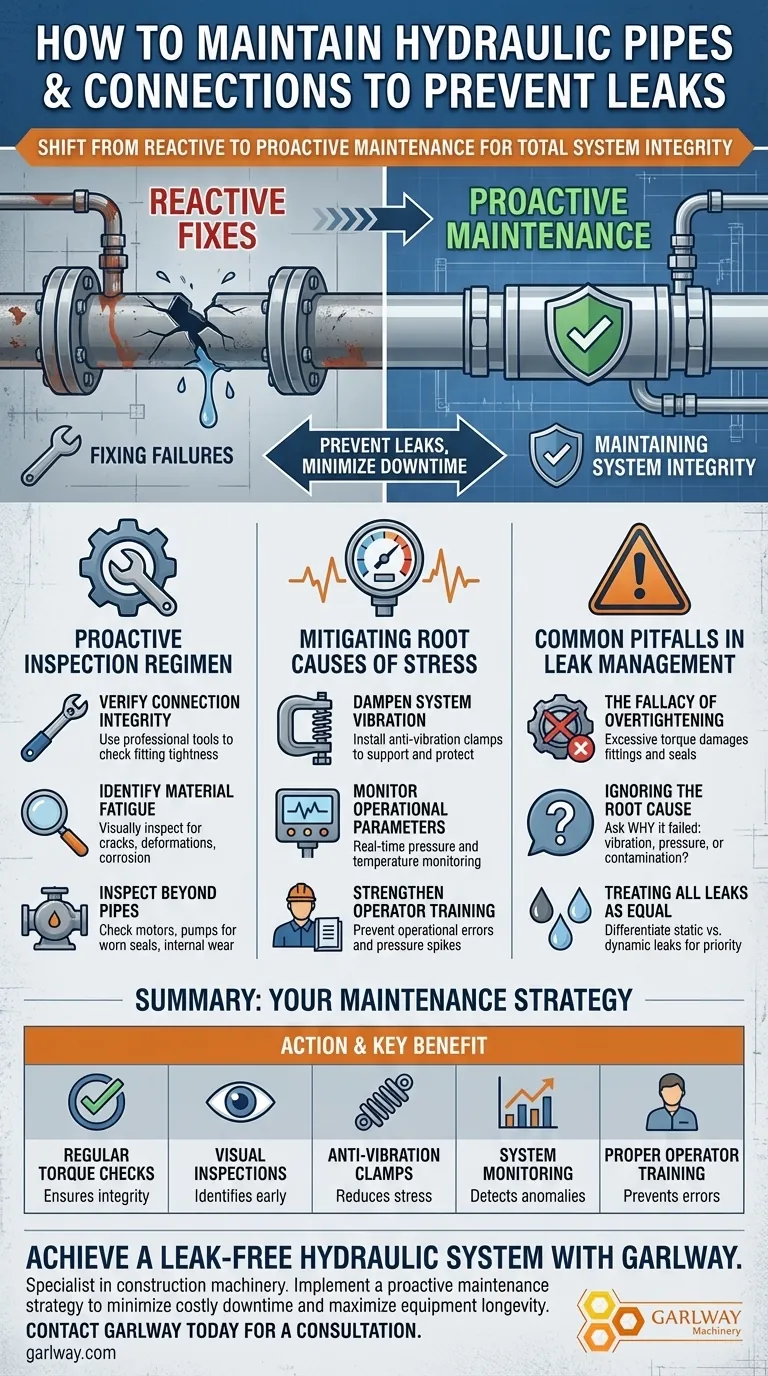
Summary Table:
| Maintenance Action | Key Benefit |
|---|---|
| Regular Torque Checks | Ensures connection integrity |
| Visual Inspections | Identifies cracks and corrosion early |
| Anti-Vibration Clamps | Reduces stress from system vibration |
| System Monitoring | Detects pressure/temperature anomalies |
| Proper Operator Training | Prevents operational errors causing leaks |
Achieve a leak-free hydraulic system with GARLWAY.
As a specialist in construction machinery, including winches, concrete mixers, and batching plants, we understand the critical importance of hydraulic reliability. Our expertise can help your construction company or contracting business implement a proactive maintenance strategy to minimize costly downtime and maximize equipment longevity.
Let's discuss how to fortify your hydraulic systems. Contact GARLWAY today for a consultation.
Visual Guide
Related Products
- Hydraulic Winding Engine Harbor Freight Winch
- Electric and Hydraulic Winch for Heavy Duty Applications
- Hydraulic Concrete Mixer Machine Cement Mixing Equipment for Mixture Concrete
- JDY350 Electric Hydraulic Mortar Mud Concrete Mixer
People Also Ask
- What role does hydraulic fluid play in hydraulic winches? It's the Lifeblood of Your Heavy-Duty Pulling Power
- What vehicles commonly use hydraulic winches? For Industrial Trucks Needing Unmatched Power
- What are the features of hydraulic winches? Unmatched Power and Continuous Duty for Heavy Loads
- What preventive measures can be taken to avoid oil leakage in hydraulic winches? Ensure Long-Term Reliability
- What does 'power out' mean in a hydraulic winch? Achieve Absolute Control When Lowering Heavy Loads