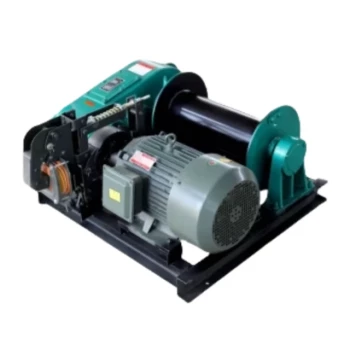
Proper training is non-negotiable for electric hoist operators because it directly mitigates the primary causes of workplace accidents: human error and a misunderstanding of the equipment's physical limits. It transforms a potentially dangerous piece of machinery into a reliable asset by ensuring operators understand its capabilities, inherent risks, and crucial safety protocols.
The core purpose of electric hoist training is not just to teach which buttons to press. It's about embedding a deep-seated culture of safety, risk awareness, and mechanical empathy that protects people, equipment, and the entire operation from catastrophic failure.
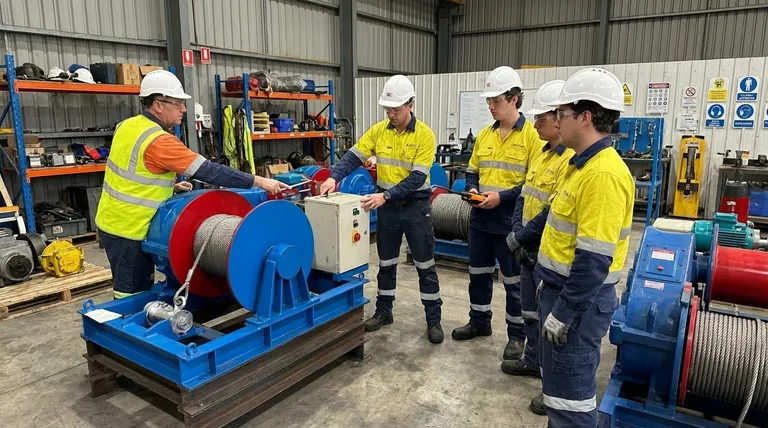
The Core Pillars of Effective Hoist Training
A comprehensive training program moves beyond basic operation. It equips the operator with the critical thinking skills needed to identify and react to unsafe conditions before an incident occurs.
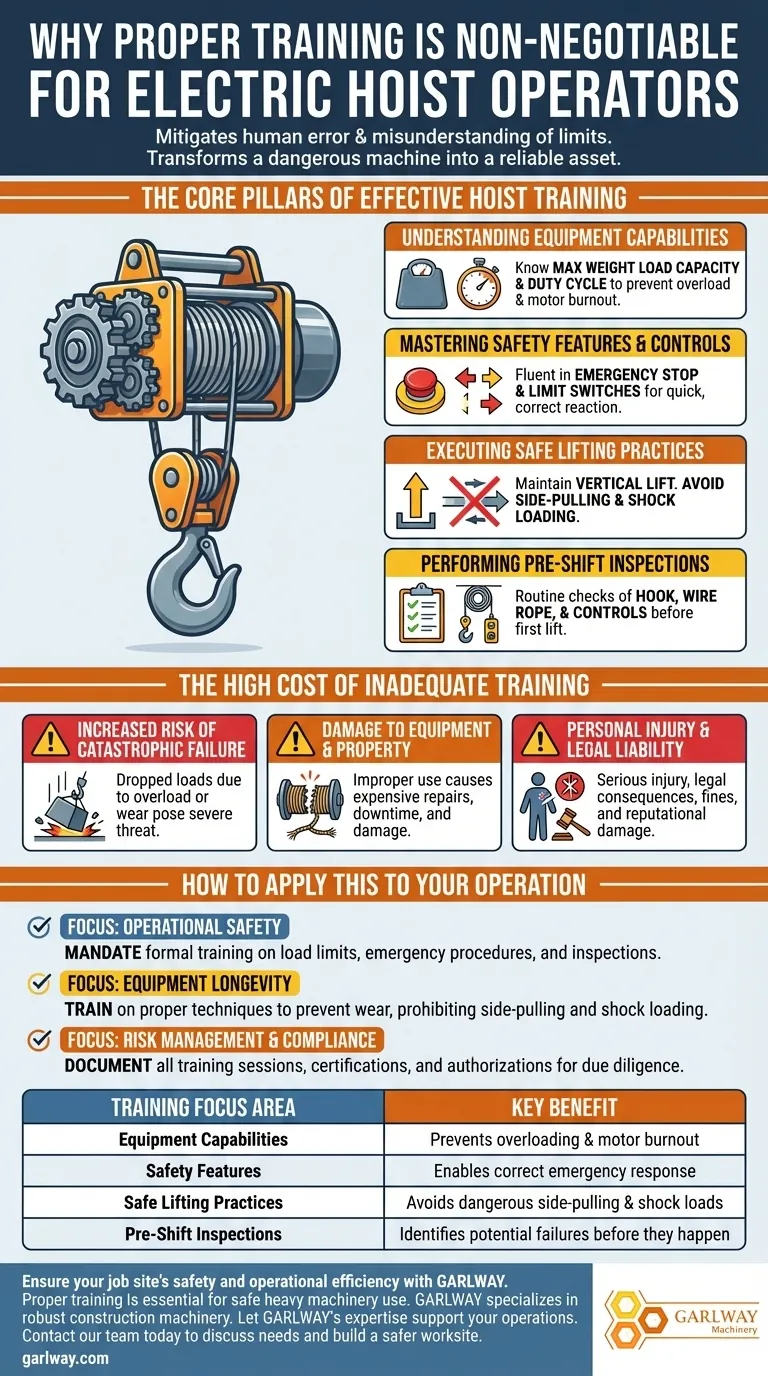
Understanding Equipment Capabilities
An operator must have an expert understanding of the specific hoist they are using. This includes knowing the maximum weight load capacity, which should never be exceeded.
Training also covers the hoist's duty cycle—how long it can run before needing to cool down—to prevent motor burnout and premature failure.
Mastering Safety Features and Controls
Operators must be fluent in the use of all controls, especially the emergency stop function. They need to know the location and purpose of limit switches, which prevent the hook from traveling too far up or down.
This knowledge ensures they can react instinctively and correctly in a critical moment, preventing a minor issue from escalating.
Executing Safe Lifting Practices
The most common source of accidents is improper lifting technique. Training instills fundamental rules, such as maintaining a vertical lift at all times.
Operators learn to avoid dangerous practices like side-pulling (dragging a load horizontally) or shock loading (jerking the load), which place extreme stress on the hoist components.
Performing Pre-Shift Inspections
A trained operator is the first line of defense against equipment failure. Training mandates a routine pre-use inspection of critical components.
This includes checking the hook and safety latch, examining the wire rope or chain for damage or wear, and testing the controls before the first lift of the day.
The High Cost of Inadequate Training
Failing to invest in proper training is not a cost-saving measure; it is a significant and often uninsurable liability. The consequences extend far beyond the equipment itself.
Increased Risk of Catastrophic Failure
An untrained operator who overloads a hoist or ignores signs of wear can cause a dropped load. This is a catastrophic event that poses an immediate and severe threat to anyone in the vicinity.
Damage to Equipment and Property
Improper use, such as repeated side-pulling, can permanently damage the hoist's drum, wire rope, and frame. This leads to expensive repairs, unplanned downtime, and potential damage to the load or surrounding infrastructure.
Personal Injury and Legal Liability
The ultimate cost of insufficient training is serious injury or fatality. For the organization, this results in devastating legal consequences, regulatory fines, and irreparable damage to its reputation. Management's responsibility begins with a thorough risk assessment and is fulfilled through documented operator training.
How to Apply This to Your Operation
To build a truly safe and efficient work environment, your approach to training must align with your primary goals.
- If your primary focus is operational safety: Mandate that every operator is formally trained and authorized on load limits, emergency procedures, and daily inspection protocols before they ever touch the controls.
- If your primary focus is equipment longevity: Train operators on proper lifting techniques that prevent premature wear, specifically prohibiting side-pulling and shock loading to reduce costly, avoidable repairs.
- If your primary focus is risk management and compliance: Document all training sessions, certifications, and operator authorizations to create a clear record that demonstrates due diligence in the event of an audit or incident.
Ultimately, investing in thorough operator training is the most critical decision you can make to transform a powerful tool into a safe and productive asset.
Summary Table:
| Training Focus Area | Key Benefit |
|---|---|
| Equipment Capabilities | Prevents overloading & motor burnout |
| Safety Features | Enables correct emergency response |
| Safe Lifting Practices | Avoids dangerous side-pulling & shock loads |
| Pre-Shift Inspections | Identifies potential failures before they happen |
Ensure your job site's safety and operational efficiency with GARLWAY.
Proper training is essential for the safe use of heavy machinery like electric hoists. GARLWAY specializes in providing robust and reliable construction machinery, including winches, concrete mixers, and concrete batching plants, trusted by construction companies and contractors globally.
Investing in quality equipment is the first step; ensuring it's used correctly protects your team and your investment. Let GARLWAY's expertise support your operations. Contact our team today to discuss your machinery needs and build a safer, more productive worksite.
Visual Guide
Related Products
- Electric Hoist Winch Boat Anchor Windlass for Marine Applications
- Electric and Hydraulic Winch for Heavy Duty Applications
- Hydraulic Winding Engine Harbor Freight Winch
- Heavy Duty Electric Boat Winch Windlass Anchor
- 12000 lb Electric Boat Trailer Winch with Windlass Anchor Warn
People Also Ask
- How does an electric anchor winch work? Power, Safety, and Reliable Operation Explained
- What are the advantages of installing an electric anchor winch on a boat? Boost Safety & Ease for Boaters
- What are the operational differences between electric hoists and winches? A Guide to Safe Lifting vs. Pulling
- What are the main benefits of a boat anchor winch? Boost Safety & Efficiency for Your Vessel
- How does a boat anchor winch work? A Guide to Reliable Anchor Handling