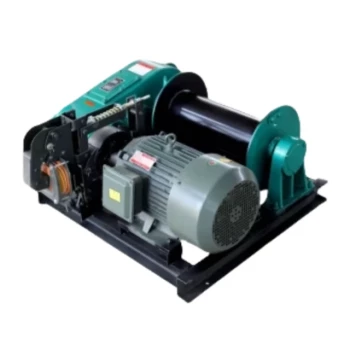
In a remote location, a winch is not a tool of convenience; it is your lifeline. It provides the immense mechanical force needed to recover a stranded or immobilized vehicle from dire situations like deep mud, snow, or steep ditches. This ability turns a potentially life-threatening wait for help into a manageable, swift self-rescue operation when no other assistance is available.
A winch transforms your vehicle from a potential liability into a self-sufficient recovery asset. Its fundamental purpose in remote settings is to eliminate the dangerous variable of waiting for external help, which may be hours or even days away.
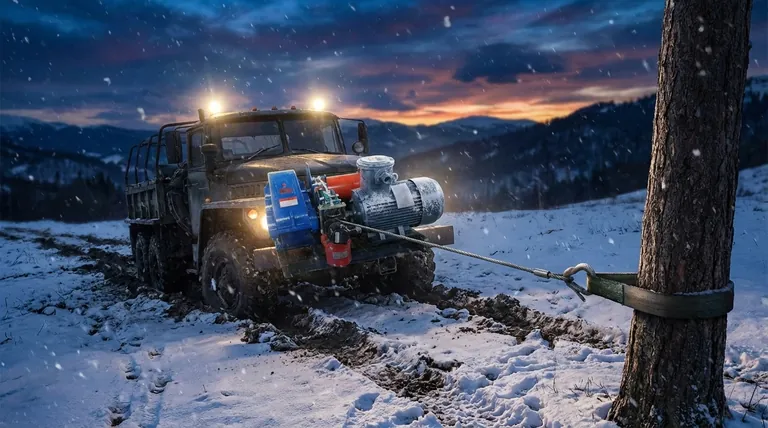
The Core Principle: Self-Reliance When Stakes Are High
When you are isolated, the ability to solve your own problems becomes a primary survival skill. A winch is a force multiplier that provides a level of self-reliance that is otherwise impossible for an individual or small group.
Overcoming Total Immobilization
A vehicle stuck in mud, sand, or a ditch is completely helpless. A winch provides the thousands of pounds of pulling force necessary to overcome this inertia and extract the vehicle, allowing you to regain mobility and get to safety.
Preventing Prolonged Exposure
Every hour spent stranded in a remote area increases your risk of exposure to the elements, be it extreme heat, freezing cold, or severe weather. A winch facilitates a timely recovery, drastically reducing this exposure time and its associated dangers.
Clearing an Impassable Route
Sometimes the danger isn't being stuck, but being trapped. A winch can be used to move heavy obstacles like fallen trees or rocks that block your only path out, ensuring you don't become stranded by circumstances beyond your vehicle's direct involvement.
How a Winch Enhances Operational Safety
Beyond pure recovery, the design and function of a modern winch are inherently geared toward reducing the risk of injury during a high-stress event.
Reducing Physical Strain and Injury
Attempting to manually recover a multi-ton vehicle with jacks, shovels, or sheer force is a recipe for exhaustion and serious physical injury. A winch performs the heavy lifting, conserving your energy for other critical tasks like navigation and communication.
Enabling Controlled and Distant Operation
Modern winches often include remote controls. This feature is critical for safety, as it allows the operator to stand at a distance, providing a better vantage point and keeping them clear of the vehicle and high-tension line should something shift unexpectedly.
Understanding the Risks and Responsibilities
A winch is a powerful tool, not a magical solution. Its life-saving potential is directly tied to the operator's knowledge and preparation.
Proper Training is Non-Negotiable
Improper winch use can be more dangerous than being stuck. A snapped cable, a failed anchor point, or an unstable vehicle can cause severe injury or death. Understanding concepts like line pull, rigging, and safety zones is essential.
An Anchor Point is Required
A winch is only as strong as its anchor. Without another vehicle, a solid tree (used with a tree-trunk protector strap), or a purpose-built ground anchor, the winch has nothing to pull against, rendering it useless.
Maintenance is a Critical Factor
A winch that fails under load is a significant liability. Regular inspection and maintenance of the cable or synthetic rope, motor, and electrical connections ensure it will work when you need it most.
Making the Right Choice for Your Goal
Deciding if you need a winch depends entirely on an honest assessment of the risks you are willing to accept.
- If your primary focus is solo travel in remote or unpredictable terrain: A high-quality winch should be considered an essential, non-negotiable piece of safety equipment.
- If your primary focus is group travel on challenging trails: Having at least one or two winch-equipped vehicles in the convoy provides a powerful recovery option for the entire group.
- If your primary focus is travel on maintained but remote roads: A winch may be less critical, but it still offers the ultimate insurance policy against an unexpected slide-off or weather event.
Ultimately, a winch is an investment in autonomy, granting you the power to resolve a critical situation when no one else can.
Summary Table:
| Situation | Winch Benefit |
|---|---|
| Vehicle Stuck (Mud, Snow) | Self-recovery without external help |
| Prolonged Exposure Risk | Drastically reduces time stranded |
| Route Blocked (Trees, Rocks) | Clears obstacles to regain mobility |
| High Physical Strain | Performs heavy lifting, prevents injury |
| Need for Safe Operation | Remote control allows for distant, controlled recovery |
Don't let a remote breakdown become a crisis. Ensure your vehicle is equipped for self-recovery. GARLWAY specializes in durable, high-performance winches for construction companies and contractors operating in challenging environments globally. Our winches are engineered to provide the reliable pulling power you need for safe, efficient vehicle recovery. Contact GARLWAY today to find the right winch for your safety needs.
Visual Guide

Related Products
- Warn Winch Windlass Boat Trailer Winch
- Electric and Hydraulic Winch for Heavy Duty Applications
- Small Electric Winch 120V and 240V for Compact Applications
- Quick Windlass Portable Winch for Truck and Boat Best Boat Winch
- Hydraulic Winding Engine Harbor Freight Winch
People Also Ask
- What are the main components of a boat trailer winch? A Guide to Safe & Efficient Boat Loading
- What factors should be considered when choosing a boat trailer winch? Ensure Safe and Effortless Boat Loading
- What is the purpose of boat trailer winches? Safely and Efficiently Load Your Boat
- What are the two main types of boat trailer winches? Manual vs. Electric Explained
- How often should a boat trailer winch be replaced? Your Guide to Safety and Longevity